

Glass Railing Cost: What Drives the Price of a Glass Balustrade -Railing Guides
Glass Railing Guides · Cost & Budgeting
Glass Railing Cost: What Actually Drives the Price of a Glass Balustrade
Glass railing cost is governed by drivers rather than one fixed figure, because every balustrade is made to order. The major variables are the glass thickness and treatment, the mounting system, the metal hardware finish, the railing length, and the installation difficulty. Frameless and minimal-hardware designs concentrate cost into engineered glass and precision fabrication.
Understanding glass railing cost begins with understanding what you are actually paying for, because the headline price hides several independent decisions. This guide walks through each driver in plain language, shows where the money concentrates, and explains why a quote varies so widely between projects. We label every market band as a third-party estimate, never as our own quote, because each balustrade we build is priced from its drawing.
What Drives Glass Railing Cost
A glass balustrade is never a shelf product with one sticker. So the honest answer to its price is a set of drivers, not a number. Five drivers move the figure most. They are the glass grade, the mounting system, the metal finish, the running length, and how hard the job is to fit. Each one is a separate choice. Each one stacks on the others. That is why two jobs of equal length can quote at very different totals.
A glass railing costs real money because it is a load-bearing part dressed up as a see-through one. The glass holds people back from a fall, so it must be tempered or laminated and built for the loading. The edges and fittings have to stay strong too. That care, more than the raw glass, explains the gap in price. A panel for show is cheap. A guard you can lean on with full trust costs more. The sections below take each driver in turn.
The Glass Itself
The biggest lever on glass railing cost is the glass, and three things set its price: the thickness, the safety treatment, and the edge finish. Thicker glass costs more because it uses more material and needs more careful handling. The safety treatment matters even more. Tempered glass is heat-strengthened, so it breaks into small blunt bits. Laminated glass bonds two panes around a plastic layer, so a broken panel still holds together in the frame. Many guards call for laminated, or laminated-tempered, glass so a cracked panel never leaves an open edge.
| Glass specification | Relative cost and why |
|---|---|
| Tempered, framed | The budget guardrail glass. A surrounding frame shares the load and supports the panel. |
| Laminated tempered | Higher, because it bonds two tempered panes around an interlayer so a broken panel still stays in place. |
| Frameless laminated | Highest, because the glass alone resists the loading, so it runs thicker and the edges are polished for display. |
| Low-iron clear | An upgrade that removes the faint green tint of standard glass, giving a truly colourless, premium look. |
The edge finish is a quieter cost that owners often miss. A frameless panel shows its edges, so they are ground and polished to a clean, flawless line. A framed panel hides its edges and needs only a basic seam. We cover how to choose thickness and treatment for safety in our guide to tempered glass railing thickness and safety. The glass you choose there is the same choice that moves your budget here.
Mounting System and Hardware
How the glass is held in place is the second big driver, and it shapes both the look and the build. A base channel grips the bottom edge of each panel in a long aluminium or steel track. That gives the cleanest minimal line, but it needs the thickest glass and the most exact fit. Standoff spigots clamp each panel at two or three points, which is more forgiving and a little cheaper, yet it still reads as a frameless guard. A top-and-bottom framed system holds the glass along its whole edge, so it allows thinner panels and the simplest hardware.
The metal finish adds another choice onto the mounting one. Powder-coated aluminium is kindest on the budget, brushed steel costs more, and marine-grade 316 steel for a coastal or poolside job sits higher again because it shrugs off salt. The hardware is where a minimal look quietly soaks up money, since a frameless run hides almost nothing and every fitting must be both strong and good-looking. We compare the channel and spigot routes in our guide to glass railing mounting systems, spigot vs channel, which maps right onto the cost tiers here.
Framed vs Frameless Budgets
The framed-versus-frameless choice is where most owners feel the budget swing, because it rolls the glass and mounting drivers into one visible decision. A framed glass railing puts a top rail and often side posts around the panels, so it can use thinner tempered glass and simpler joints, which lowers the cost. A frameless guard drops the metal frame and lets the glass do the work alone. That is the look most owners want, and it is also the setup that needs thicker, laminated glass and exact fittings.
| Configuration | Budget character |
|---|---|
| Framed with top rail | The budget glass railing. The frame shares the load, so the glass is thinner and fittings are simpler. |
| Spigot frameless | A middle tier. Minimal hardware and a frameless look, with point fixings that are more forgiving to install. |
| Channel frameless | The premium tier. The cleanest uninterrupted line, but it requires the thickest glass and the most exact connection. |
Neither setup is better value on its own; they answer different needs. If you want a clear, open view, the frameless premium buys exactly that. If you want a long run of glass on a sensible budget, a discreet framed system gives most of the openness for far less. Our overview of the frameless glass railing look explains what that style buys and where it earns its premium.
Market Ranges in Context
Owners naturally want a number, so here is the honest framing. Trade and renovation sites usually quote glass railing cost per linear foot, fitted, and they put frameless systems well above framed ones. Those bands are third-party market estimates, not our quote, and they swing widely by region, by glass grade, and by how hard the job is to fit. Treat any single figure you read online as a rough guide, not a promise, because the drivers above can double a total without changing the length at all.
A safer way to budget is to lock your setup first, then price it. Decide framed or frameless, choose your glass grade, and settle the metal finish, because those three choices drive most of the gap between quotes. Once the spec is set, a drawing-based quote turns clear and easy to compare across suppliers. As a made-to-order maker, we price each glass balustrade from its drawing, not from a shelf list. That is why we share drivers here and save numbers for your own project.
A real client project pairing a custom staircase with a glass railing — tap to play.
Installation and Site Factors
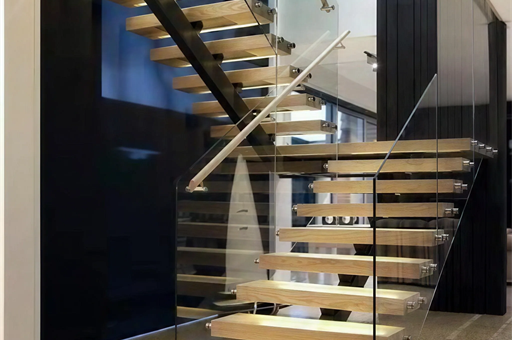
The fit is a cost driver the glass price never shows, yet it can move a total a lot. A straight, level run on a solid concrete deck is the simplest case, because the fittings land where you expect and the panels drop into place fast. A staircase brings in raked panels cut to the slope of the flight, which take more shop work and more careful setting out. Curved runs, stepped levels, and balconies high up all add labour, access gear, and design time, so the fitting share of a quote rises with how tricky the site is.
This is where it pays to know our scope clearly. Double Building Materials draws, builds, trial-fits, and crates your glass balustrade, then ships it ready for your installer to fit. We do not fit on site, and we do not sign off local code, which stays with your local team. Because we trial-fit each run on our Guangdong floor before it ships, the panels and fittings arrive checked for fit, which often cuts the on-site fitting time and the risk of a costly remake. Where you need a fitter, we can often help you find one where local fitting is on offer.
Where to Save Without Cutting Safety
A glass railing has smart saving and false saving, and the line between them is the structural glass itself. The safe place to save is the visible finish, not the load path. You can pick a discreet framed system over a frameless one, choose powder-coated aluminium instead of marine steel, or accept the faint tint of standard glass over low-iron clear. Each of these choices trims the budget without touching the panel that holds people back from a fall.
The place never to cut is the glass grade and the fittings, because that is the part doing the safety work. Thinning the glass below the loading, skipping lamination where a guard wants it, or under-sizing the hardware does not really save money; it borrows against safety and against a future remake. A guard you can lean on with full trust is worth getting right the first time. Browse the full glass balustrade range to see the options, then read the cluster complete glass railing guide for how every choice fits together.
Glass Railing Cost FAQ
Is a glass railing more expensive than other railings?
Glass railing generally costs more than a basic metal or cable system, because the glass is a structural safety element that must be tempered or laminated and engineered for the anticipated loading. The premium reflects an uninterrupted view and a refined, architectural finish. A framed configuration narrows the gap, while a frameless installation widens it, so the configuration you select ultimately determines where your investment lands.
Why is frameless glass railing so expensive?
A frameless balustrade is expensive because the glass alone resists the loading, with no surrounding frame to share it. That configuration demands thicker, laminated panels, polished display edges, and precision fixings that must be structurally strong and beautiful at once. You are paying for the engineering and the finishing that let the glass stand on its own, which is exactly the minimal aesthetic most owners want.
What is the most budget-friendly way to get a glass railing?
A framed tempered configuration trims the budget the most, especially with a powder-coated aluminium frame and standard glass rather than low-iron. The frame shares the structural loading, so the glass can be thinner and the fittings simpler. You keep most of the openness of glass while trimming the drivers that push a frameless installation higher, which is a sensible economy that never compromises structural safety.
Does glass thickness change the price much?
Yes, thickness is one of the larger levers on glass railing cost, since thicker panels use more material and demand more careful handling and engineering. A frameless configuration needs thicker glass than a framed one to carry the load independently, which is a major reason it costs more. The correct thickness is determined by the loading and the mounting, not by preference, so it should be engineered and specified, never guessed.
Should I compare glass railing to cable railing on cost?
It is a fair comparison, because the two often compete for the same modern, open look. Cable railing typically costs less in materials but reads busier across a long run, while glass gives a fully transparent view at a higher price. The right choice depends on the view you want and the budget you have. Our glass railing vs cable railing guide weighs the two side by side.
Keep reading across the glass cluster: the complete glass railing guide, tempered glass thickness and safety, spigot vs channel mounting, and the frameless glass railing look. Ready to specify? Browse our glass balustrade systems.
Double Building Materials draws, manufactures, trial-assembles, crates, and ships your glass balustrade. Your own contractor or installer handles on-site installation and local code sign-off — we can help you find one where available. Any price bands referenced above are third-party market estimates, not our quote; each balustrade is made to order and priced from its drawing. Specification and code values are common references; your local adopted edition governs, so confirm the current version with your local team.
Talk to us on WhatsApp →