

Wrought Iron vs Aluminum vs Vinyl Railing -Railing Guides
Wrought Iron Railing Guides · Material Comparison
Wrought Iron Railing vs Vinyl vs Aluminum: How the Three Materials Compare
In a wrought iron railing vs vinyl comparison, iron delivers solid weight, hand-forged character, and decades of structural life, while vinyl offers the lowest upfront price and almost no maintenance. Aluminum sits between them, combining a metal look with rust-free durability. Iron suits feature staircases and grand entrances; vinyl suits budget fencing and casual decks.
Three materials dominate the railing market, and they could hardly feel more different in the hand. This guide walks through how wrought iron, aluminum, and vinyl compare on looks, strength, weather resistance, upkeep, and budget, so you can match the right railing to your villa, deck, porch, or new build. Where a topic runs deep, we link to a focused guide so you can read further.
The Three Materials at a Glance
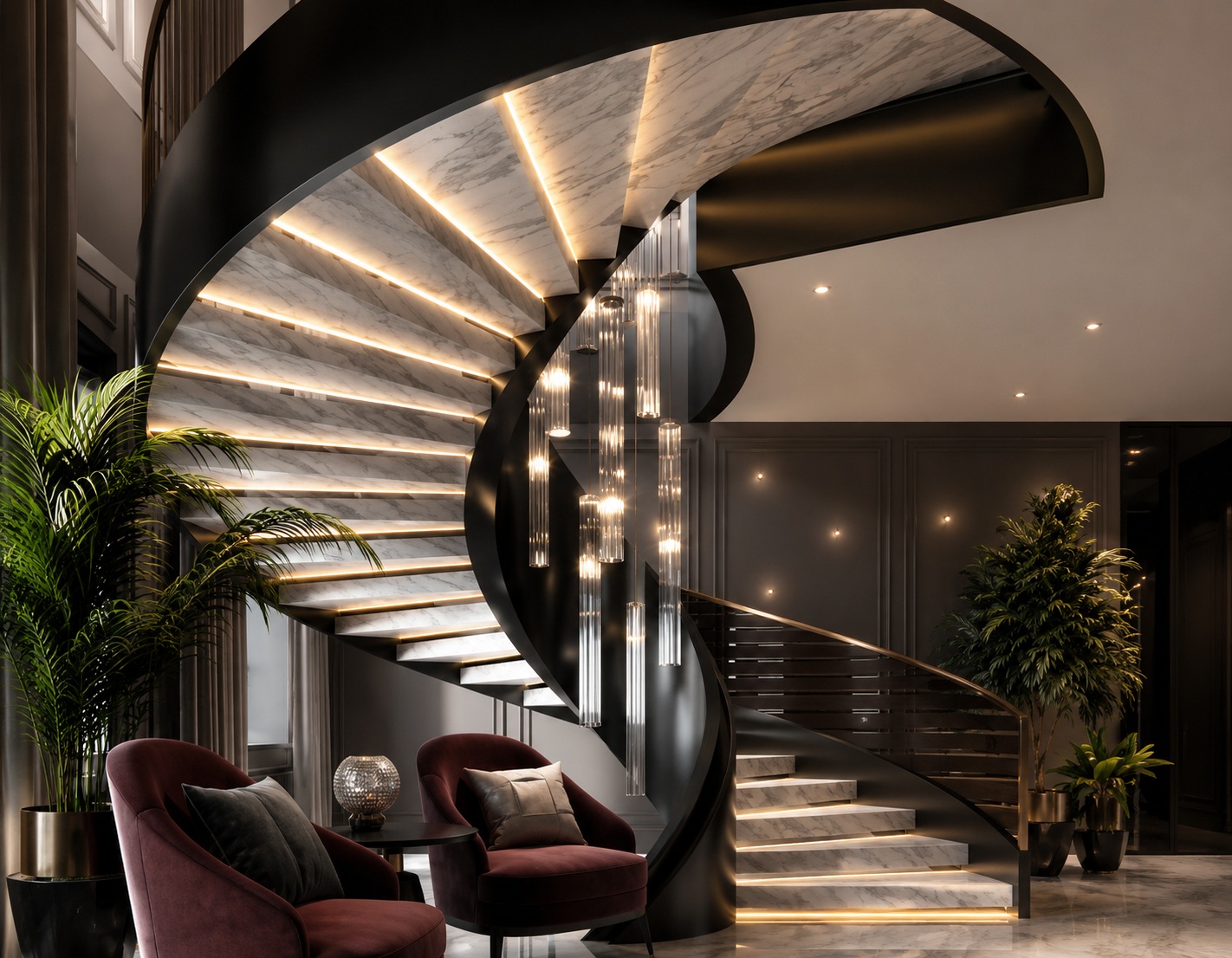
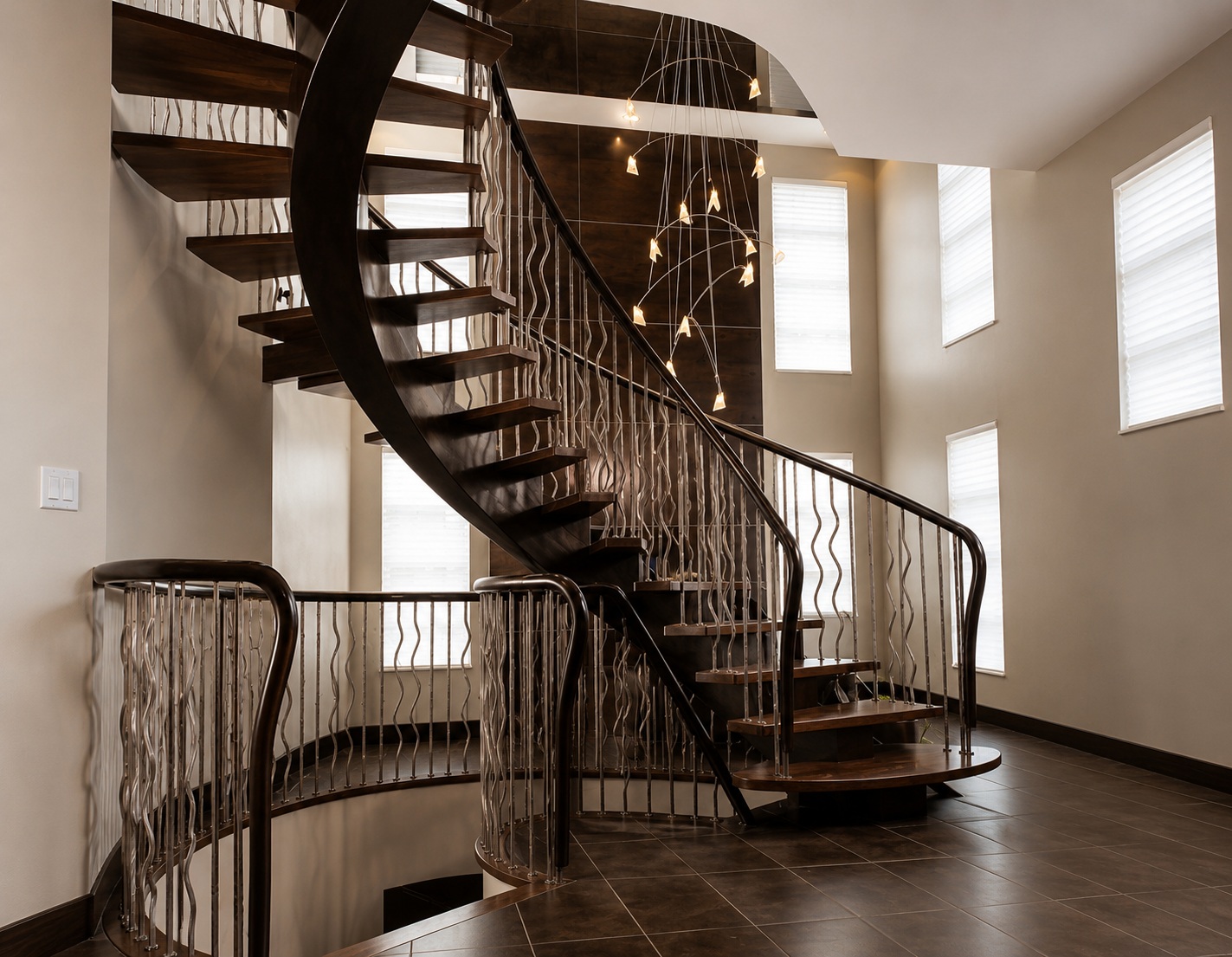
A wrought iron railing is shaped from solid steel bar. It is then welded, dressed, and coated by skilled hands. It carries real weight, and that weight reads as permanence and craft. People reach for iron when a railing should feel heavy, ornamental, and timeless. That is why it crowns so many grand staircases, balconies, and old entrances. The material rewards a heavy, sculptural design that lighter products cannot copy.
Aluminum is a lighter metal railing. It is shaped into slim sections and powder-coated for colour. It mimics the clean lines of iron at a fraction of the weight. It never rusts, because aluminum forms its own oxide layer. Vinyl, by contrast, is a moulded PVC plastic. It arrives in pre-formed sections that snap together. It costs the least of the three, and it asks almost nothing of you once it is up.
So the wrought iron railing vs vinyl question really frames a spectrum. At one end sits heavy, hand-made iron with the richest character and the longest life. At the other sits light, low-cost vinyl with the easiest upkeep and the most casual look. Aluminum bridges the middle. It gives a metal look without the rust or the weight. The sections below take each quality in turn, so the trade-offs grow clear.
Looks and Character
An owner usually feels the difference first in the look. The three materials speak very different design languages. Wrought iron reads as ornamental, grand, and quietly rich. It can be forged into scrollwork, twisted balusters, collars, and leafwork. So a single iron panel becomes a statement. The hand-finished surface and the real heft give iron a presence you feel the moment you touch it. That is why it suits a feature staircase or a stately front door.
Aluminum offers a cleaner, more modern look. Its slim sections suit modern porches, decks, and balconies. The colour stays even, because it is baked on. Aluminum can borrow some classic detail, yet it rarely matches the depth and weight of forged iron. Vinyl reads as the most casual of the three. The white or neutral PVC profiles look tidy and even. That suits a relaxed deck or a fence line. Still, the plastic surface lacks the substance an owner notices up close.
In short, the look tracks the material honestly. Iron announces craftsmanship and grandeur, aluminum delivers a crisp modern line, and vinyl keeps things simple and unobtrusive. For a sense of how varied iron alone can be, our guide to wrought iron railing designs and styles walks through patterns from clean modern lines to full period scrollwork.
Strength and Structural Life
Strength is where iron pulls decisively ahead, and a side-by-side glance makes the order obvious. Wrought iron is the strongest of the three by a wide margin, because solid steel resists impact, leaning loads, and the rough handling that an exterior railing inevitably meets over the years. A well-built iron railing can serve for decades and shrug off knocks that would dent a lighter material. That structural substance is a large part of what an owner is buying when they choose iron.
| Material | Structural character |
|---|---|
| Wrought iron | The strongest. Solid steel resists impact and leaning loads, and a well-built railing lasts for decades. |
| Aluminum | Strong for its weight, though lighter and softer than iron. It holds guard loads well when engineered correctly. |
| Vinyl | The least rigid. PVC flexes more, can grow brittle in cold or strong sun, and relies on its reinforced frame. |
Aluminum is strong for its low weight. A well-built aluminum railing holds the guard loads a balcony needs. It is softer than iron, though, so it can dent under a sharp blow. Vinyl is the least stiff of the three. The plastic profiles flex a lot. They lean on a steel channel inside for stiffness. They can also grow brittle after years of cold winters or strong sun. For a barrier that must feel firm underhand, iron is the benchmark.
Weather and Corrosion
Weather resistance flips the ranking. This is the strongest case the lighter materials make. Bare iron rusts when steel meets water. So an exterior iron railing leans wholly on its coating. A painted, powder-coated, or galvanised finish keeps rust at bay. Yet that coating needs renewing over the years, above all near the coast. Kept up well, iron lasts a lifetime outdoors. Left alone, it streaks and bleeds rust, which is the one real weak spot of the metal.
Aluminum and vinyl were both built to ignore this problem. Aluminum cannot rust, because it forms an oxide layer the moment it meets air. So a coastal balcony or a poolside deck suits it well. Vinyl shrugs off rust too, since plastic does not react with water or salt. The trade is that strong sun can fade a vinyl surface over time, and hard cold can make it brittle. We weigh coating choices for iron by climate in our exterior wrought iron railing guide.
Our broader railing materials compared for coastal homes — useful background to the iron-against-vinyl choice.
Maintenance and Upkeep
Day-to-day upkeep is the deciding factor for a great many owners, and here the order from the weather section continues. Wrought iron asks the most attention of the three, because the coating is its only defence against rust. An interior iron railing in a dry hallway stays handsome for years with almost no effort. An exterior iron railing wants regular checks and an occasional repaint, above all where it faces salt air or driving rain. That upkeep is simply part of owning a material with this much weight and character.
Aluminum sits in the middle. Its baked powder coat shrugs off weather. So it usually needs nothing more than an occasional rinse to look fresh, and it never wants repainting against rust. Vinyl asks the least care of all. A wash with soapy water cleans the surface. There is no coating to renew and no rust to chase. Owners who want a railing they can fit and forget often lean toward vinyl or aluminum for this reason. They take the lighter look in exchange for the easier life.
Cost Drivers: Wrought Iron Railing vs Vinyl vs Aluminum
Budget often settles the wrought iron railing vs vinyl decision, so it deserves an honest framing. Because each material is supplied to a project specification, there is no single price to compare; there are drivers that move the figure. Vinyl is consistently the most economical to buy, since moulded PVC sections are mass-produced and quick to assemble. Aluminum sits higher, reflecting the metal and the powder-coating. Iron typically carries the highest price of the three, because its cost lives in skilled hand-fabrication rather than a mass-produced part.
| Material | What drives the price |
|---|---|
| Vinyl | Lowest upfront cost. Mass-moulded PVC sections that snap together with minimal labour. |
| Aluminum | A middle band, set by the extrusion, the powder-coat colour, and the post layout. |
| Wrought iron | Typically the highest, because ornament, hand-forging, and the protective finish are paid for in skilled hours. |
It pays to read price across the whole life of the railing, not the purchase day alone. Vinyl wins the upfront comparison cleanly, yet it can fade or grow brittle and may need replacing sooner. Iron costs the most at the start, but a maintained iron railing can last for generations, which spreads the spend across a long life. Those market patterns are third-party estimates, not our quote, because every iron balustrade we build is priced from its drawing. Our wrought iron railing cost guide breaks down each iron driver in detail.
How to Choose Between Them
The right material follows the setting and the feeling you want, not a fixed rule. Lean toward wrought iron when the railing should be seen and admired, when you want genuine weight and ornament, and when a feature staircase or a grand entrance deserves a barrier that signals permanence. Iron also rewards owners who do not mind a little periodic upkeep in exchange for a railing that can outlast the house itself. It is the natural choice where character carries more weight than the lowest sticker price.
Lean toward aluminum when you want a clean modern metal line that never rusts and asks for almost no care, which suits a contemporary deck, porch, or coastal balcony. Lean toward vinyl when the budget leads and the look can stay casual, such as a simple deck guard or a long fence run where low cost and zero upkeep matter most. Many properties mix the three, using iron on the front entrance and a lighter material at the rear. To see the iron systems we make, browse our wrought iron balustrade and railing systems.
One honest note on scope, because it shapes who makes what. Double Building Materials fabricates iron and aluminum railings; we do not mould vinyl, so we compare it here as a fair option rather than a product we supply. Whichever metal you choose, the build sequence stays the same. We start from a drawing, fabricate in our 4,500 square metre Guangdong factory, trial-assemble the run before packing, then crate it for export. Across more than 800 projects in over 60 countries, that drawing-first habit is what keeps a railing fitting on the first attempt.
Wrought Iron vs Vinyl vs Aluminum Railing FAQ
Which is better, wrought iron or vinyl railing?
Neither is universally better; they answer different priorities. Wrought iron offers far more strength, character, and structural life, which suits a feature staircase or a grand entrance. Vinyl offers the lowest upfront cost and almost no upkeep, which suits a casual deck or a long fence run. In the wrought iron railing vs vinyl trade, iron buys permanence and presence, while vinyl buys economy and an easy life.
Is aluminum railing cheaper than wrought iron?
Aluminum is usually more economical than wrought iron, because it is extruded or cast rather than hand-forged, and the metal itself is lighter and quicker to fabricate. It also avoids the corrosion upkeep iron needs outdoors. Iron still carries a richness and a structural heft that aluminum cannot fully match, so the higher iron price reflects craftsmanship and durability rather than a simple difference in raw material.
Does vinyl railing last as long as iron?
Vinyl resists rust completely and needs very little care, yet it rarely matches the lifespan of well-maintained iron. Strong sun can fade or chalk the plastic, and severe cold can make it brittle, so a vinyl railing may need replacing sooner. A coated iron railing, kept up over the years, can serve for decades or longer, which is part of why its higher upfront cost spreads across a much longer life.
Which railing material needs the least maintenance?
Vinyl asks the least of you, since a wash with soapy water is usually all it needs and there is no coating to renew. Aluminum follows closely, because its baked powder coat resists weather and never rusts. Wrought iron asks the most attention, as its coating is the only defence against rust outdoors, so it wants periodic inspection and an occasional repaint to stay at its best.
Can these railings meet building code for a balcony?
All three can satisfy guardrail rules when they are designed correctly, since common US references such as the IRC and IBC set the four-inch sphere spacing and the guard-load limits rather than name a material. Aluminum and vinyl rely on a properly engineered frame and post layout, while iron has the inherent strength. Your local adopted code edition governs, so confirm the current figures with your local team before you build.
Keep reading across the iron cluster: the complete guide to wrought iron railing ideas and design inspiration, designs and styles, exterior wrought iron railing, and the wrought iron railing cost drivers. Ready to specify? Browse our wrought iron balustrade and railing systems.
Double Building Materials draws, manufactures, trial-assembles, crates, and ships your wrought iron or aluminum balustrade; we do not mould vinyl, which is compared here as a fair option only. Your own contractor or installer handles on-site installation and local code sign-off — we can help you find one where available. Any cost figures above are third-party market patterns, not our quote; each balustrade is made to order and priced from its drawing. Code values are common US references (IRC / IBC / ADA / OSHA; AS 1170 / NCC where relevant); your local adopted edition governs, so confirm the current version with your local team.
Talk to us on WhatsApp →