

Black Glass Railing & Black Cable Systems: Glass Tints, Hardware & Coastal Choices
Railing Guides · Glass Tint, Hardware & Coastal Care
Ordering a black glass railing starts with one clear split on your shop drawing: dark metal hardware versus dark tinted glass. Nine in ten modern homes pair clear or low-iron glass with matte-black posts, spigots, or base shoes. Smoked gray glass, blackened 316 cables, and black pickets solve glare, wind, or privacy.
Walk past new custom residences and one architectural trim color leads on exterior decks, interior staircases, and elevated balconies: matte black. Dark window mullions and sliding patio doors have encouraged property owners to specify matching perimeter balustrades across every elevation. Yet requesting a dark railing system from a custom manufacturer opens four distinct fabrication paths across safety glass, stainless cable, aluminum pickets, and solid rod.
Each structural configuration manages wind load, solar temperature swings, span deflection, and coastal corrosion differently. Before approving fabrication drawings, keep our complete glass railing guide and cable railing guide open alongside this specification checklist.
What a Black Glass Railing Means on Shop Drawings
When residential buyers specify a black glass railing, most envision transparent laminated or tempered panels framed by matte-black balusters, base spigots, or a continuous cap profile. Roughly one architectural project in ten selects charcoal or bronze body-tinted safety glazing instead.
Separating hardware coating color from glazing tint early prevents expensive fabrication changes on workshop drawings. Inside our Foshan facility we manufacture both combinations, frequently pairing them across different elevations of one residence. A waterfront balcony can carry ultra-clear low-iron glazing inside a black aluminum channel while an adjacent spa terrace transitions to smoked or frosted panels inside matching black hardware.
Three ways to spec a black glass railing on shop drawings: (A) clear or low-iron glass in a black frame, (B) smoked gray glass in a black shoe, and (C) frosted privacy glass.
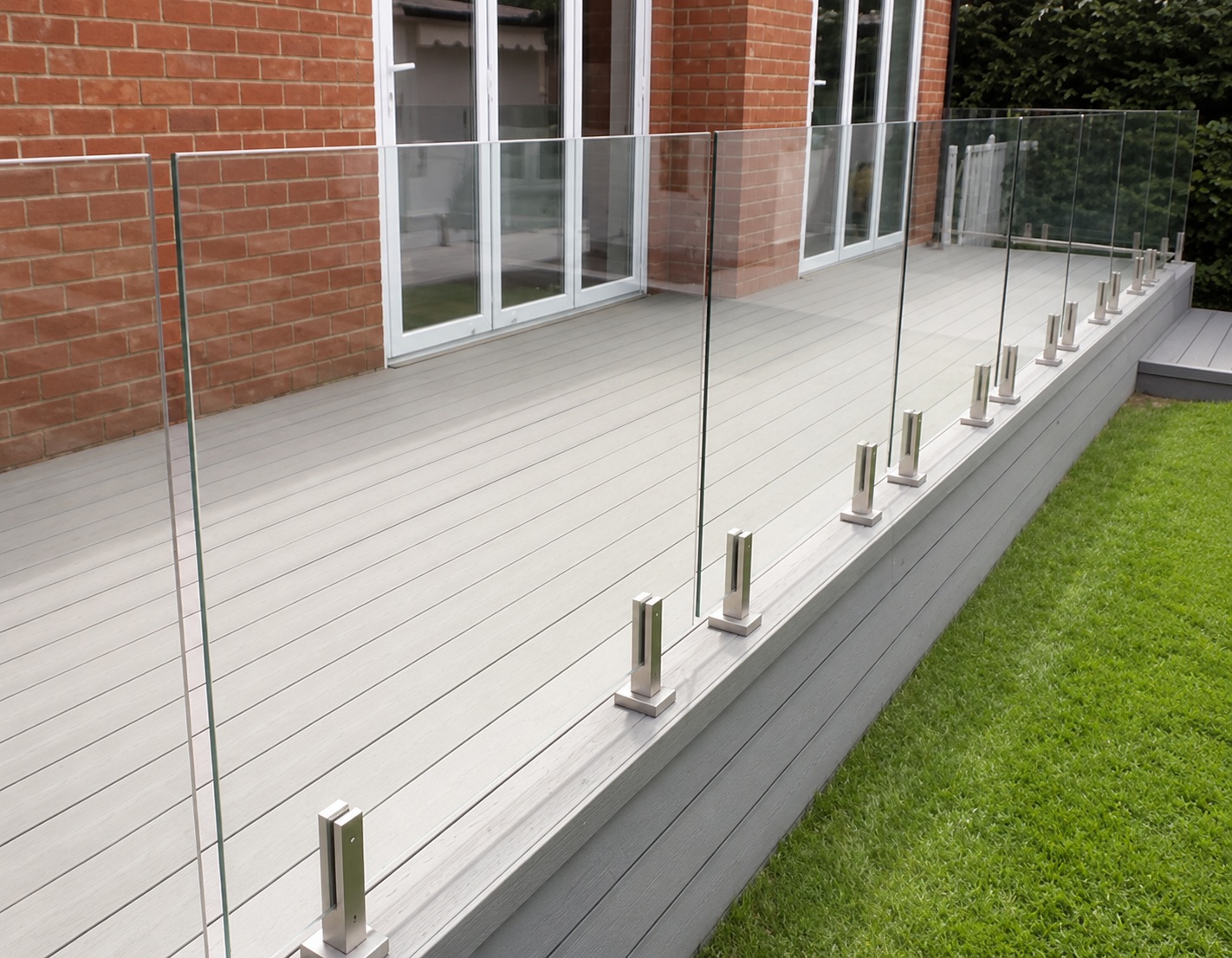
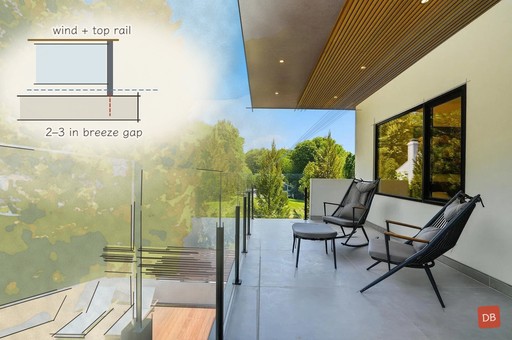
How you mount the glass changes the look just as much as color. A frameless glass railing set inside a black base shoe shows only a four-inch dark strip at the floor line. Moving to black aluminum post glass railing places slim dark posts every four to five feet. You trade an open glass edge for lighter panel weight and simpler bolt-down plates on wood joists.
Clear, Smoked Gray, or Frosted Privacy Glass?
Picking the glass sheet inside a black glass railing balances clear views, afternoon glare, and side-yard privacy. Every guard sheet still needs tempered or laminated safety glass sized to local load rules, such as 16 CFR 1201 in the US or AS 1288 in Australia.
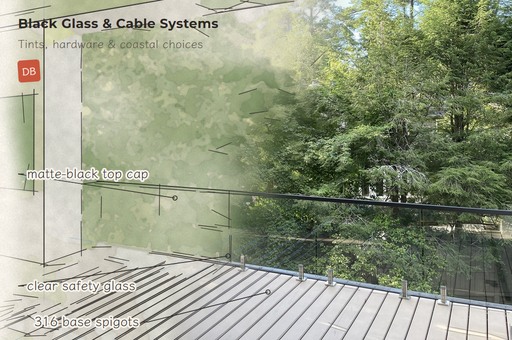
Standard clear glass shows a faint green edge where light hits polished corners. Next to silver steel, few people spot that green cast. Next to jet-black clamps or a black top cap, green edges stand out much more. Stepping up to low-iron glass strips out most of that green tint so black metal and clear glass look crisp.
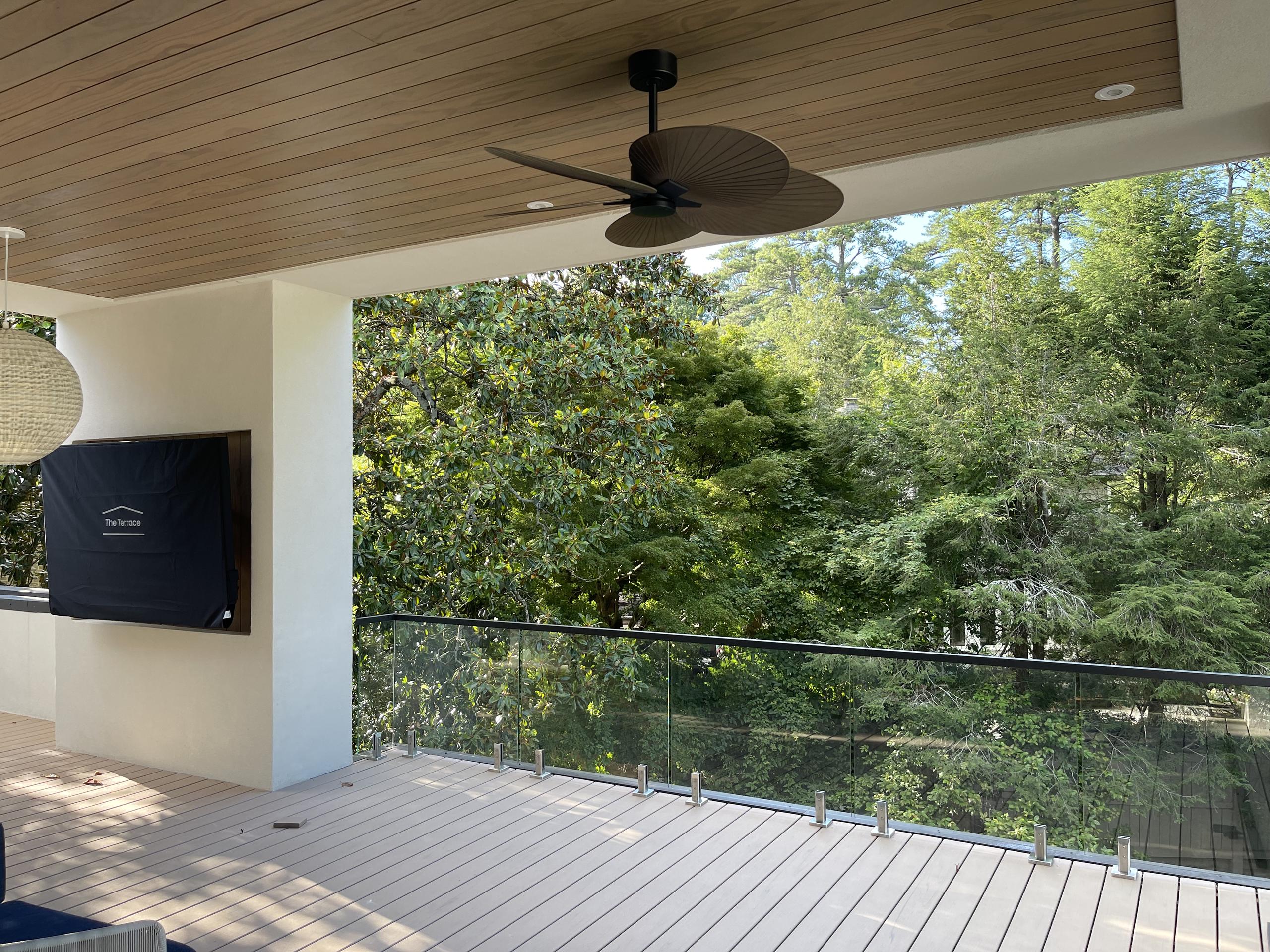
Real DBM build in Atlanta, Georgia: clear glass panels stand on steel spigots under a matte-black top rail that frames the trees while keeping the porch bright.
Smoked gray or black-tinted glass works like sunglasses on west decks and bright pool slabs. Tinted glass cuts strong water glare and hides deck chairs when seen from the street. Keep one night trade-off in mind, though. After dark, when indoor lamps glow behind you, tinted glass acts more like a soft mirror than clear glass does.
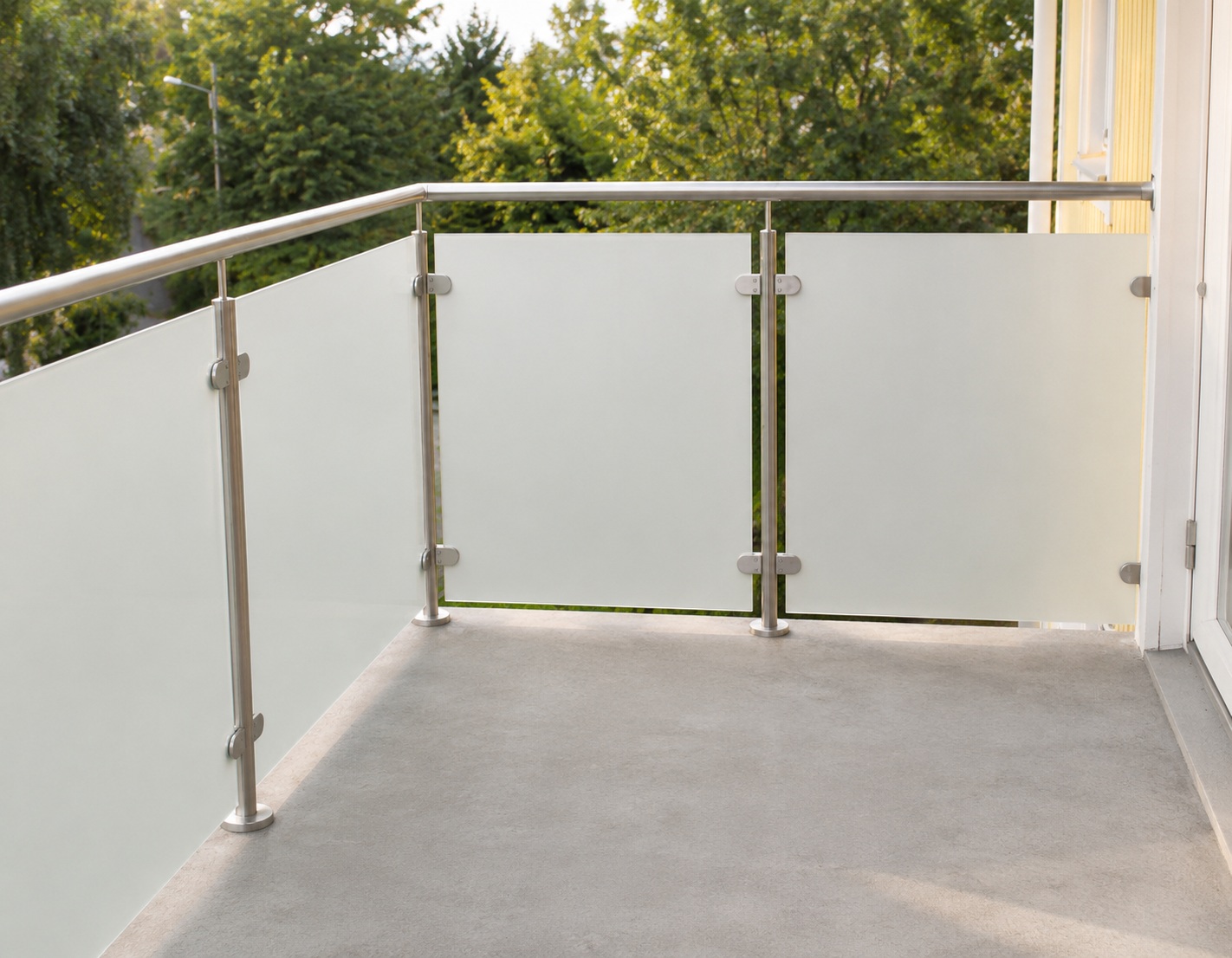
Where full neighbor screening comes first—such as side balconies or outdoor showers—tint alone is too sheer. For those runs we supply acid-etched frosted glass or back-painted panels that block views while passing daylight.
| Glass & Frame Setup | Daytime View | Glare & Privacy | Best Home Spot |
|---|---|---|---|
| Clear or low-iron glass + black posts or spigots | Full color-true open view | No screening; low night reflection | Lake, ocean, golf, and tree decks (see Atlanta project) |
| Smoked gray / black-tinted safety glass | Warm shaded cinema tone | Cuts west sun glare & softens street view | Sunny pool decks, white stucco homes |
| Frosted acid-etched privacy glass in black frame | Soft daylight; shapes blurred | Blocks close neighbor sightlines day & night | Townhome side decks, spa nooks |
| Frameless glass in matte-black base channel | Pure glass line above slab | Follows clear or tinted sheet choice | Concrete balconies, fascia-mount edges |
Black Cable Railing: Silver 316 vs. Blackened 316 Wire
Owners weighing a black glass railing against open-air guards almost always look at black cable railing next. Thin wires let summer breezes cross muggy porches and skip glass washing, while matte-black posts still match dark window trim.
In our Foshan workshop we build two proven wire setups on black posts. Your distance from salt water decides which setup holds up better over ten years:
- Coastal Standard (Matte-Black Posts + Bare Silver 316 Wire): Pairing black-coated posts with bare 316 stainless wire is our first pick near salt air or pool splash. Bare 316 wire has no dark skin to rub inside post sleeves or scratch under wrenches, and thin silver lines fade into bright water.
- All-Black Look (Matte-Black Posts + Blackened 316 Wire): For wooded inland decks, shaded porches, and indoor loft stairs, we also supply blackened 316 stainless wire. Dark wires blend right into tree trunks and deep shade where bright wire might catch sun.
Two ways to build black cable railing: bare 316 silver wire for harsh salt air versus blackened 316 wire for wooded or indoor runs.
Whichever wire color you pick, post stiffness controls cable deflection. Pulling ten or eleven wires tight puts hundreds of pounds of inward load on end and corner posts. We weld heavy base plates, check post plumb during trial assembly, and space intermediate posts so wires stay tight within code clearance limits.
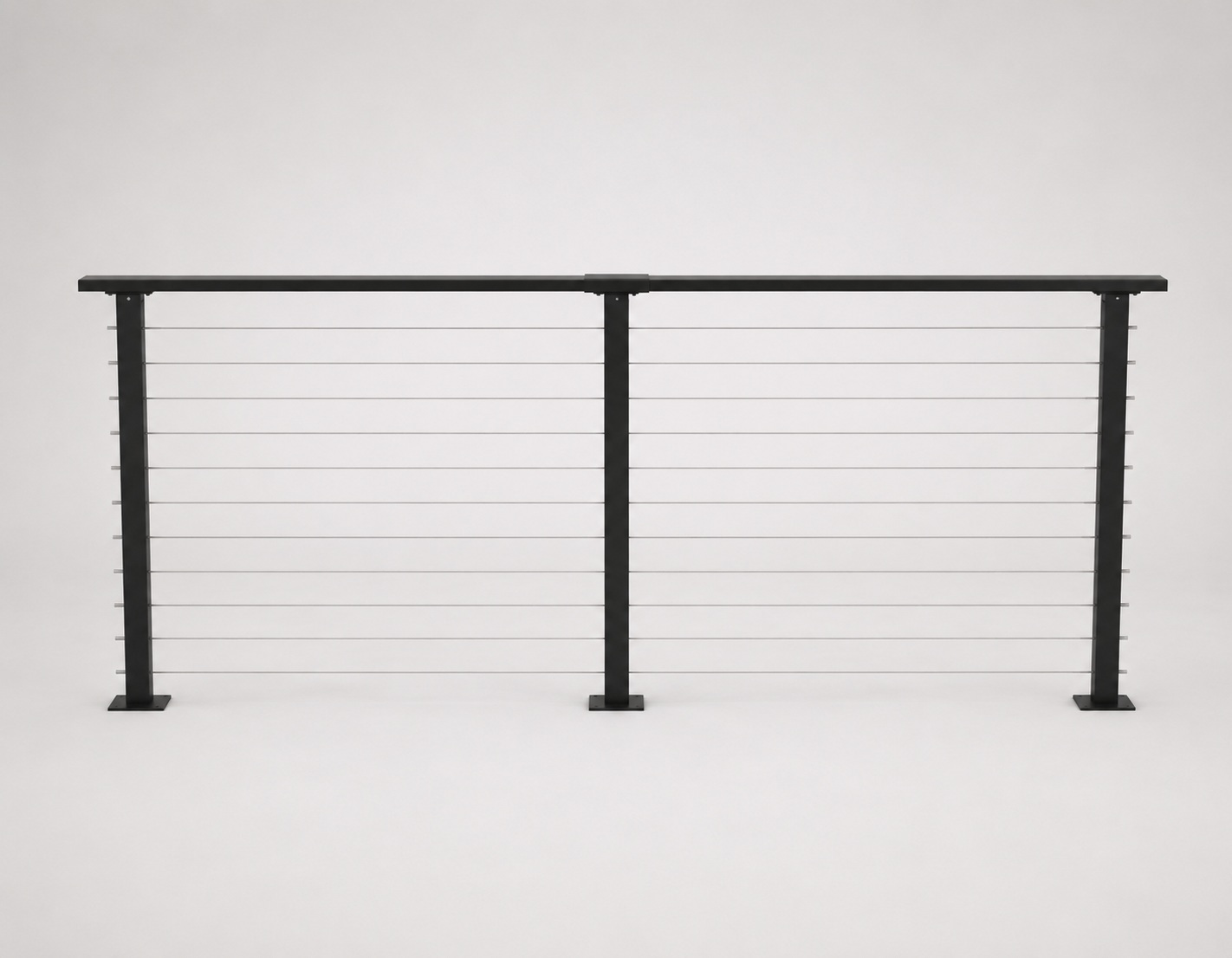
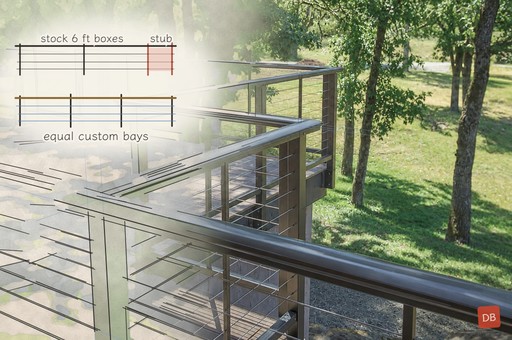
Shop-fitted black cable railing: batch-coated matte-black posts and top rail paired with bare 316 stainless strands.
Black Aluminum Pickets and Black Stainless Rods
Glass sheets and pulled wires are not the only ways to draw a crisp dark line across a deck or stair. When owners want zero wire tension checks and zero glass wiping, two stiff metal builds give the same dark look.
Outdoors on front porches, high walkout decks, and apartment runs, black aluminum railing with square pickets is the steady workhorse. Aluminum never forms red rust, adds very little dead load on wood joists, and ships coated in one batch so posts, rails, and stair panels share one sheen.
Indoors on open flights—or outdoors where you want level bars that never need wrenching—black stainless steel rod railing swaps wire for solid steel rods. Solid bars sit straight across each span without pulling hard on corner posts, making them a quiet low-care pick for busy family halls, loft landings, and breezy lake decks.
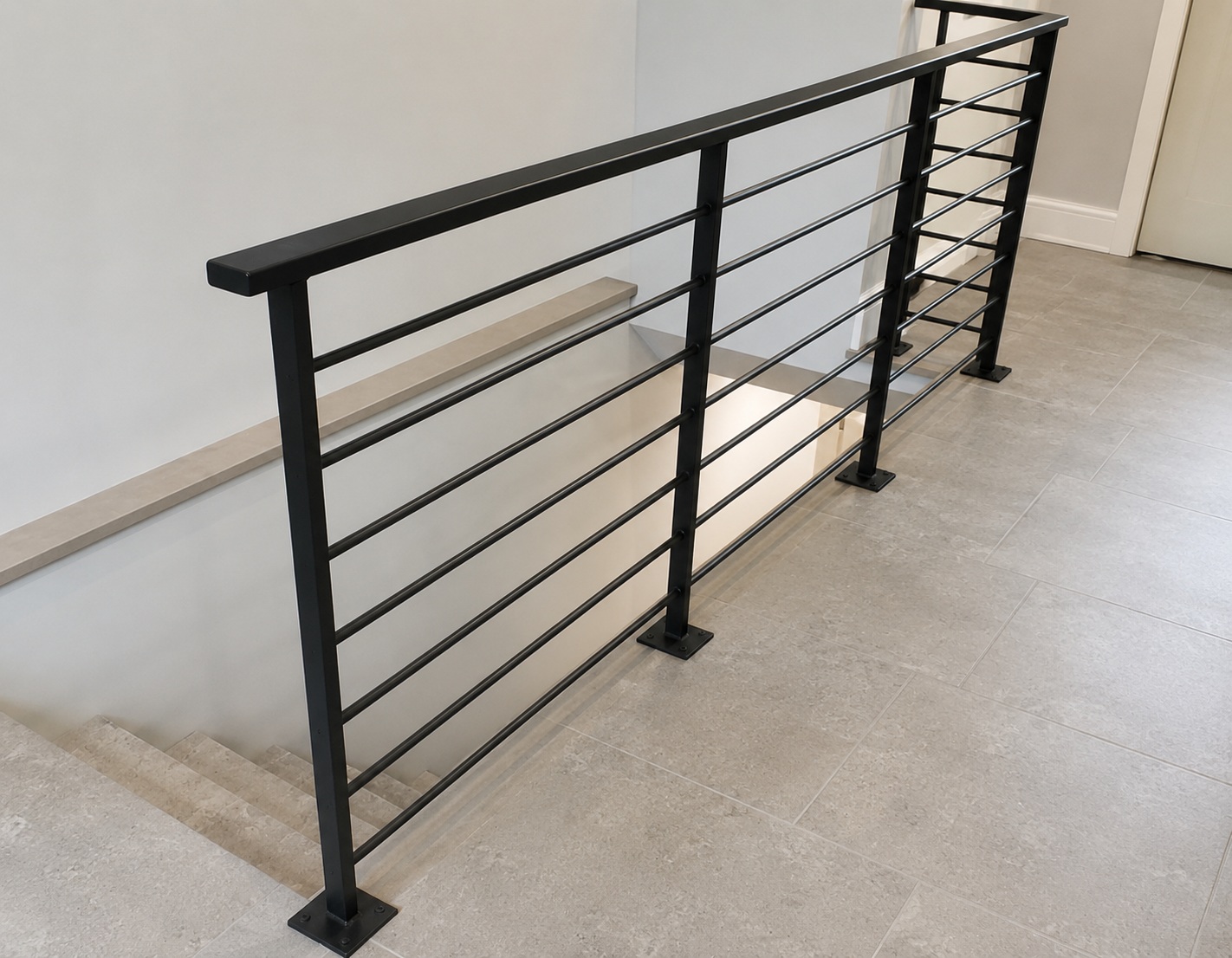
Matte-black solid-rod guard on an indoor landing: stiff bars keep a straight dark line with no tension gear.
Sun Heat, Salt Air, and AAMA Coat Grades
Dark architectural metalwork outdoors obeys unforgiving thermal physics because matte-black surfaces absorb significantly more solar radiation than white or brushed stainless finishes. On an unshaded west-facing terrace in Texas, Arizona, or Western Australia, a flat black handrail grows hot under bare palms during afternoon sun. Daily temperature swings also drive measurable thermal expansion across long continuous aluminum extrusions.
Within architectural aluminum finishing, Fenestration and Glazing Industry Alliance benchmarks—universally referenced as AAMA 2604 super-durable polyester and AAMA 2605 fluoropolymer coatings—explain why resin chemistry governs dark color retention. Standard exterior paint chalks toward faded charcoal under relentless ultraviolet exposure, and any unsealed jobsite miter cut near ocean air invites filiform corrosion beneath the protective film.
Three disciplined workshop practices keep matte-black balustrades sharp across demanding coastal climates. First, every post, top rail, and mounting bracket is cut, drilled, and welded in Foshan prior to powder-coating so raw edges cure inside a single controlled oven batch. Second, oceanfront installations upgrade to marine 316 stainless hardware or coastal-pretreated aluminum extrusions, detailed inside our coastal railing climate guide. Third, homeowners rinse dried salt crystals and sunscreen residue from dark frames and glass panels with plain fresh water, following the routine in our glass railing maintenance guide.
Counter-Questions: When Not to Pick All-Black
Before you mark every balcony and stair run matte black, test your house plan against three honest counter-questions so trade-offs show up on paper first:
1. When not to put a wide flat black metal cap around a sunny pool? If kids and barefoot guests grip the stair rail at 2 p.m. in July, bare dark metal feels hot. Instead of dropping the black theme, top black posts with a white oak or teak wood rail, or run capless frameless glass on base spigots around the pool.
2. Are you placing dark smoked glass in front of a prized night view? Smoked glass looks sleek from the yard at noon, yet trade-offs show up at dusk. Indoor ceiling lights turn dark glass into a dim mirror unless yard lights shine outside. Pick clear or low-iron glass in black hardware when harbor or city lights matter at night.
3. Do lawn sprinklers spray hard well water onto the deck edge? Lime drops dry into white rings that show ten times faster on matte-black posts and dark glass than on brushed steel. Unless sprinkler heads turn away from the guard, mineral water turns dark bottom rails into a weekly wipe-down job.
Black Glass & Cable Railing Ordering FAQ
Does a black glass railing use dark tinted glass or clear glass?
Most builds pair clear or low-iron safety glass with matte-black posts, spigots, standoffs, or a black base shoe. We also make smoked gray or black tinted glass and frosted privacy glass when sun control or screening is needed.
Is black cable railing safe to use near the ocean?
Yes, with the right metal mix. Near salt spray we pair marine-coated black posts with bare 316 stainless wire for best corrosion life. We also supply blackened 316 wire for inland, wooded, or covered porch runs.
Does matte-black railing show salt and dust more than silver steel?
Yes. White salt mist, pollen, and hard-water spots stand out more against matte black than brushed steel, so a quick fresh-water rinse helps. Coating parts after cutting and welding seals every edge, and we pack touch-up finish for small site scuffs.
Can one order mix black glass on the main deck with black cable or pickets on side steps?
Yes. Building both runs in one factory lets us coat your posts and rails in the same matte-black batch so color and sheen match from the main balcony down the side stairs.
Who installs custom black glass or cable railings once crates arrive?
We draw shop drawings, fabricate, trial-assemble on our Foshan floor, and ship numbered crates. In the USA, Australia, and Canada, our crews and partner installers offer nationwide fitting (quoted separately), or your builder installs from our drawings while your local office signs off code.
Ready to compare dark railing builds for your deck, stair, or balcony? View our Black Aluminum Glass Railing, Black Cable Railing, Black Aluminum Deck Railing, and Black Stainless Steel Rod Railing, or send your run lengths for shop drawings.
Double Building Materials draws, builds, trial-assembles, and crates custom glass and metal railings in our 4,500 m² Foshan workshop (25+ years, 800+ projects, 60+ countries). Our own crews and partner installers cover the USA, Australia, and Canada nationwide (quoted separately), or your contractor fits the run from our shop drawings while local authorities sign off code.
Request Black Railing Shop Drawings →