

Square-Tube Stair & Standoff Glass Railing, Atlanta GA | DBM
Home / Project / USA / Atlanta Square-Tube Staircase & Glass Railing
Project DBM24071804 · Atlanta, Georgia · Staircase & Glass Railing
Ash Treads on a Square-Tube Spine, With Standoff and Spigot Glass Railings
One steel spine carries solid ash treads through a bright Atlanta hall, with a standoff glass railing pinned to the tread ends. Outside, clear glass on the balconies and decks keeps the trees in view.
By Double Building Materials — the staircase & railing manufacturer in Guangdong, China that drew, made and crated this staircase and its glass railings. Written from our project record and the site photos. Published October 2026.
The Project at a Glance
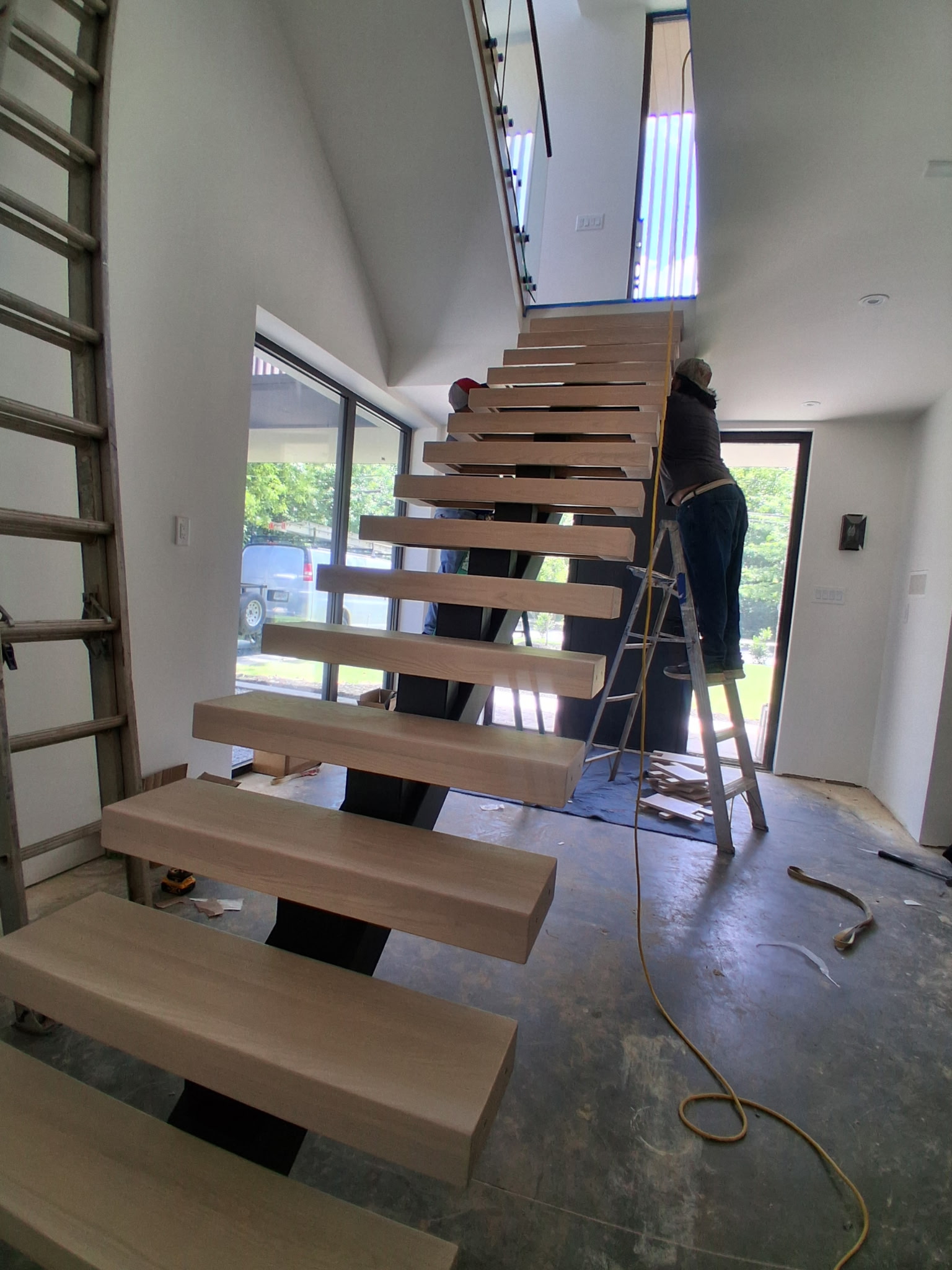
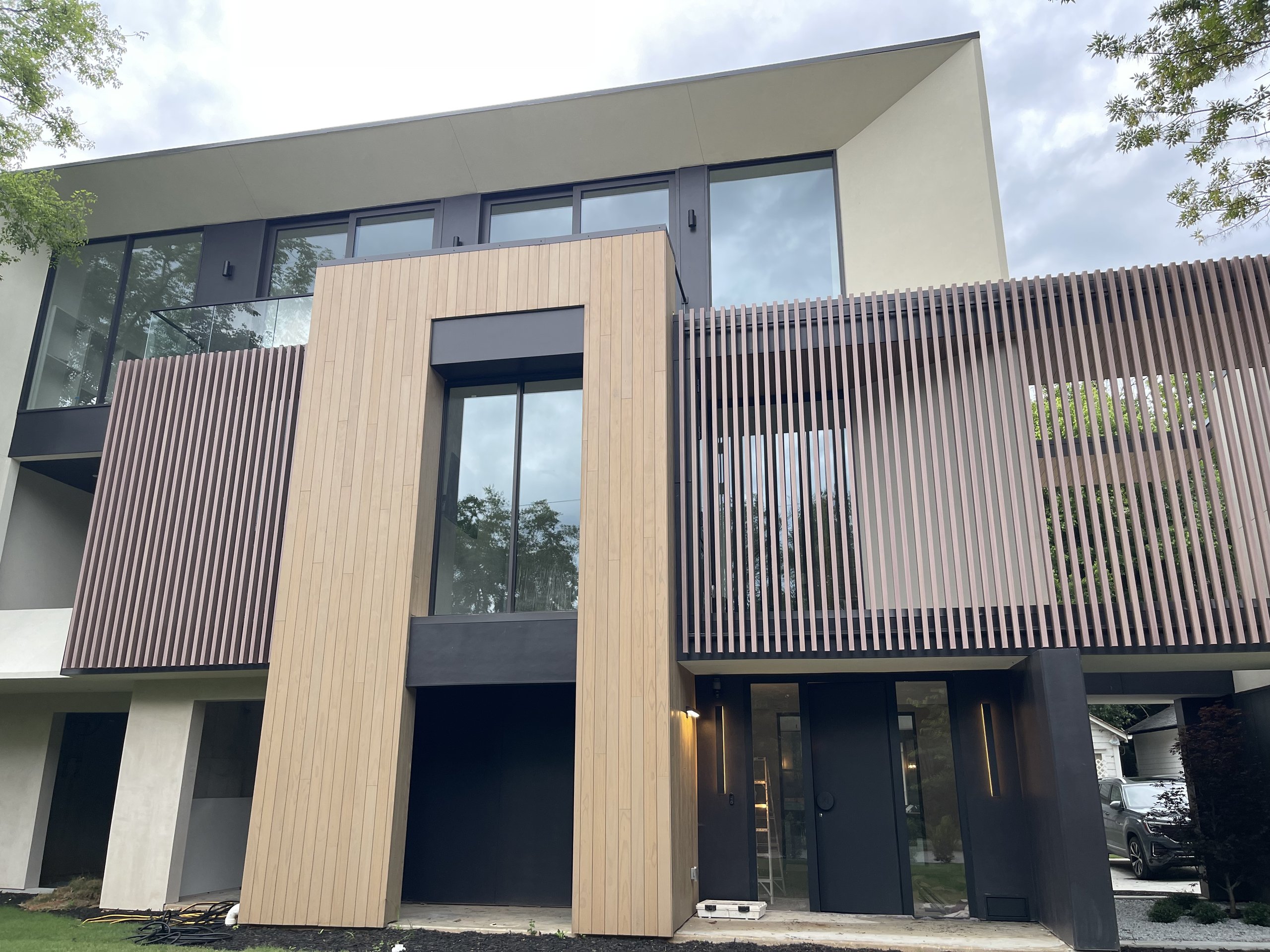
A square-tube staircase and glass railings for a modern home in Atlanta, Georgia. Solid ash treads sit on one steel spine, and glass is pinned to the tread ends. Outside, pinned glass guards a large opening, and spigot glass railing lines the balconies and covered decks. Double Building Materials drew, made, trial-assembled and crated it in Guangdong, China.
The Challenge
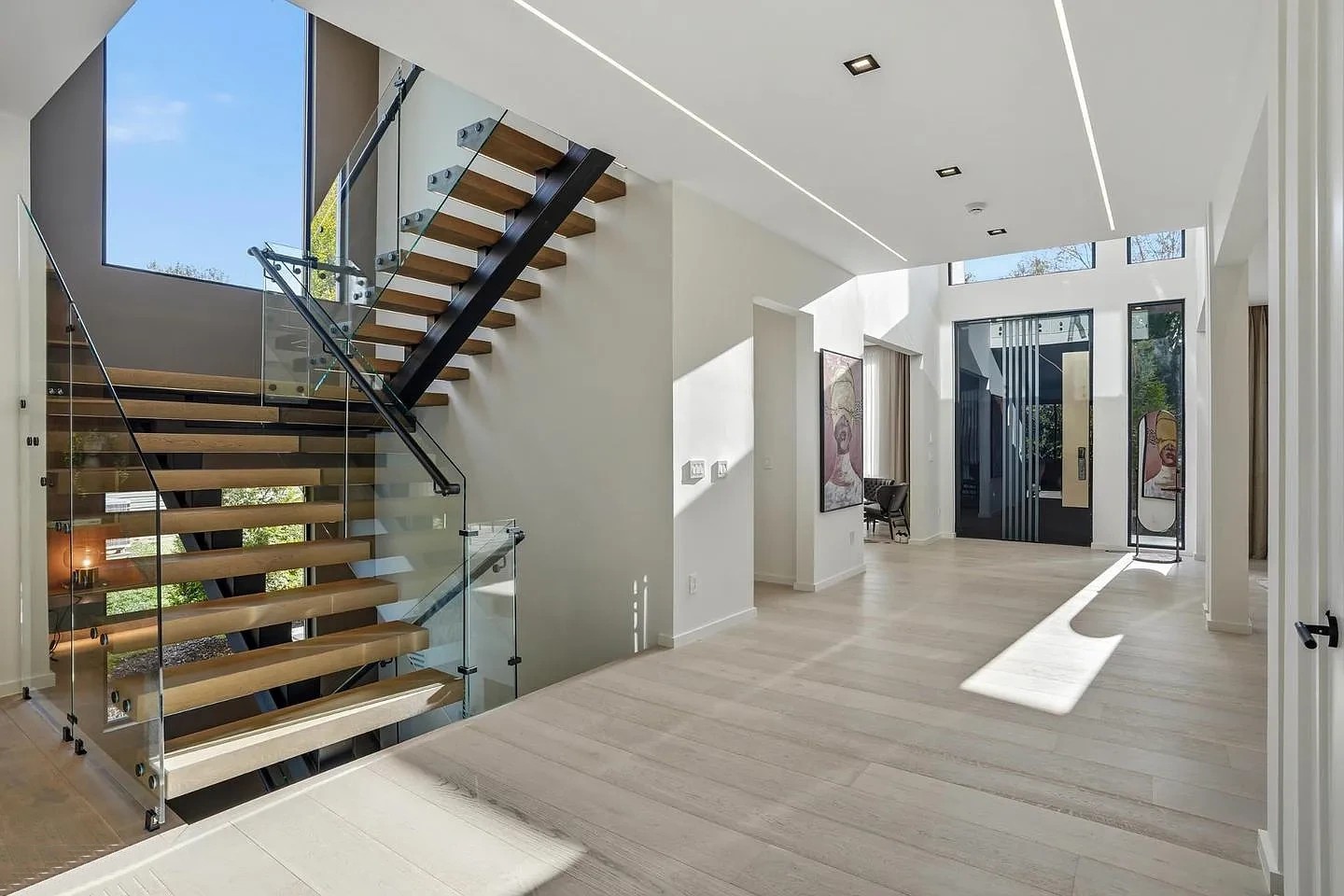
The stair stands in a tall, bright hall with large glass openings to the garden. Its treads ride on a single square tube with open gaps between them, so light passes straight through. With no side stringer along the flight, the glass has to hold on to the treads themselves.
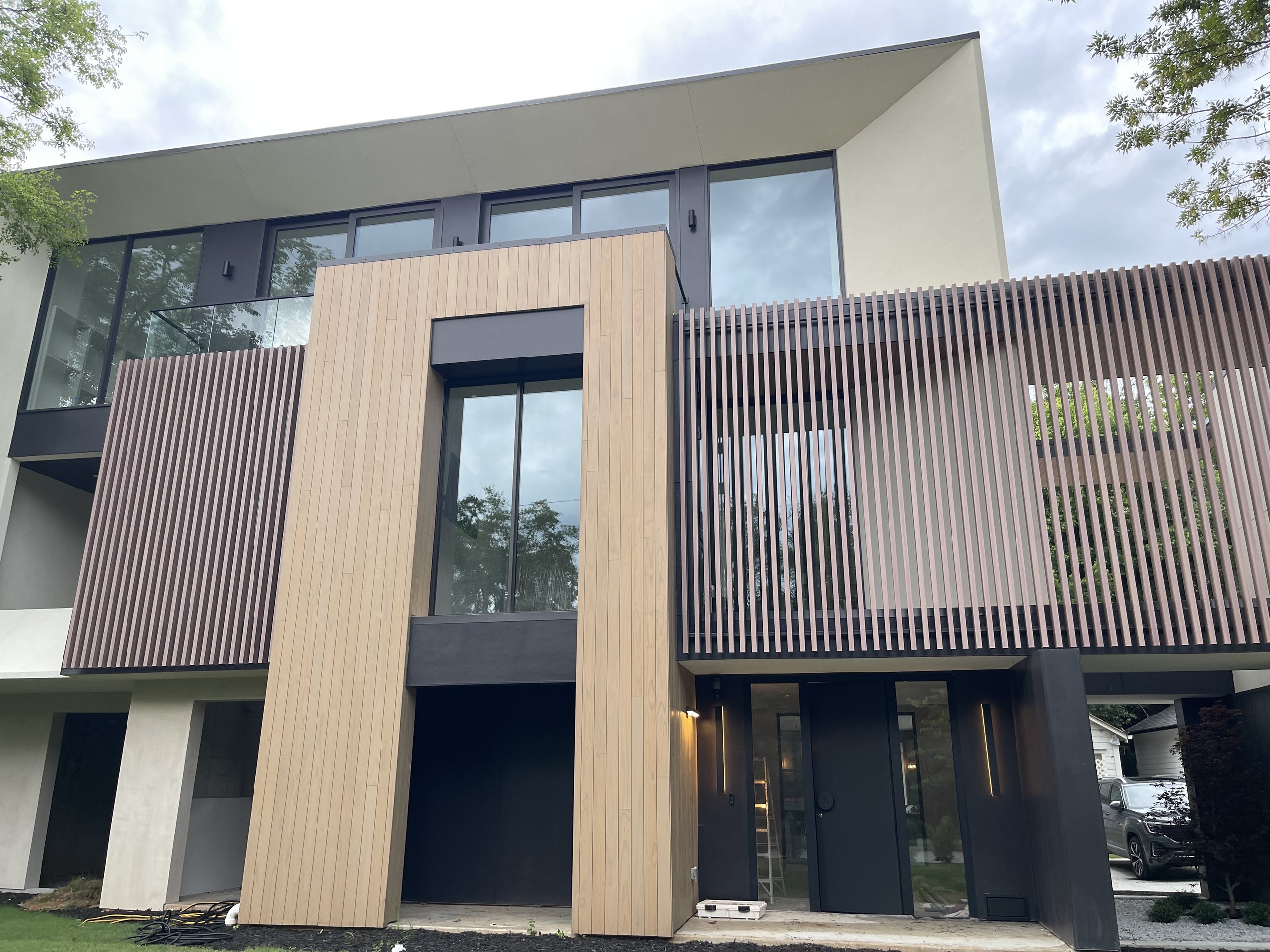
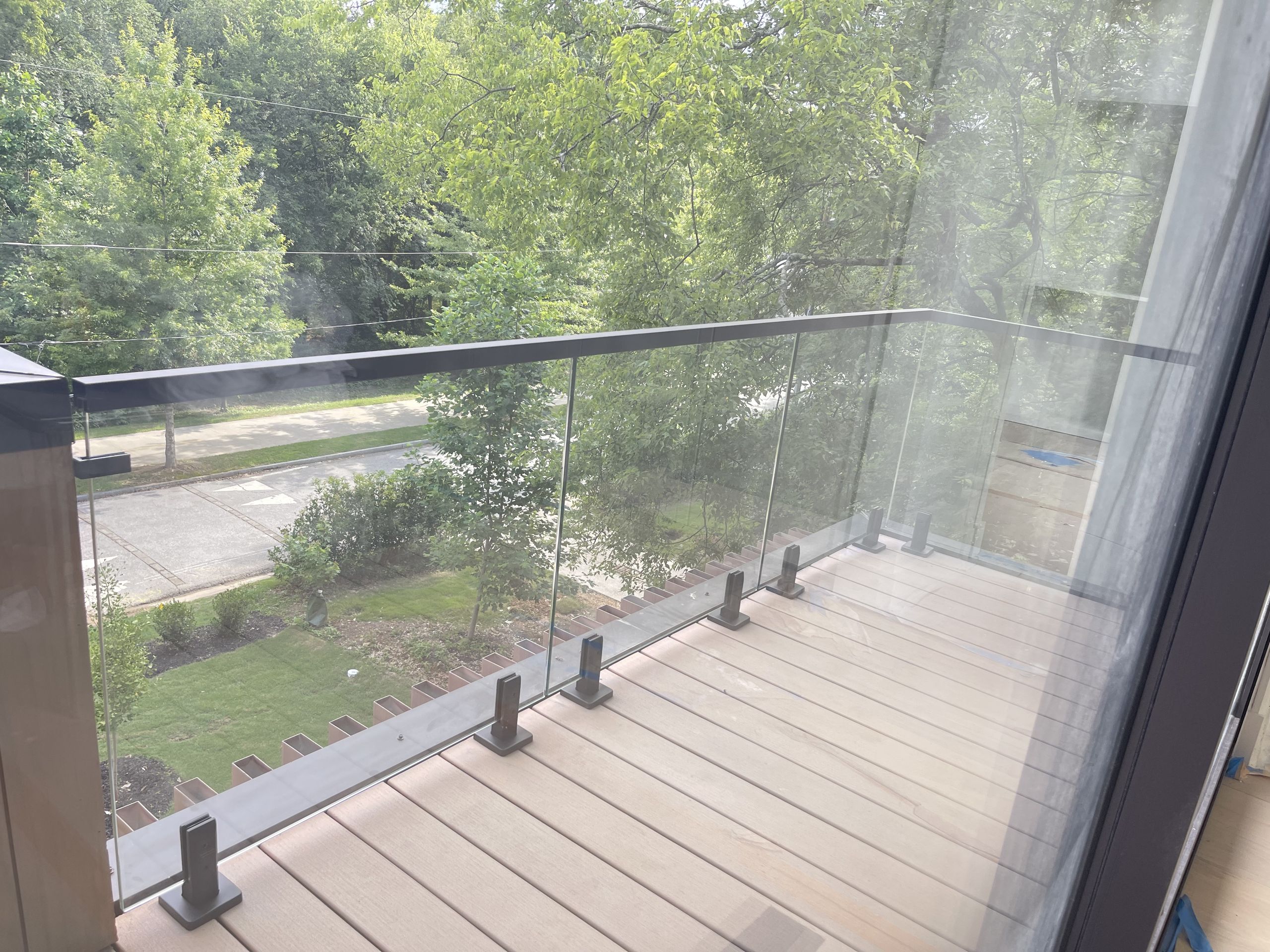
The house also has glass edges in different places: along the stair inside, and outside across a large opening and on balconies and covered decks that look out over tall trees. Indoor glass deals with hands and passing shoulders, while outdoor glass deals with rain, sun and wind.
And it all has to read as one house, with clear glass and dark metal from room to room, while each edge uses the fixing that suits it.
The Brief, as Built
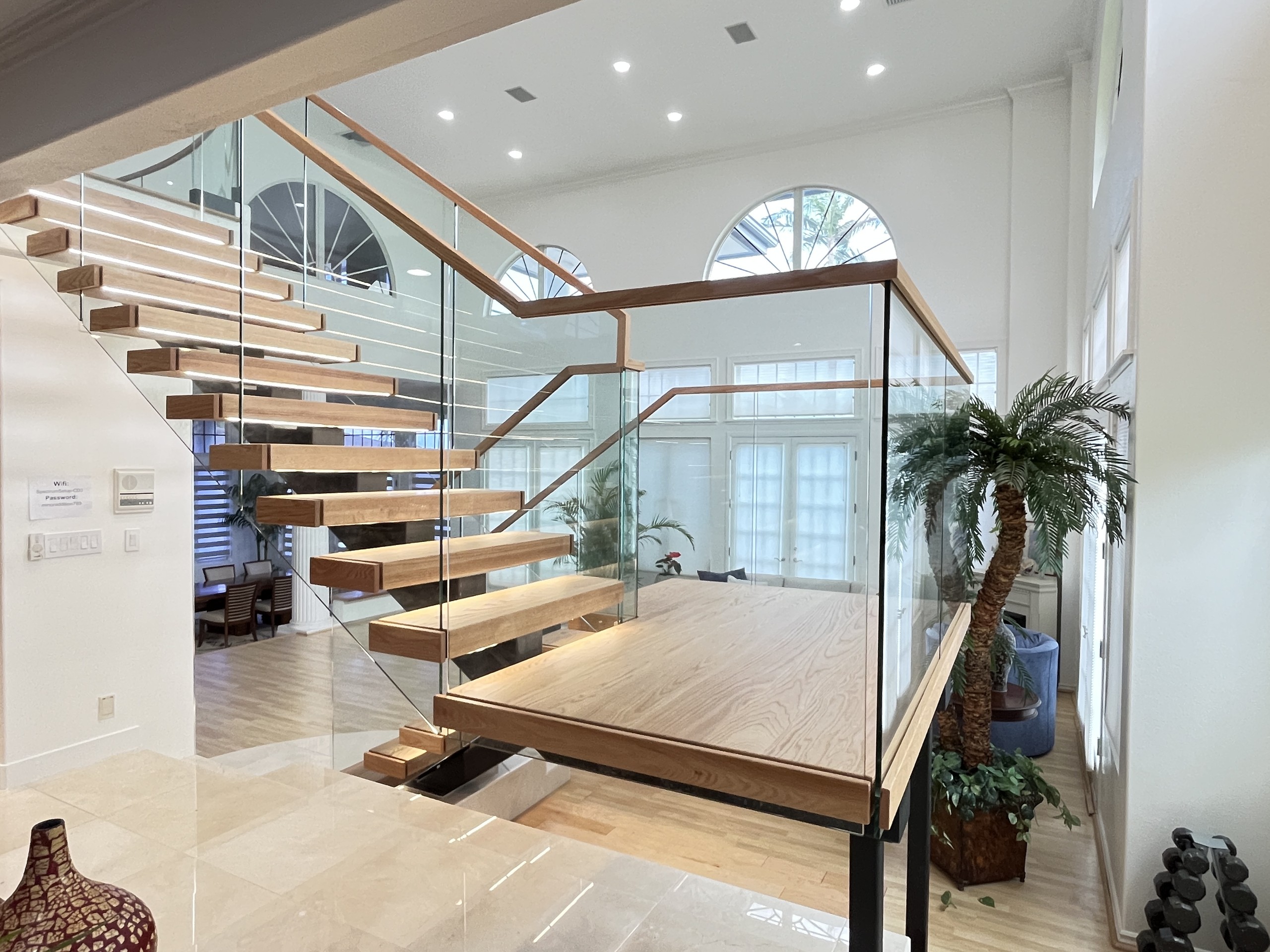
A straight square-tube staircase with solid ash treads and open risers. Along the stair, glass pinned to the tread ends with two pins at each tread, under a black top rail. Outdoors, the same standoff detail guards a large opening, this time with bright metal pins, and frameless glass on short spigots with a black top rail lines the balconies and decks. Our straight staircase guide covers the basics of this layout.
Inside a Square-Tube Stair With a Standoff Glass Railing
A square-tube stair looks simple: one steel beam, a row of treads, and glass on pins rather than posts. The diagram takes one typical step apart, lights each part in turn, and then shows how the load travels to the floor.
Inside a square-tube stair with standoff glass
Taken apart at one tread: each part lights up in turn.
↓ top rail
↓ glass
↓ pins
↓ treads
↓ spine
↓ floor & landing
Put together: one straight flight, glass pinned to the tread ends.
A typical square-tube stair and standoff section, for illustration. The exact tube size, plates, glass make-up and pins on any project come from its own drawings.
- Square-tube spine. A steel square tube runs under the middle of the treads, from the floor to the landing, and carries the whole flight. Because you can see it, this is a mono-stringer stair, and our mono-stringer staircase guide explains the type.
- Tread plate. A steel plate on top of the spine under each tread, which sets the height and level of every step.
- Ash tread. Solid ash, a pale hardwood with a strong grain. Here the treads are thick blocks, and their ends are where the glass is fixed.
- Bolt and spacer. The standoff itself: a bolt into the tread end, with a short metal barrel that holds the glass a little way off the face. This stair has two at each tread.
- Glass panel. Safety glass with holes for the pins, drilled before the glass is tempered, because tempered glass cannot be drilled afterwards.
- Cap. A round cap clamps the glass against the spacer, and on this stair the black caps read as a neat row of dots.
- Top rail. A black rail along the top edge of the glass ties the panels together and gives the hand a line to follow.
Put together, the load runs from the top rail through the glass, pins and treads, and down the spine to the floor and the landing. Your engineer confirms each link on your own project.
Standoff or Spigot? Two Ways to Hold Glass
This house uses both, so it shows the difference well. A standoff glass railing fixes to the side of the structure, such as the tread ends here or the face of a slab, beam or wall. A spigot glass railing stands on top of the floor, on short metal posts that clamp the bottom edge of the glass.
| Standoff pins | Spigots | |
|---|---|---|
| Fixes to | The side of the treads, a slab or a wall. | The top of the floor or deck. |
| Floor space | The walking surface stays clear. | Small bases sit on the floor. |
| Look | A row of round caps. | Short posts at the foot of the glass. |
| Used here | The stair indoors, and a large opening outdoors. | The balconies and covered decks. |
The right choice depends on what the edge is made of and how much floor you have. A stair with open risers has no side beam, so pins into the tread ends make sense, while a deck has a solid surface for spigots. Our guides compare spigot vs channel glass railing and the main railing mounting methods.
Glass Indoors and Outdoors
Indoors, the glass sees fingerprints, daylight and the odd bump from a bag, so pins can sit right against finished wood, and a soft cloth with a mild glass cleaner keeps it clear.
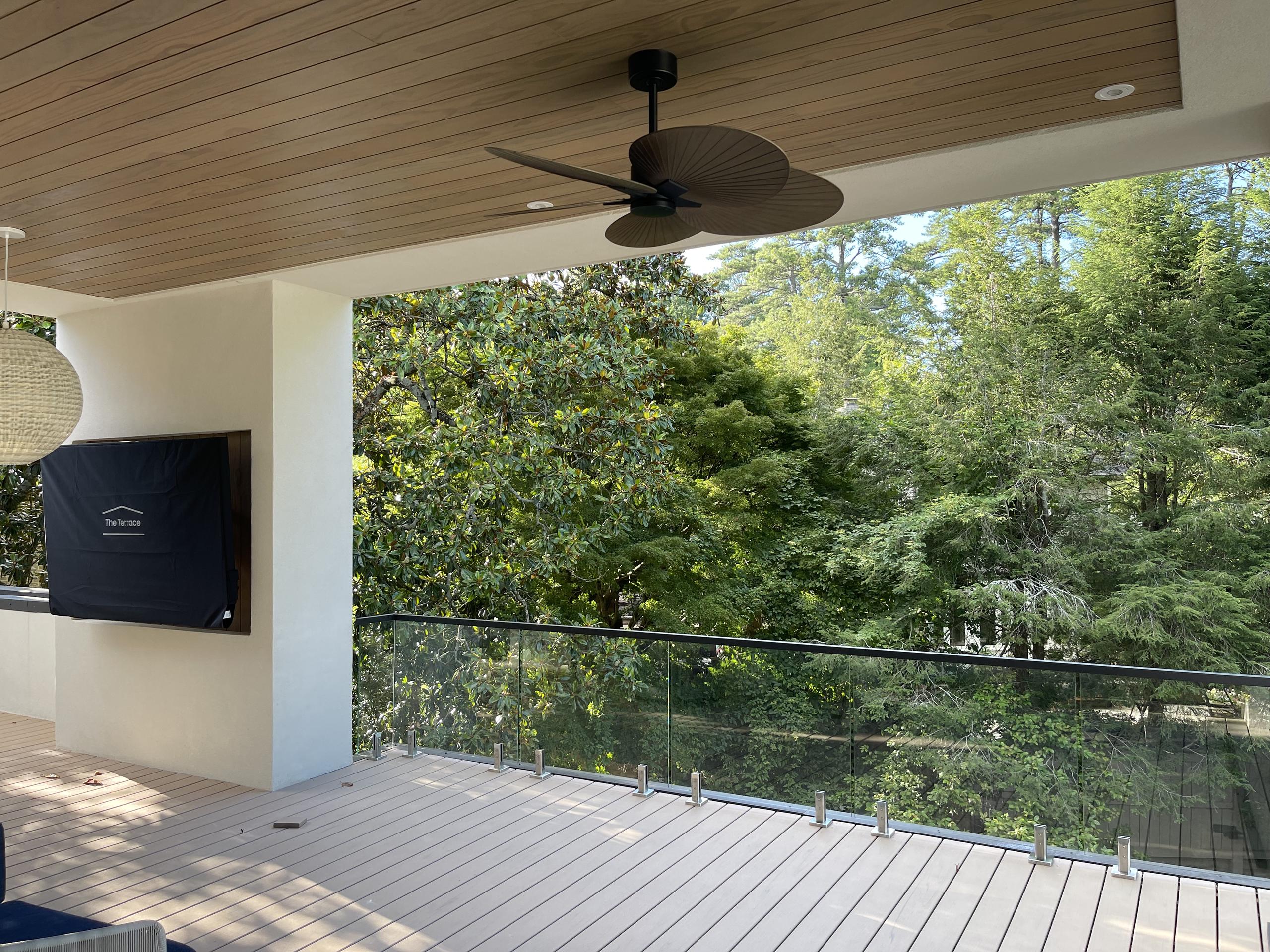
Outdoors, it sees rain, sun and wind, so the hardware needs a finish made for the weather and each spigot needs solid structure under the deck boards. On this house the balcony spigots are dark and the covered-deck spigots are bright metal, both under a black top rail. Our guides to railings for coastal and humid climates and how to clean glass railings cover finishes and care.
Glass Guard Basics in Georgia
Georgia’s residential code is now the 2024 International Residential Code with Georgia changes, in force since January 1, 2026, with guards in Section R321 and stairs in Section R318.
A guard is needed where a floor, stair, balcony or deck is more than 30 inches above the floor or ground below, and it must be at least 36 inches high. On the open side of a stair, the minimum is 34 inches, measured from the line of the tread nosings. No gap may pass a 4-inch ball, a rule that also covers open risers more than 30 inches up, and guards are designed for a 200-pound load at the top.
Glass in a guard always counts as safety glazing. When the glass panels themselves carry the guard, as they typically do with standoffs and spigots, the code asks for an attached top rail. The exception is laminated glass made of two or more layers of equal thickness. Our drawings reference these rules so your engineer or building department can confirm them, and the code edition on your permit decides what applies.
From Drawing to Site
Drawing-First Coordination
Drawing-First Coordination means we draw the stair and every glass panel, and you approve the drawings, before we cut anything. On a standoff stair, the drawings place each pin hole in the glass and each fixing point in the tread ends, since a hole cannot move once the glass is tempered. The same drawings set the outdoor panels and the spigot spacing.
Trial Assembly Before Packing
Trial Assembly Before Packing is our standard. We fit the spine, plates and treads together in our Guangdong workshop and check the glass and pins against the tread ends, so the holes line up on site. Then we take it apart and label every piece to its place in the flight.
Export-Ready Crating
Export-Ready Crating means the glass travels in braced crates with protected edges, while the steel, treads and fittings ship in their own labelled packs. This order reached Atlanta in a shipping container, parked at the street with a telehandler on hand for the unloading.
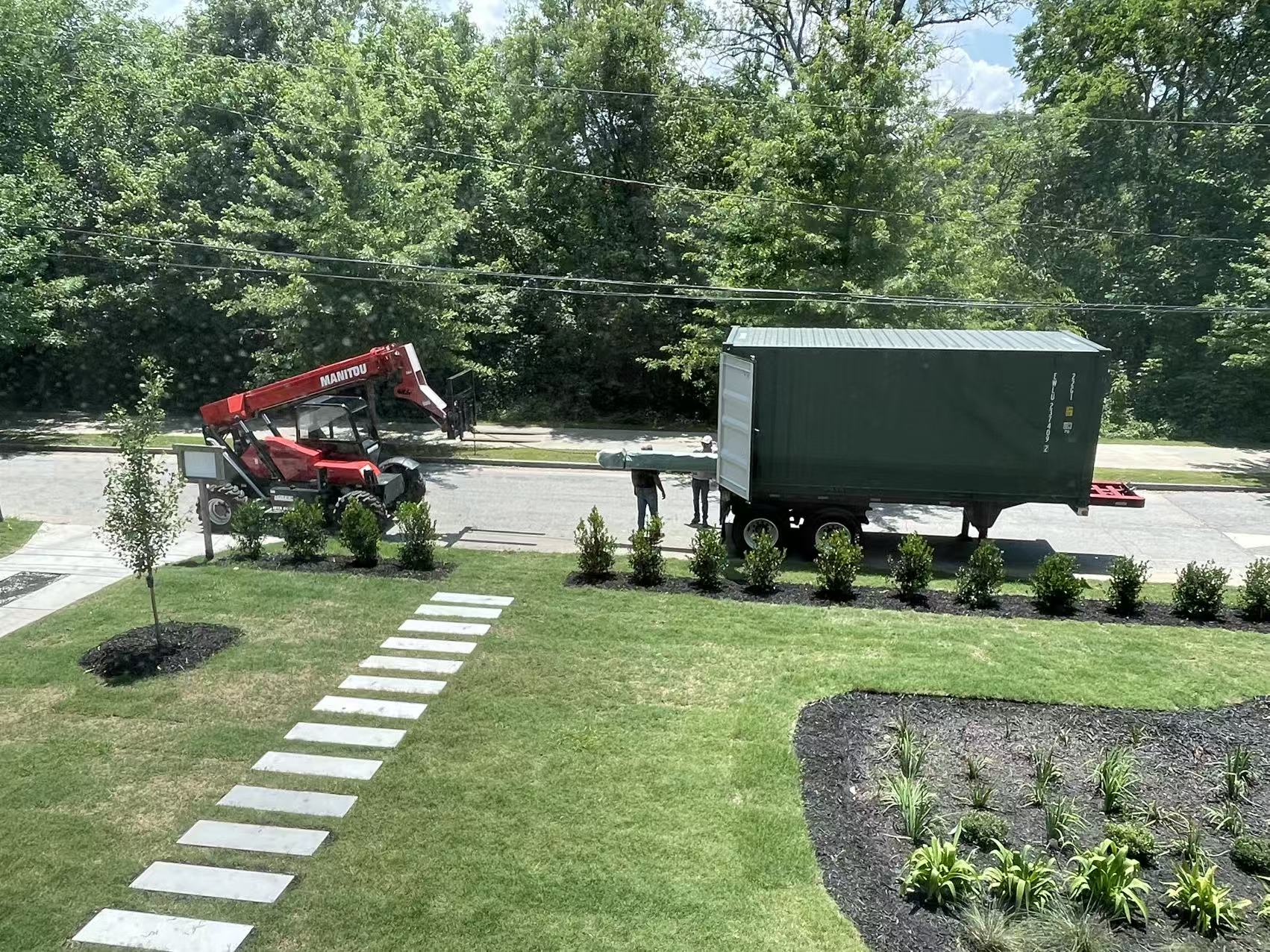
Double Building Materials draws, makes, trial-assembles, crates and ships. In the US, our installation team or your own contractor fits the stair and railings on site.
Installation in the US
In the United States, we can also install the stair and the glass for you. The crew fixes the spine, bolts the treads to their plates, hangs the glass on its pins and fits the top rail. If you prefer your own contractor, we send assembly drawings and a step-by-step guide with the crates. Tell us the project location with your drawings, and we will confirm the options for your site.
What the Site Photos Show
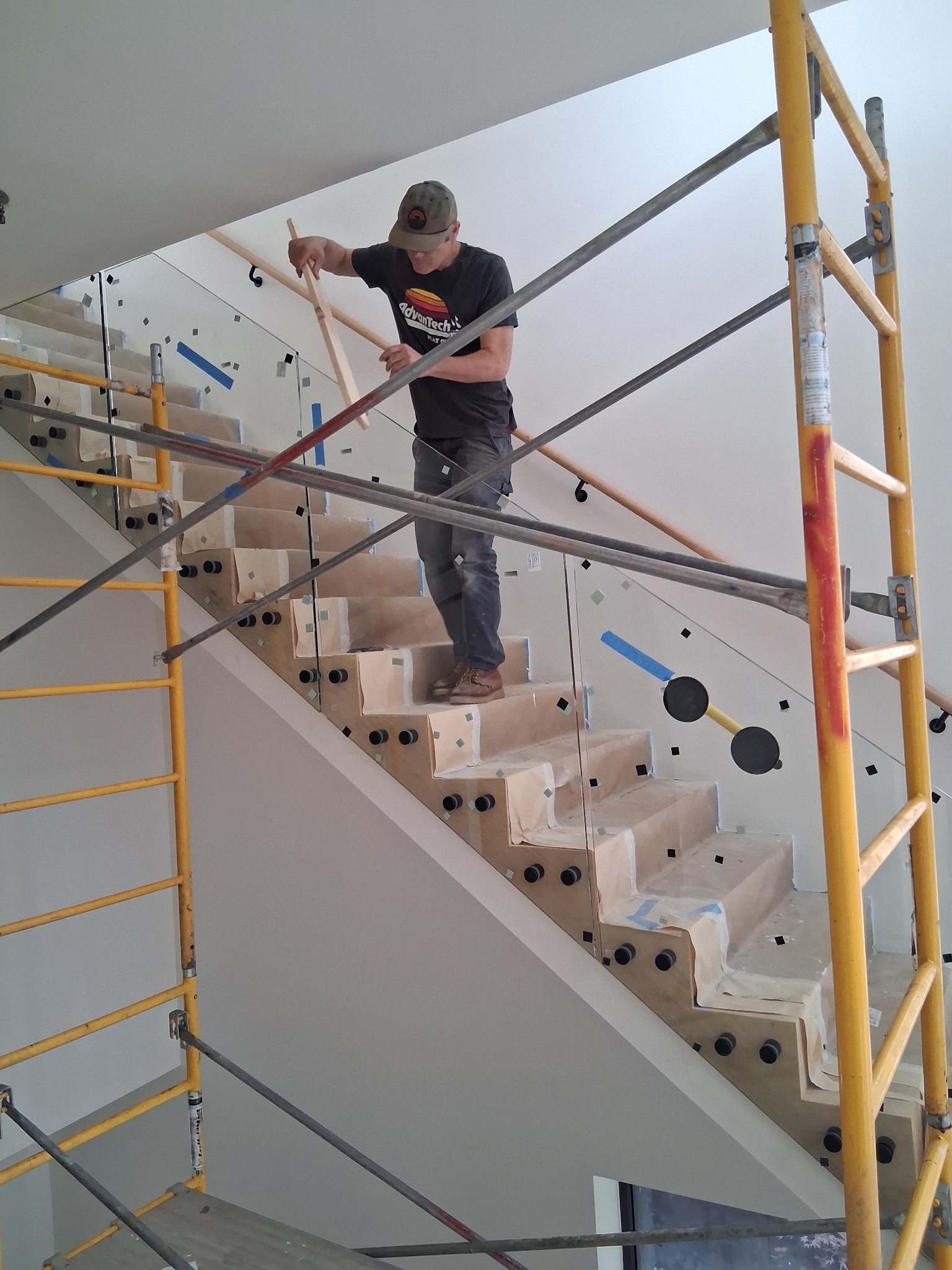
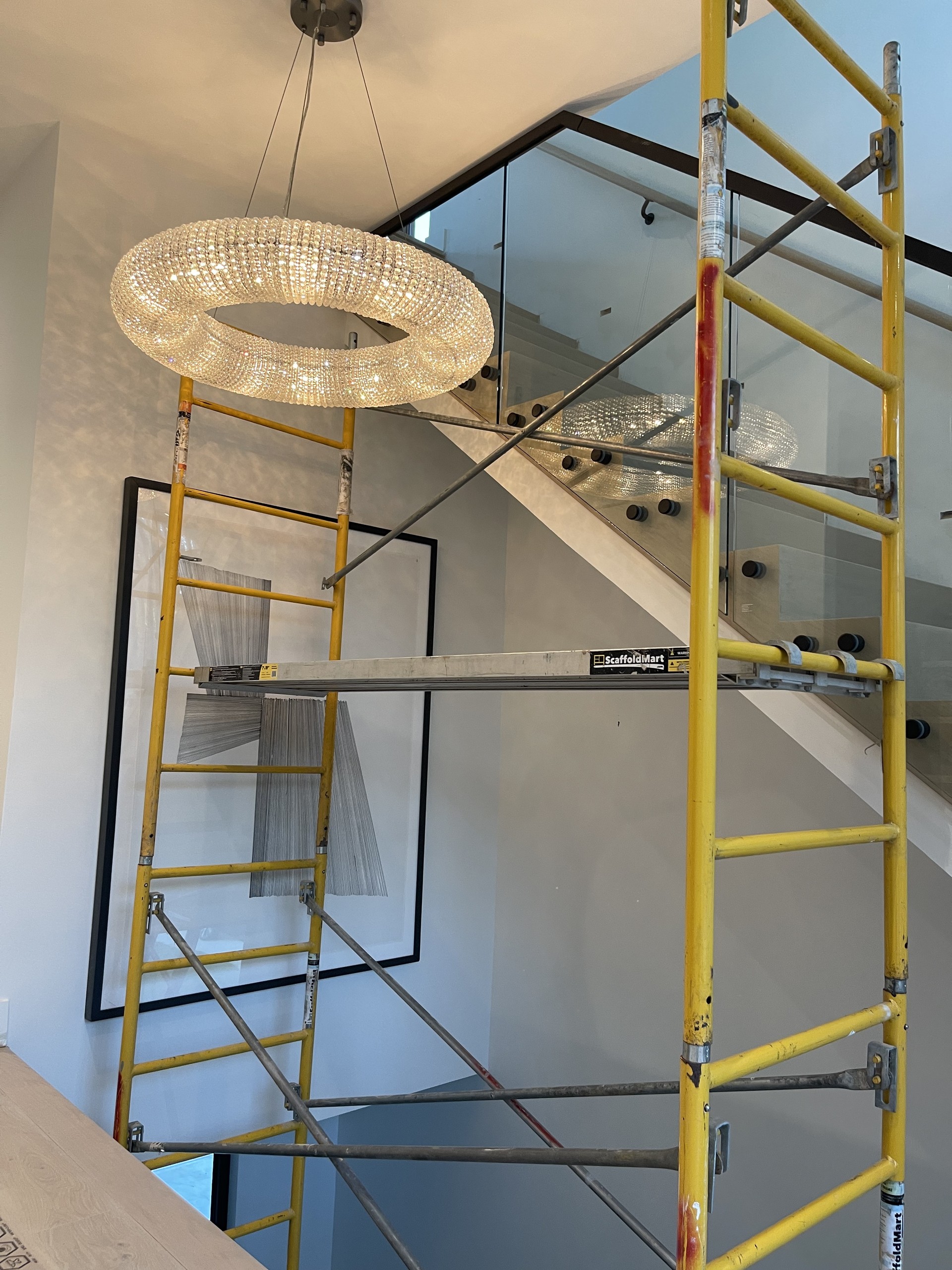
The photos were taken while the house was still being finished, with papered floors, a scaffold in the hall and tape on the glass, so the railing is easy to read on its own.
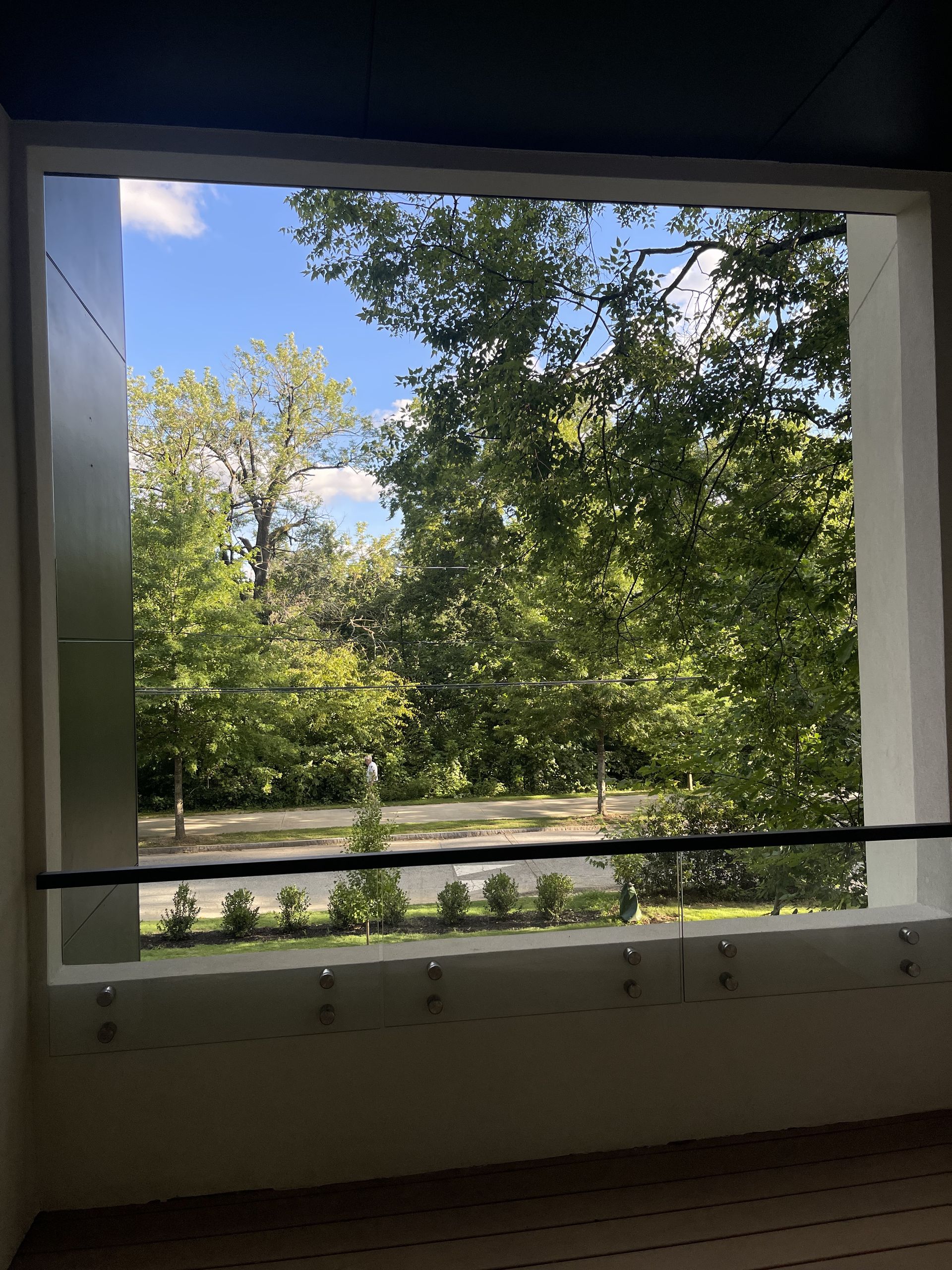
On the stair, two black pins sit at each wrapped tread end, and a round wood handrail runs along the wall. Outside, glass on bright metal pins frames the street trees across a large opening, and short spigots and a black top rail are all that stand between the decks and the trees.
Frequently Asked Questions
Is a square-tube staircase a floating staircase?
No. You can see the steel beam under the treads, so it is a mono-stringer stair. A floating staircase hides its support in the wall, so the treads seem to hang in the air. Our guide to mono beam vs center stringer stairs shows where the single beam can sit.
Can a standoff glass railing go outdoors?
Yes. This house has one: the glass guard across a large outdoor opening is pinned with bright metal standoffs. Standoffs are used on balconies and decks too, fixed into the face of a slab or beam. Outdoors, the hardware finish and water at the fixings need more care, and your engineer confirms the edge can take the pins.
Does a glass stair railing need a top rail?
In most cases, yes: Georgia’s residential code asks for an attached top rail on glass that carries the guard, unless the glass is laminated from two or more layers of equal thickness. This stair has a black top rail. Our tempered glass railing guide explains the glass types.
What should I send for a quote?
Send floor plans, the floor-to-floor height, photos of the space and where each glass edge goes. Our guide on what to send a staircase manufacturer lists the details. We price each project from its drawings and do not publish a price list.
Planning a square-tube stair, or glass edges inside and out?
Send Us Your Plans for a Drawing Review →Related Projects
Related Products
See the full standoff glass railing and spigot glass railing ranges, or all our glass railing systems.
Other Products
More from the same factory — drawn, trial-assembled and export-crated the same way.