




Floating Stairs vs Regular Stairs: Cost, Look, Code and Build Compared
Floating Staircase · vs Regular Stairs
Floating Stairs vs Regular Stairs: Cost, Look, Code and Build Compared
In floating stairs vs regular stairs, the difference is the support. A regular stair shows a stringer on each side and usually closes the risers. A floating stair hides that support in concealed steel and leaves the risers open. That single change ripples through the cost, the look, the engineering, and the code detailing.
A regular staircase and a floating staircase do the same job, yet they are built in almost opposite ways. One shows its structure and the other hides it, and everything else follows from that. This guide compares floating stairs vs regular stairs across the decisions that actually matter, cost, look, engineering, and code, then sets out when each one makes sense. By the end you should know which suits your home, your budget, and the way you want the space to feel.
The Core Difference
A regular staircase carries its load on visible stringers and closes the gap between treads with a solid riser. It is simple, familiar, and the least expensive way to move between floors. A floating staircase moves that same load into a concealed structure and leaves the risers open, which is what produces the floating appearance.
Everything that separates the two follows from that one decision, so it helps to compare them directly rather than feature by feature. Hide the support and open the risers, and the stair needs more steel, more engineering, and more careful code detailing, in exchange for an open, light, modern look. Keep the support visible and the risers closed, and the stair stays simple and affordable, at the cost of that openness. The rest of this guide puts numbers and detail behind that trade.
Floating Stairs vs Regular Stairs: Side by Side
| Dimension | Regular stairs | Floating stairs |
|---|---|---|
| Support | Visible stringers | Concealed steel structure |
| Risers | Usually closed | Open (gap detailed to code) |
| Cost | Lower | Higher (more steel, engineering) |
| Look | Solid, traditional | Open, light, modern |
| Engineering | Straightforward | Real structural design required |
| Code focus | Standard rise, run, guard | Same, plus the open-riser gap |
| Light through | Blocked by risers | Passes through open treads |
The table is the quick version, but each row deserves a closer look, because the right choice depends on which of these dimensions matters most to you. The sections below take the four big ones in turn.
Cost Compared
Cost is usually the first question, and here the regular stair wins outright. A visible stringer is an efficient, well-understood way to carry a stair, so a conventional flight is the most economical option in almost every home. A floating stair costs more because the support moves into engineered steel, which means more material, real structural design, and tighter fabrication.
Third-party market figures for floating stairs run roughly $15,000 to $60,000 or more installed, and those are industry estimates rather than our quote. A regular stair typically sits well below that range. The gap is the price of the open look and the hidden structure that makes it possible. If budget is the deciding factor, the regular stair is the honest answer, and our floating staircase cost guide shows exactly what the extra money pays for.
Look and Feel Compared
This is where the floating stair earns its premium. By hiding the structure and opening the risers, it stops being a solid wall of timber and becomes a light, sculptural object. Daylight passes between the treads, sightlines run straight through the flight, and the room feels larger and more open. In a space where the staircase is on show, that effect is the whole reason to spend the extra.
A regular stair offers a different and equally valid character. Closed risers and visible stringers read as solid, grounded, and traditional, which suits a period interior or a home where the stair is simply a way upstairs. Neither look is better in the abstract; they answer different briefs. The floating stair is about openness and drama, the regular stair about familiarity and calm, and the room you are putting it in usually points clearly to one or the other.
Engineering and Build Compared
A regular staircase is straightforward to build. The stringers carry the load in plain view, the joinery is well understood, and a competent stair builder can produce one without specialist structural input. The closed risers also hide minor imperfections, so the tolerances are forgiving.
A floating staircase is a different proposition. The hidden carrier has to be engineered like the structural element it is, the connections have to be detailed and conservative, and the open risers leave nothing to cover a rough cut. This is why a floating stair is made to order from a drawing, trial-assembled in the workshop, and shipped as a precise unit, rather than built loosely on site. The extra engineering is exactly what the higher cost pays for, and our guide to floating staircase structural design walks through how that carrier works.
Code Compared
Both stairs answer to the same core rules: a maximum riser, a minimum tread, a guard, and a handrail, all to common US residential values that your local edition confirms. A regular stair with closed risers meets these in the usual way, with no special complications.
A floating stair faces every one of those same rules, plus one extra that comes with the open risers. The gap between treads must reject a 4-inch sphere where it sits more than 30 inches above the floor. That single addition is the only code difference of any substance, and it is handled at the design stage with tread spacing, a sub-rail, or a glass infill. So the code comparison is not floating versus regular so much as the same rules plus one detail, which we cover in do floating stairs meet code.
Space and Footprint Compared
Footprint rarely tops the list, but it can decide the choice in a tight home. A regular stair and a straight floating stair take a similar run, since both climb at the same comfortable pitch set by the rise and run.
Where the two diverge is in how open the space feels and what each can become. A floating stair reads as far lighter even on the same footprint, because the eye travels under and through it instead of stopping at a solid mass. It can also take a sculptural form, a spiral or a curve, that turns a tight corner into a feature rather than a compromise. A regular stair, by contrast, often gains useful storage in the closed space beneath it, a cupboard or a set of drawers that a floating stair gives up in exchange for the open look. So the footprint question is really about what you value in the space the stair occupies: usable storage and solidity, or openness and light.
Resale and Value Compared
Owners often ask which stair adds more to a home, and the honest answer is that it depends on the property and the market rather than the stair alone. A regular stair is expected, so it rarely moves a valuation on its own; it simply has to be sound and tidy.
A floating stair can do more, but only in the right setting. In an open-plan or higher-end home where the staircase is visible and the style is modern, a well-executed floating flight becomes a genuine selling feature that photographs well and lingers in the memory. In a modest or traditional home, the same stair can read as over-specified and return less of its cost. No supplier can promise a resale figure, and any who do are guessing. What holds true everywhere is that quality and coherence matter more than the label, because a beautifully made regular stair beats a poorly made floating one every time.
When to Choose Which
Choose a regular stair when the budget is tight, when the stair is purely functional, or when the structure cannot easily take a cantilever. It is the sensible, economical default, and there is no shame in it; most homes are well served by a good conventional flight.
Choose a floating stair when the staircase is part of the room’s design, when you want light to pass through, and when the structure can carry the concealed load. Many homes happily use both: a floating feature stair in the main living space, and a regular stair for the back of the house or the basement. The right answer depends on the room, the budget, and the structure you already have, not on which stair is fashionable. If the floating option appeals, the floating staircase guide is the place to go deeper.
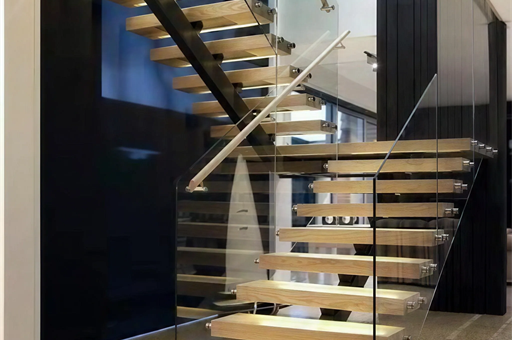
A floating staircase with a glass railing we built for a Virginia home — the open, light alternative to a closed conventional flight.
Floating vs Regular Stairs FAQ
Are floating stairs more expensive than regular stairs?
Yes. A floating stair uses more steel, needs real engineering, and demands tighter fabrication, so it costs more than a regular stringer stair. Third-party figures for floating stairs run roughly $15,000 to $60,000 or more installed, while a regular flight sits well below that. Our floating staircase cost guide breaks down the difference.
Are floating stairs up to code like regular stairs?
They can be, when you design for it. A floating stair faces the same rules as a regular one, plus the open-riser gap that must reject a 4-inch sphere. The guard, the handrail, and the rise and run are all the same. Your local authority confirms the result, exactly as it would for a conventional stair.
What are the disadvantages of floating stairs versus regular ones?
They cost more, they need a structure that can carry the concealed load, and their open risers call for careful detailing. A regular stair avoids all three by keeping the support visible and the risers closed. The floating stair trades that simplicity for an open, light look that a regular stair cannot match.
Can you have both floating and regular stairs in one house?
Yes, and many homes do. A floating feature stair often sits in the main living space, where it is on show, while a regular stair serves the back of the house or the basement. Using each where it fits best is a sensible way to balance the budget against the design.
Do floating stairs feel less safe than regular stairs?
They should not, when engineered properly. The open risers and missing stringer look daring, but the load runs through hidden steel sized with a safety margin, and the guard meets the same rules. A well-built floating stair is as safe as a regular one, as we explain in are floating stairs safe.
Do regular stairs let in less light than floating stairs?
Yes, noticeably. Closed risers on a regular stair block light and sightlines, so the stair reads as a solid wall. A floating stair’s open risers let daylight pass straight through, which can brighten a hallway or a landing that a closed flight would shade. In a dark space, that difference alone can decide the choice.
Which lasts longer, floating or regular stairs?
Both last for decades when they are well made, because longevity comes from the materials and the build, not the style. A floating stair’s steel carrier is highly durable, and a regular stair’s stringers are proven over generations. Keep either one well maintained, and it will comfortably outlast most of the fit-out around it.
Background: the floating staircase guide. Related: the cost drivers and are floating stairs safe. See the staircase range and the glass balustrade options.
Double Building Materials draws, manufactures, trial-assembles, crates, and ships your staircase. Your own contractor or installer handles on-site installation and local code sign-off — we can help you find one where available. Cost references above are third-party market estimates, not a DBM price.
Compare options on WhatsApp →