

What Is a Floating Staircase? The Complete Guide to Cantilevered Stairs
Floating Staircase · Complete Guide
What Is a Floating Staircase? The Complete Guide to Cantilevered Stairs
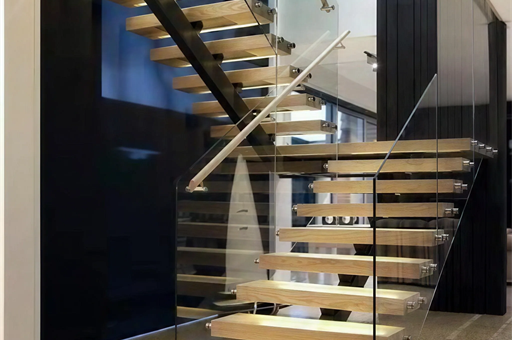
A floating staircase is a stair with no visible support beneath the treads. Each step appears to hang in mid-air, with open gaps where solid risers would normally sit. The structure is still there, but a wall or a single steel beam conceals it, which gives the stair its clean, uncluttered appearance.
That hidden support is the whole story of a floating staircase. This guide explains how the support works and how a floating stair differs from a regular one. It also covers which treads and railings you can choose, what configurations are possible, and the honest picture on cost, code, and safety. Where a topic runs deep, we link to a focused guide so you can continue reading.
What a Floating Staircase Is
A floating staircase carries each tread without a visible stringer on the sides. You see the treads and the open space between them, but not the structure that holds them up. People also call it a cantilever staircase, an open-riser stair, or a suspended stair. The name describes the effect rather than one fixed method, so two floating stairs can be built in very different ways underneath.
The appeal is primarily visual. A floating staircase no longer blocks the sightline through a room, so the space reads as considerably larger and calmer. Daylight penetrates between the open treads and reaches further into the floor. The staircase stops being a solid wall of timber and becomes a sculptural element instead. That openness is the point, and it shapes every later choice, from the railing to the small code details that keep the stair safe.
It helps to be clear about one thing early. A floating staircase is not a lighter or flimsier stair. Each step still carries a person, and often more than one. The weight has not gone away; an engineer has simply rerouted it through a structure you cannot see. That is why a floating stair asks for real engineering, not an off-the-shelf kit, and why the support method below matters so much.
How the Support Is Hidden
The treads carry genuine weight, so that load has to travel into the building somewhere. A floating staircase simply moves the path of that load out of sight. There are three common ways to do it, and each one suits a different room and budget.
| Support method | How it works and when it suits |
|---|---|
| Wall-anchored cantilever | Steel arms reach into a structural wall, and each tread extends from that one side. It gives the purest floating appearance, with nothing under or beside the steps. It requires a wall built to take the load, so the builder usually plans the wall around the staircase. |
| Central mono-beam (spine) | A single steel beam runs up the centre, and the treads sit across the top of it. It works in open space without a side wall, so it suits a stair that stands in the middle of a room and is seen from both sides. |
| Concealed stringer | Cladding wraps a normal stringer so the stair still reads as floating. It is the simplest of the three to engineer, and a sensible alternative when a true cantilever is not practical for the wall you have. |
Each method asks an individual tread to behave like a small diving board. Push down on the open end, and the steel inside resists the bend and springs back. Get that wrong and the stair feels bouncy underfoot; get it right and it feels as solid as any other stair. The right method depends on your walls, the span you need to cross, and the appearance you are after. We cover the structure in depth in our guide to floating staircase structural design.
Floating vs Regular Stairs: What Is Different
A regular staircase shows its support in plain view. A stringer runs down each side and does the structural work, and a solid riser closes the gap between the steps. It is simple, familiar, and usually the least expensive way to get from one floor to the next. There is nothing wrong with it; most homes use one happily for decades.
A floating staircase changes one decision, and the rest follows. It hides the support and leaves the risers open. Because the load now runs through concealed steel, the stair needs more material and real engineering, so it costs more. Because the risers are open, the guard and the baluster spacing carry more responsibility. And because nothing blocks the view, the room opens up. Same task, very different build. We compare the two in detail in floating stairs vs regular stairs.
Tread Materials
The treads are where most of the character lives, because they are the surface you see and touch continually. The common materials each bring a different weight, appearance, and price.
| Tread material | Character |
|---|---|
| Solid or engineered wood | The most popular choice. Oak, walnut, and ash are warm, lighter than stone, and easy to match to a floor. Treads are usually thick, around 50–80mm, so they read as solid. |
| Steel | Slim and industrial. A folded steel plate can be the thinnest tread of all, and it can carry its own load, which keeps the whole stair light on the eye. |
| Stone or marble | A premium, substantial appearance. Stone is considerably heavier, so it asks for additional structure and budget, and the carrier has to be sized for it. |
| Glass | The most open appearance of all. Structural laminated glass lets daylight penetrate directly. It needs a slip-resistant surface and careful detailing. |
| Concrete | The most monolithic appearance, often a single sculptural form. It is the heaviest option and usually the most involved to fabricate. |
If you want to weigh these against each other on thickness, weight, grip, and price, our guide to floating staircase tread materials compares them side by side. Two of the choices are big enough topics in their own right: read about the all-glass version in floating glass staircase, and the heaviest, most solid look in floating concrete staircase.
Railings and Infill
The railing is the second big decision, and on a floating staircase it does real visual work. A heavy railing can undo the open appearance you paid for, so most floating stairs pair with something light. A frameless glass balustrade is the most popular partner, because it guards the edge without adding a single visible post. Stainless cable infill is the other common alternative, with thin horizontal lines that the eye reads straight through.
A slim metal picket railing also works, and in some open positions the code may allow an open edge with only a handrail. The infill is not only an aesthetic call. It is the part of the stair that keeps a small child safe, so it carries a code rule we return to below. If you like the all-glass direction, the glass balustrade range shows the options that pair with most floating flights.
Shapes and Configurations
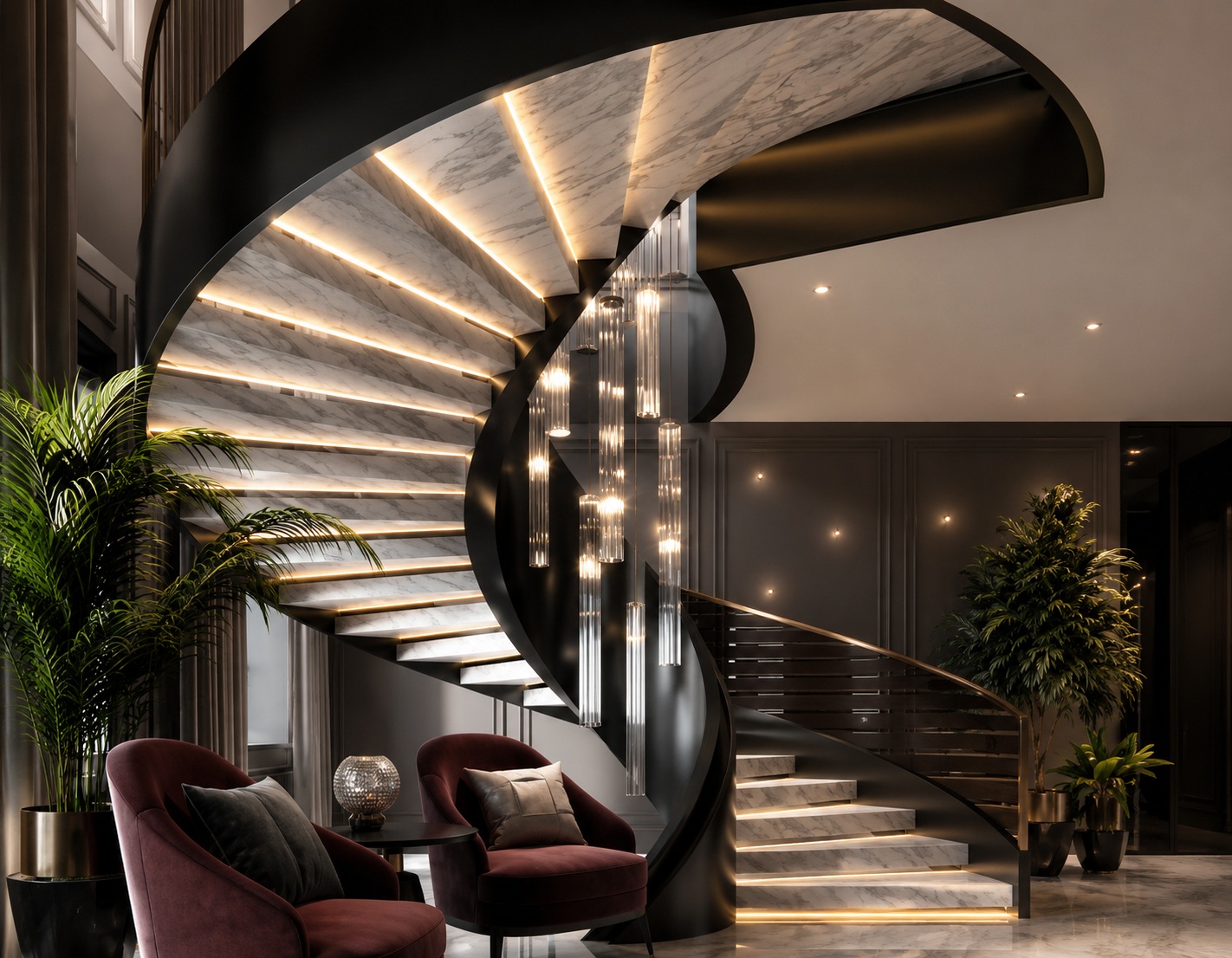
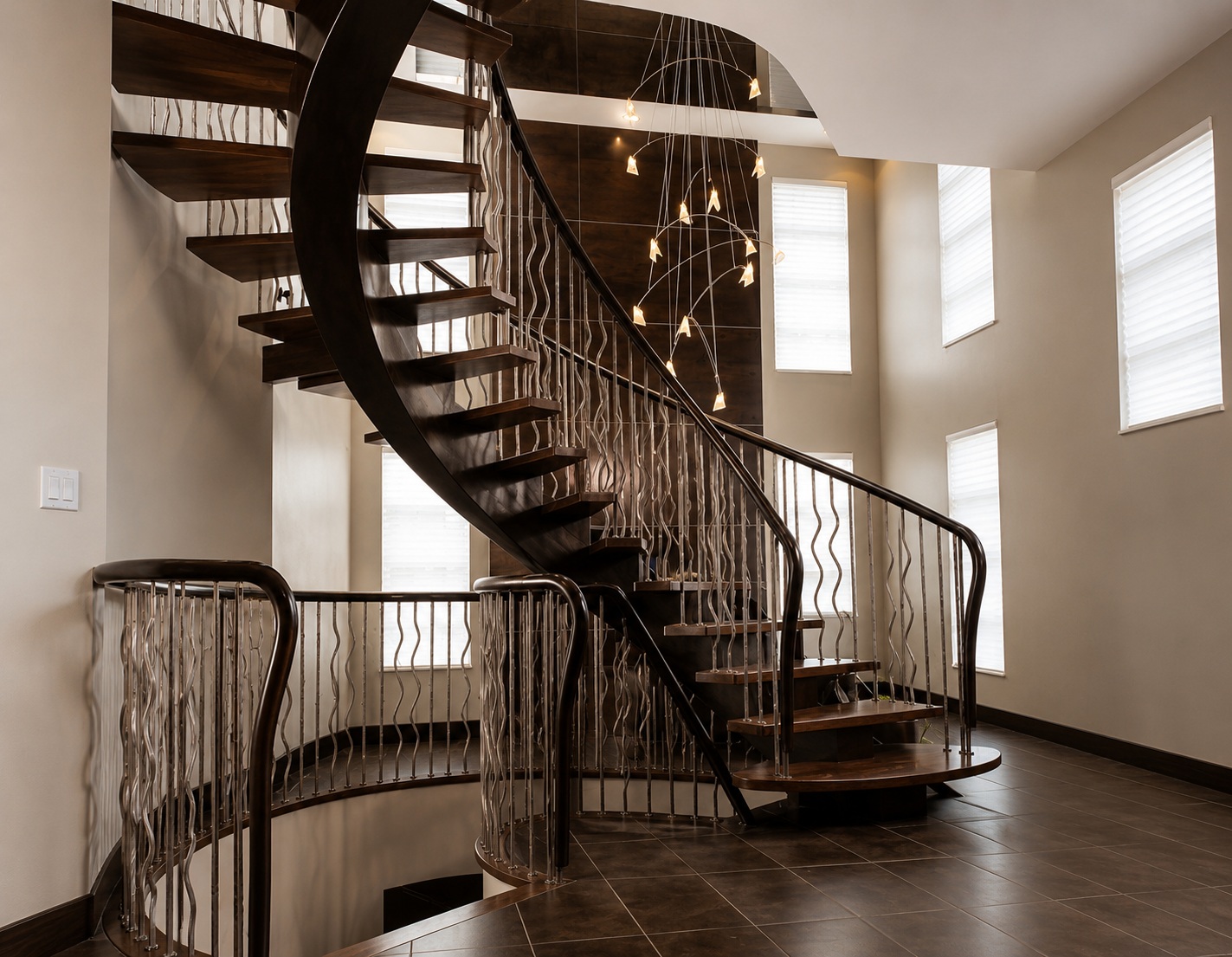
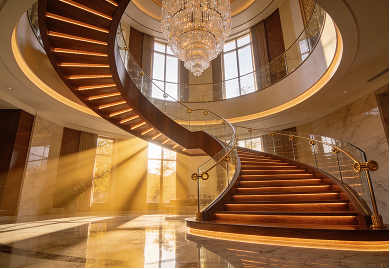
A floating staircase is not limited to one configuration. The simplest is a straight flight, which is the easiest to engineer and usually the least expensive. An L-shaped or U-shaped stair turns at a landing, which fits the flight into a corner and breaks a tall climb into two shorter runs. A curved flight sweeps the treads along a gentle arc, which is the most demanding to fabricate and the most sculptural in a room.
A spiral stair winds the treads around a centre, and it packs a full flight into the smallest footprint of all. Each configuration changes both the appearance and the price, because each one places different demands on the structure. For inspiration grounded in what actually ships, see floating staircase ideas, and for the winding version read floating spiral staircase. If you are comparing floating with another stair type, our head-to-head guides cover floating vs spiral, floating vs curved, and floating vs straight stairs. Each type also has a standalone guide: spiral, curved, and straight staircases.
How One Is Built
At Double Building Materials, a floating staircase starts as a drawing, not a kit. We take your elevation and your site dimensions, then turn them into a working shop drawing that fixes the support method, the materials, and every junction. We cut nothing until you approve that drawing, because a floating staircase leaves no room to hide a mistake.
From there we fabricate the carrier and the treads, then trial-assemble the complete staircase on our Guangdong floor. That trial build is where we check the fit and the line of every step before anything ships. Once it passes, we crate the staircase for export, packed in the order your installer will fit it. Your own contractor or installer fits it on site from our drawings, and we can help you find one where local installation is available. We do not install on site or sign off local code; that stays with your local team. The full sequence is in how a floating staircase is built.
A square-tube floating staircase with glass railing we built for a Virginia home — trial-assembled in our workshop before crating.
What a Floating Staircase Costs
A floating staircase sits at the top of the staircase price range, and the concealed steel structure is the primary reason. You are paying for engineering, for heavier material, and for tighter fabrication than a regular stair needs. Published third-party market figures run roughly $15,000 to $60,000 or more installed, with many estimates landing near $20,000 to $30,000 for a single flight. Those are industry estimates, not our quote.
Because every floating stair is made to order, the real number depends on a handful of drivers: the overall size, the support method, the tread material, the railing, and the finish. A straight steel-and-oak flight sits at the lower end; a curved stair with stone treads and a frameless glass balustrade sits much higher. We break down each driver, with attributed market ranges, in the floating staircase cost guide.
Code and Safety
Open risers are the part of a floating staircase that codes pay particular attention to, and the reason is small children. Under common US residential rules, the open space between treads should not let a 4-inch sphere pass through where it sits more than 30 inches above the floor. The guard along an open side is typically at least 36 inches tall, and the same 4-inch sphere rule applies to the gaps in that guard. Codes usually require a handrail once a stair has four or more risers.
The step geometry follows the same rule book. Common residential figures cap the riser at about 7¾ inches and ask for a tread of at least 10 inches, with a small nosing where the treads are otherwise too shallow. These are widely used reference values, and your local adopted code edition is what actually governs, so confirm the current version with your local team. A floating staircase can meet all of this; the openness is a detailing question, not a barrier. We cover the rules in do floating stairs meet code.
Safety, in the end, comes from two places: the engineering under the treads and a well-detailed railing beside them. A floating staircase that an engineer designs properly is as safe as any other stair in the house. If you have young children, the questions worth asking are about the infill spacing and the grip on the treads, both of which have good answers. We go through them in are floating stairs safe.
Floating Staircase FAQ
How does a floating staircase work?
A concealed structure carries the treads instead of a visible side stringer. That structure is usually steel arms set into a wall, a single beam up the centre, or a stringer hidden behind cladding. Engineers size each tread to carry weight like a small cantilever, which is what lets the steps stay open underneath.
What is the difference between floating and non-floating stairs?
A non-floating stair shows its support, with a stringer on each side and usually closed risers. A floating stair hides the support and leaves the risers open. The floating version needs additional steel and engineering, costs more, and opens up the room. The conventional version is simpler and more affordable.
Are floating staircases safe?
Yes, when an engineer designs and details them properly. We size the support so each tread carries a normal load without flexing, and we detail the guard and infill to keep a small child safe. The open risers look daring, but they are a detailing question with well-established answers, not a weakness.
What are the disadvantages of floating stairs?
They cost more than traditional stairs. They need a wall or a beam that can carry the engineered load, which the builder often has to plan early. And the open risers call for careful guard and infill detailing, especially with young children or pets. None of these are deal-breakers; they are simply why a floating stair wants proper engineering rather than an off-the-shelf kit.
What is the average cost of a floating staircase?
Third-party market figures run roughly $15,000 to $60,000 or more installed, with many estimates near $20,000 to $30,000 for a single flight. Those are industry estimates, not our quote. Because floating stairs are made to order, the real figure depends on dimensions, support method, treads, railing, and finish — see the floating staircase cost guide for the full breakdown.
Go deeper into the cluster: structural design, tread materials, and floating vs regular stairs. See real builds: the Virginia square-tube floating staircase and the Florida white-oak floating staircase. Or browse the full staircase range.
Double Building Materials draws, manufactures, trial-assembles, crates, and ships your staircase. Your own contractor or installer handles on-site installation and local code sign-off — we can help you find one where available. Cost figures above are third-party market estimates, not a DBM price; code values are common US residential references, and your local adopted edition governs.
Talk to us on WhatsApp →