

Floating Spiral Staircase: When a Helix Can Float
Floating Staircase · Spiral
Floating Spiral Staircase: When a Helix Can Float
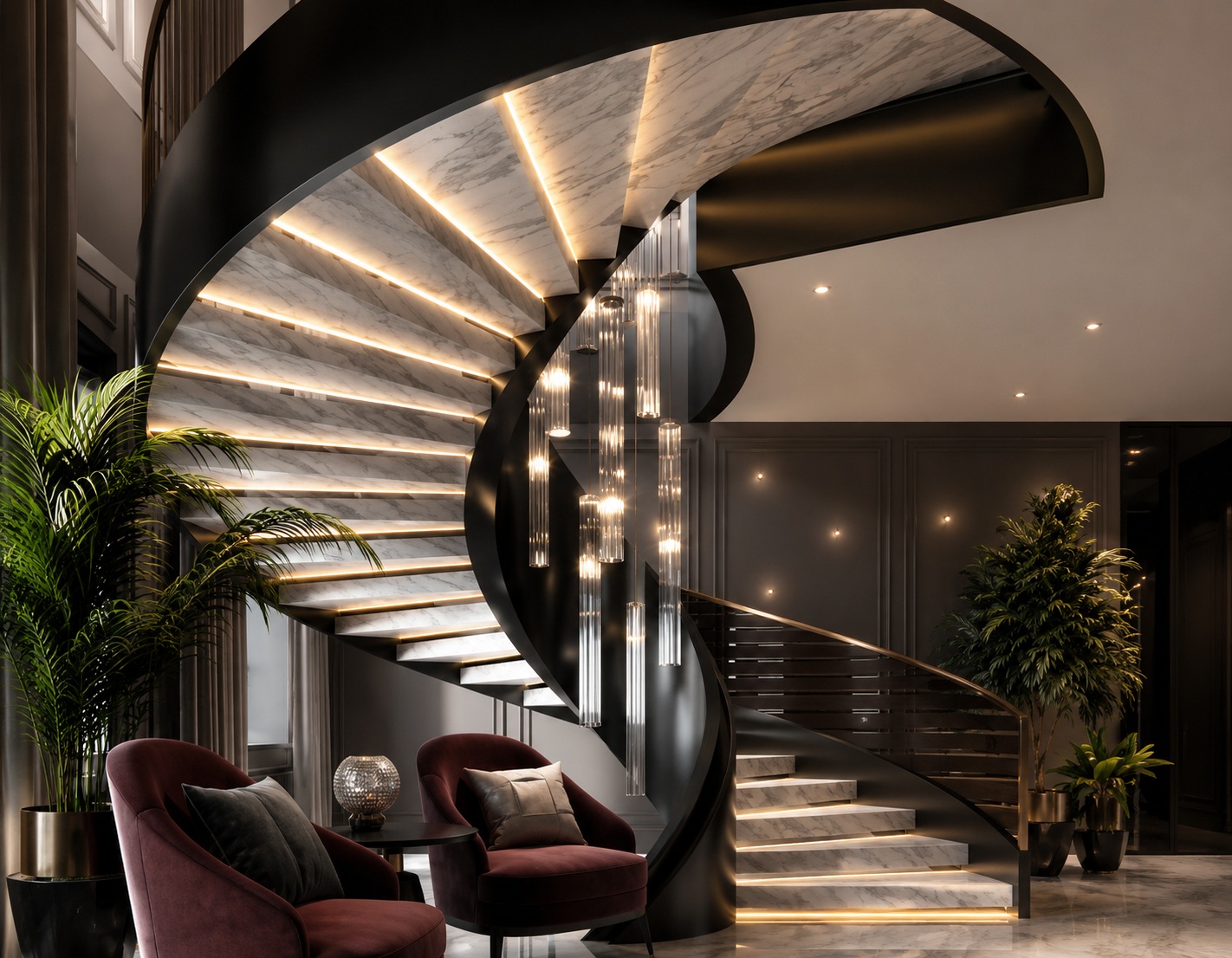
A floating spiral staircase winds open-riser treads around a central axis, so the steps appear to spiral upward in mid-air. A slim central column or a helical steel stringer carries the load instead of solid sides. It saves floor space, works as a sculptural centrepiece, and lets light pass through the open treads.
A spiral staircase already turns a climb into a sculpture. Make it float, with open risers and a minimal hidden structure, and it becomes one of the most striking objects in a home. A floating spiral staircase is not the easiest stair to build, and it is not right for every space, but where it fits, nothing else reads quite like it. This guide explains how a floating spiral works, the two ways to build one, the space it saves, and the code and comfort trade-offs to weigh before you commit.
What a Floating Spiral Staircase Is
A spiral staircase winds its treads around a central axis, turning a full storey into a tight, circular climb. A floating spiral staircase takes that idea and removes the visual weight. The risers stay open, the structure shrinks to a slim column or a hidden helical stringer, and the treads seem to spiral upward on their own.
The word floating describes the effect rather than a single method. In some designs each tread cantilevers from a central pole, like a stack of small diving boards fanned around an axis. In others a curved steel stringer hidden at the outer edge does the work. Either way, the goal is the same as any floating stair: carry the real load through a structure you barely see, so the steps read as light. The principle is the same one we cover in our guide to floating staircase structural design.
Centre Column vs Helical
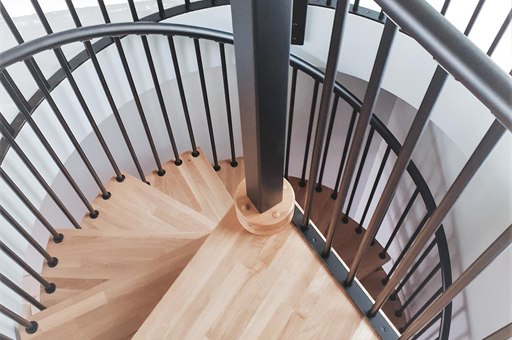
There are two ways to build a spiral, and they look and behave differently. The centre-column spiral runs a single vertical pole up the middle, and each tread cantilevers from it. This is the compact, classic spiral, and it is the most space-efficient of all stairs because every tread shares one central support.
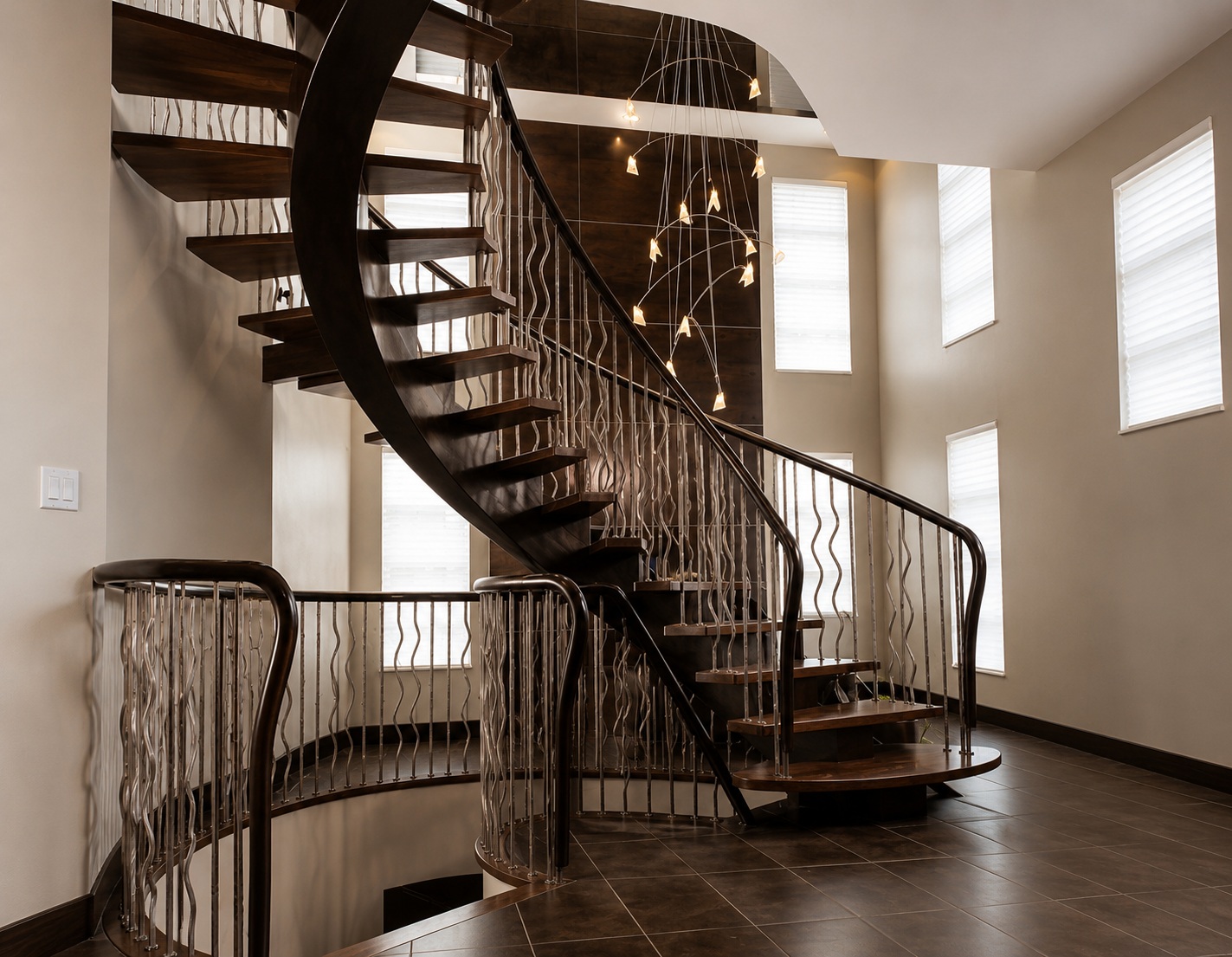
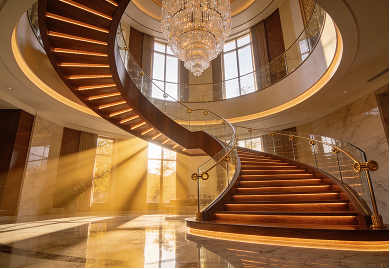
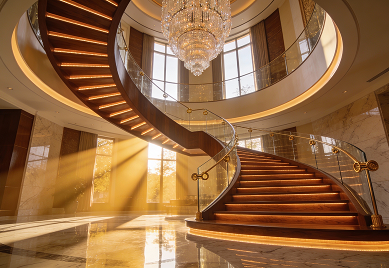
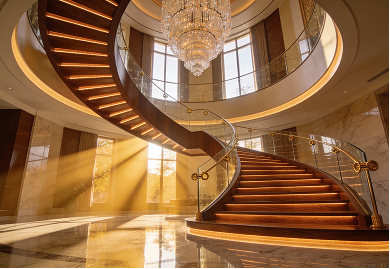
The helical stair is the more dramatic cousin. It curves around an open well with no central pole, so the eye travels straight through the middle of the spiral. A helical flight carries its load through curved stringers and the balustrade, which makes it far harder to engineer and more expensive to build. A true floating spiral usually leans on the centre-column approach with open treads, because it gives the floating look within a structure that stays sane to build. We confirm which route suits your space on the first drawing.
Why People Choose a Spiral
People choose a floating spiral staircase for three reasons, and they often want all three at once. The first is space, because a spiral packs a full flight into the smallest footprint of any staircase. The second is sculpture, because a spiral is a genuine three-dimensional form that a straight flight can never be. The third is light, because open treads winding around an axis let daylight filter down through the whole spiral.
A floating spiral leans into all three. It frees the floor it stands on, it draws the eye as a centrepiece, and it keeps a room bright where a solid stair would cast a shadow. Those qualities are why a spiral often appears in a mezzanine, a loft, or a compact home where a straight flight would simply not fit. It earns its place by doing a structural job and a sculptural one together.
The Space It Saves
The headline advantage of a spiral is its footprint. Because the treads wind around a single axis, a spiral occupies a small circle rather than a long run, which is why it is the go-to staircase for tight plans. A compact residential spiral can fit into a corner that no straight or L-shaped flight could ever use.
There is a trade-off, and it is honest to name it. A smaller diameter means a steeper, tighter climb and a narrower walking path, while a larger diameter is more comfortable but eats more floor. The right diameter balances the space you can give the stair against how often and how heavily it will be used. A spiral that serves a guest mezzanine can be tighter than one that is the main route between floors, and we size it on the drawing to suit its real role.
Code and the Spiral Stair
Spiral stairs sit under their own set of code rules, because their geometry differs from a straight flight. US residential codes commonly set a minimum tread depth measured at the walkline, which is the path you actually tread part-way out from the centre. They also set a minimum clear width, a maximum riser, and a minimum headroom through the spiral. Open risers add the familiar rule that the gap should not pass a 4-inch sphere.
These are common reference values rather than a single national figure, and your current local edition is what governs, so confirm the numbers with your local team before the design is fixed. Because of these special rules, some jurisdictions limit where a spiral can serve as the only stair to a level. We design the spiral to the rules you provide and reference them on the working drawing, so your engineer and authority have what they need. The wider code picture for open-riser stairs sits in our guide to do floating stairs meet code.
Safety and Comfort
A spiral is a sure-footed stair when it is detailed well, but it asks a little more of the person climbing it than a straight flight does. The treads are wider at the outer edge and narrow toward the centre, so the natural path is part-way out. A continuous handrail on the outer edge gives the hand something steady to follow all the way up, which makes the climb feel secure even on a tight turn.
Two practical points are worth weighing. A spiral is steeper and tighter than a straight stair, so it is less suited to anyone who finds stairs difficult, and carrying large furniture up a spiral is genuinely awkward. Neither rules a spiral out; they simply shape where it belongs in a home. With a firm structure, a slip-resistant tread, and a well-detailed guard and handrail, a floating spiral is as safe as any other stair, a theme we expand in are floating stairs safe.
Materials and Railings
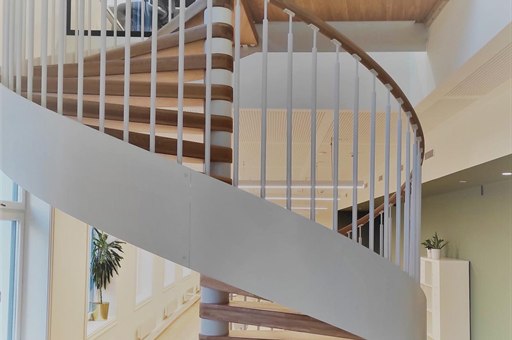
A floating spiral uses the same palette as any other floating stair, and the choices change both the look and the weight. Timber treads keep the spiral warm and approachable. Steel treads stay slim and sharp, and they suit the industrial reading of a tight metal spiral. Stone or glass treads are possible too, though their weight asks more of the central column or the helical stringer.
The railing follows the curve, which is where a spiral shows its craft. A frameless glass balustrade wraps the spiral in a clear ribbon, while stainless cable or slim metal balusters trace the helix with fine lines. The curved handrail is the hardest single component to make well, because it has to flow smoothly along the spiral and feel natural under the hand. We detail the treads and the railing together so the whole spiral reads as one object. You can see our spiral options in the spiral staircase range.
Where a Floating Spiral Fits Best
A floating spiral rewards the right location and struggles in the wrong one, so it is worth picturing where it will actually live. Its compact footprint makes it a natural solution for a mezzanine, a loft conversion, or a smaller apartment, where a conventional flight would consume floor a compact home cannot spare.
It also works beautifully as a sculptural feature in a generous, open space, where the spiral is there to be admired from every angle rather than merely climbed. A double-height void is particularly flattering, because the helix unwinds through the volume and becomes the architectural centrepiece of the room. The configuration that suits a quiet guest mezzanine is tighter than the one that anchors a living space, and that decision shapes the diameter, the proportions, and the materials. Once you understand the role the spiral plays, the rest of the design follows more easily, and our floating staircase ideas guide shows how the same thinking applies across every shape.
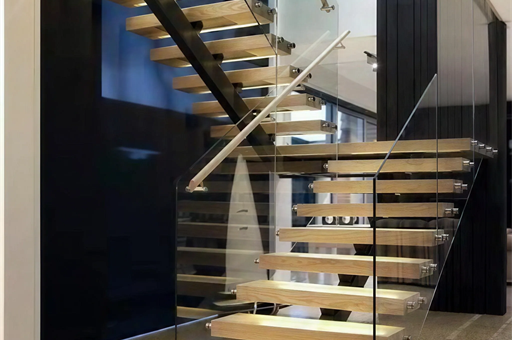
A floating staircase with a glass railing we built for a Virginia home — the same open-riser, hidden-structure principle a floating spiral uses.
Floating Spiral Staircase FAQ
Is a spiral staircase good for saving space?
Yes, it is the most space-efficient staircase there is. Because the treads wind around a single axis, a spiral occupies a small circle instead of a long run, so it fits a corner or a tight plan where a straight or L-shaped flight cannot. That compact footprint is the main reason people choose one.
Are floating spiral staircases safe?
Yes, when they are engineered and detailed correctly. A firm central column or helical stringer carries the load, a slip-resistant tread gives grip, and a continuous outer handrail guides the climb. A spiral is steeper than a straight flight, so it asks for care, but a well-built one is as safe as any other stair.
Can a spiral staircase be the main stair in a house?
Sometimes, but not always. Because spiral stairs follow special code rules and are steeper and narrower, some jurisdictions limit where a spiral can be the only route to a level. Confirm this with your local authority. Many homes use a spiral as a feature or secondary stair and keep a straight flight as the main route.
Is it hard to carry furniture up a spiral staircase?
It is more awkward than a straight flight, yes. The turn and the narrowing treads make large or rigid items difficult to manoeuvre. It is worth thinking about how a room above will be furnished before you choose a spiral as its only access, especially for bulky pieces.
How much does a floating spiral staircase cost?
Third-party market figures for floating stairs run roughly $15,000 to $60,000 or more installed, and those are industry estimates rather than our quote. A spiral’s curved components and handrail add complexity, so it tends to sit higher than a simple straight flight. See our cost guide for the drivers.
What is the difference between a spiral and a helical staircase?
A spiral staircase turns around a central column, with each tread cantilevering from that pole, which makes it compact and economical. A helical staircase curves around an open well with no central column, so the eye sees straight through the middle. The helical version is more dramatic and considerably harder to engineer, which usually places it at a noticeably higher cost than a column spiral.
Do floating spiral stairs have open risers?
Usually yes, and the open risers are part of what makes the spiral read as floating. The gap between treads still follows the code rule that rejects a 4-inch sphere, so the openness stays safe for a small child. A solid-riser spiral is possible too, but it loses much of the light, airy character that makes a floating spiral so appealing in the first place.
Background: the floating staircase guide. Related: floating staircase ideas and structural design. Browse the spiral staircase range and the full staircase range.
Double Building Materials draws, manufactures, trial-assembles, crates, and ships your staircase. Your own contractor or installer handles on-site installation and local code sign-off — we can help you find one where available. Cost and code points are general references; confirm your current local edition.
Ask about a spiral on WhatsApp →