

Floating vs Curved Staircase: Modern vs Sculptural -Staircase Guides
Staircase Design Guides · Type Comparison
Floating vs Curved Staircase: Which Statement Stair Suits Your Home?
In the floating vs curved staircase choice, a floating stair uses open treads with a hidden support for a clean, minimal, modern look. A curved stair sweeps in a graceful arc and reads as sculptural and classic. Floating suits tighter, contemporary spaces; curved wants room to turn and fits grand, traditional homes. Both cost more than a straight flight.
A statement staircase is often the first thing a guest sees, so its shape shapes the whole entry. Two designs lead the high-end market today. The floating stair looks weightless and sharply modern. The curved stair flows in a soft arc and feels timeless. This guide sets the two side by side. It walks through space, cost drivers, engineering, and the style each one flatters, so you can match a shape to your home with confidence.
Floating vs Curved Staircase at a Glance
Both stairs transform a simple climb into a centrepiece, yet they speak two different design languages. A floating staircase strips the structure back to its essentials. The treads seem to hover, the risers vanish, and daylight pours through the openings. The atmosphere is spare, contemporary, and quietly confident. A curved staircase does the opposite. It draws a flowing arc through the room, wraps a soft handrail around that curvature, and fills the interior with movement and elegance.
The distinction runs deeper than appearance. A floating stair depends on a concealed steel spine or a robust wall to carry the open treads. A curved stair depends on a bent stringer and precise geometry to hold its sweep accurate. One flatters a clean contemporary interior; the other flatters a grand, traditional one. The comparison below gives you a rapid overview before we examine each point in turn.
| Factor | Floating staircase | Curved staircase |
|---|---|---|
| Look | Minimal, modern, weightless | Sculptural, classic, flowing |
| Footprint | Tight; works on a single wall | Large; wants an open volume |
| Support | Hidden spine or wall anchors | Bent stringer along the arc |
| Style fit | Contemporary, loft, gallery | Grand entry, villa, hotel |
| Cost band | Higher than straight | Often the highest of the three |
The Floating Staircase, in Short
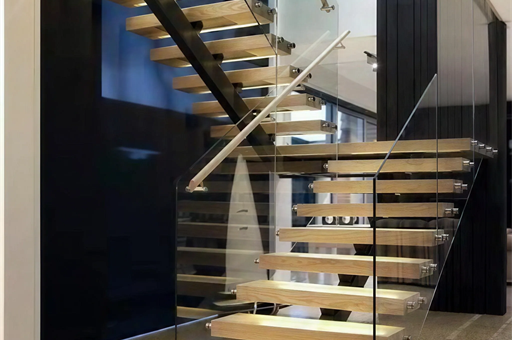
A floating staircase reads as a row of solid treads that seem to rest on nothing. The trick sits out of sight. Either a single steel spine, called a mono-stringer, runs under the centre of the treads, or a series of hidden brackets ties each tread into a strong structural wall. Either way, the visible risers disappear, and the eye slides straight through the open gaps to the room beyond. That openness is the whole appeal.
The style leans hard into contemporary and minimalist design. A floating flight keeps sight lines clear, lets daylight travel deeper into a hallway, and makes a compact footprint feel spacious. Owners often combine it with a slim glass or thin metal cable balustrade, so the staircase keeps that airy, gallery-like serenity. To go deeper on how these stairs are built and detailed, read our full guide to what a floating staircase is.
The Curved Staircase, in Short
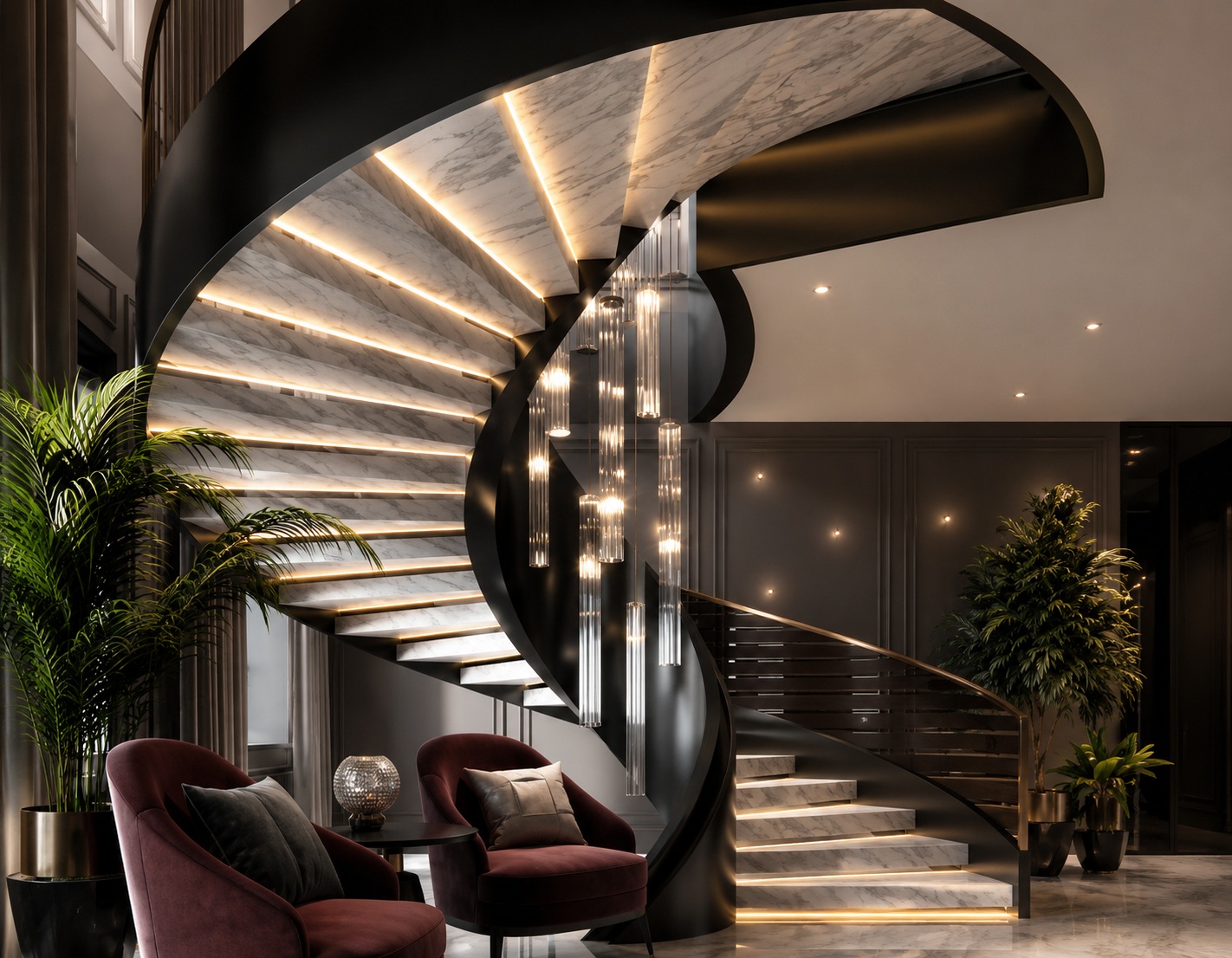
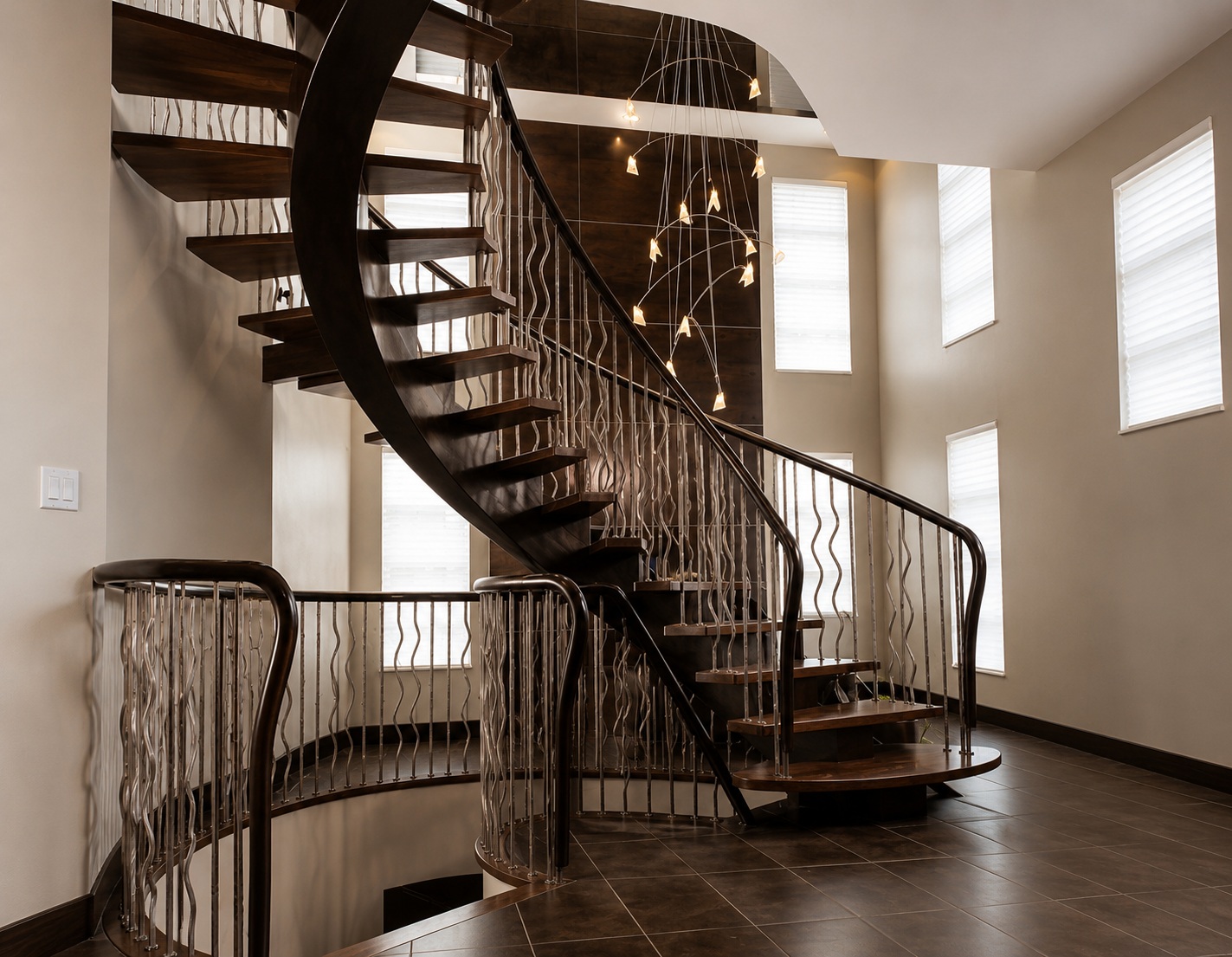
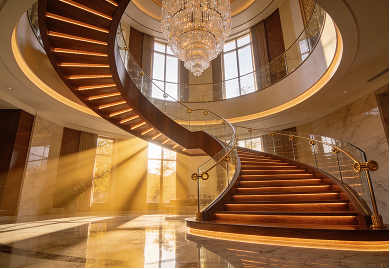
A curved staircase turns as it climbs, tracing a smooth radius rather than a hard corner. Unlike a spiral, it does not wind around a tight centre pole. Instead it sweeps in a wide, gentle arc, and the handrail flows in one continuous ribbon from bottom to top. That single unbroken line is what gives the curved stair its grand, sculptural presence in a room.
The style speaks of classic, elegant, and traditional residences, though a clean curved stair can appear strikingly contemporary too. It suits a generous entry hall, a double-height foyer, or a hotel lobby where the staircase becomes the centrepiece of the space. Because every tread and the stringer bend to an identical radius, the craftsmanship behind a curved stair runs remarkably deep. For the full picture of how these stairs work, see our guide to what a curved staircase is.
Space and Footprint
Space is often the first factor that settles this contest, so it deserves an honest evaluation. A floating staircase is the space-saver of the pair. A straight floating flight hugs one wall and requires little floor area, which makes it a natural candidate for a loft, a townhouse, or a compact contemporary entry. Even a floating flight with a mid-landing stays tidy in plan, and the transparent treads keep the interior feeling larger than it actually is.
A curved staircase requires far more room. The arc needs width to turn without feeling cramped, and a tight radius quickly becomes awkward to navigate. For that reason, a curved stair flourishes in a double-height foyer or a wide hall where the sweep has room to breathe. If your space is generous, the curvature rewards you with drama. If the plan is tight, a floating flight, or perhaps a spiral, tends to serve the interior better. Match the shape to the volume you actually possess, not to a photograph of a mansion staircase.
Style and Mood
Style is where taste leads, and the two stairs pull in clearly different directions. A floating staircase belongs to the contemporary school. It reads as crisp, spare, and architectural, and it flatters clean plaster walls, wide-plank timber, and generous sheets of glass. Combine it with a frameless glass balustrade and the staircase almost dissolves into daylight. This is the shape for an owner who loves calm, uncluttered rooms and a strong modern line.
A curved staircase carries a softer, more romantic charge. The sweeping arc and the flowing handrail feel gracious and welcoming, which is why the curvature anchors so many grand traditional residences, boutique hotels, and heritage-style villas. Yet a pared-back curve in natural stone or pale timber can appear wonderfully contemporary as well, so the shape is not restricted to one era. The honest question is simple. Do you want the interior to feel sharp and modern, or flowing and timeless? Your answer points to a clear front-runner.
Engineering and Structure
Under the surface, both stairs demand genuine engineering, just in different ways. A floating staircase conceals its muscle. A steel mono-stringer, or a run of concealed wall brackets, has to carry each cantilevered tread and counteract the vibration that open treads can develop. The treads themselves need sufficient depth and the correct fixings to stay rigid underfoot. Engineer that hidden structure properly and the staircase feels substantial, not springy, even though it appears to barely touch the building.
A curved staircase moves the challenge into geometry. The stringer bends along a true radius, every tread changes shape as it turns, and the handrail follows a smooth three-dimensional curve. All of it has to line up before anything reaches the site. This is exactly where drawing-first coordination earns its keep. We model the whole stair, then trial-assemble it in our 4,500 m² factory in Guangdong, China, so the arc, the treads, and the rail meet cleanly. After that check, the stair goes into export-ready crating for the trip to your project.
Cost Drivers, Not a Price Tag
Both of these stairs cost more than a plain straight flight, and it helps to know why before you plan a budget. Because every stair is made to order, the honest way to think about money is in drivers, not one figure. We price each project from its drawing, so there is no fixed price list here. Still, a few clear factors move the number, and they differ between the two shapes.
For a floating staircase, the significant drivers are the concealed structure and the tread material. A hidden steel spine, heavy solid-timber or stone treads, and a frameless glass balustrade all increase cost, since each one demands precision to manufacture and to install. For a curved staircase, the driver is the curvature itself. Bending stringers, shaping every tread to the arc, and forming a continuous handrail consume skilled hours that a straight run never requires. As a broad market signal, third-party remodelling guides often position custom curved stairs among the priciest residential stairs, above most floating flights, though your own drawing determines the actual number.
How to Choose Between Them
Pulling the threads together makes the floating vs curved staircase decision far less intimidating. Start with your available space, because it eliminates the wrong answer quickly. A tight or narrow plan points toward a floating flight. A wide, open, double-height volume opens the door to a curvature. Next, identify the atmosphere you want. Sharp and contemporary leans floating; gracious and timeless leans curved. Let those two answers, space and atmosphere, carry most of the weight.
After that, sanity-check the practical side. Think about who will use the stair, since open floating treads suit adults and calm households better than busy family traffic with very young children or pets. Weigh the maintenance of your chosen materials, and set a budget band using the drivers above. A quick word on safety follows the same reasoning for both configurations. A guard has to satisfy the height, gap, and load requirements in your region. Common references cover typical values here. The IRC and IBC apply in the United States, while AS 1657 and the NCC apply in Australia. Your local adopted edition governs, so confirm the current version with your regional consultant. When you are ready to specify a sweeping design, explore our modern curved staircase systems. For a broader tour of shapes, browse our pillar on staircase design ideas.
Floating vs Curved Staircase FAQ
What is the main difference between a floating and a curved staircase?
A floating staircase uses open treads with concealed support, so it appears weightless, minimal, and contemporary. A curved staircase turns in a smooth arc with a flowing handrail, so it appears sculptural, grand, and classic. In summary, floating is about openness and a clean contemporary line, while curved is about a graceful sweep and a timeless atmosphere.
Which one takes up less space?
A floating staircase usually needs less floor area, because a straight floating flight can hug a single wall and the see-through treads keep a room feeling open. A curved staircase needs a wide, open volume for its arc to turn comfortably. If your plan is tight, a floating flight, or a spiral, tends to fit better than a full curve.
Which is more expensive, floating or curved?
Both cost more than a straight stair, and a fully custom curved staircase often lands at the higher end, because bending the stringer and shaping each tread to the arc takes skilled hours. A floating stair can also run high once you add a concealed steel spine and premium treads. Because every stair is made to order, the drawing decides the real figure.
Is a floating staircase safe for a family with children?
A well-designed floating stair can suit many homes, but the open gaps between treads deserve thought where very young children or pets use the stair daily. A close-spaced balustrade, deeper treads, and a firm handrail all help. A guard must still meet the local height, gap, and load rules, and your local adopted edition governs the exact numbers.
Can a curved staircase look modern rather than traditional?
Yes. While the curvature has deep classic roots, a pared-back version in natural stone, pale timber, or a slim steel stringer can read as thoroughly contemporary. Clean materials, a frameless glass balustrade, and restrained detailing shift a curved stair toward a contemporary atmosphere, so the shape is not tied to one era at all.
Keep exploring the staircase cluster: start with the pillar on staircase design ideas, then dive into each type with our guides to what a floating staircase is and what a curved staircase is. Ready to specify a sweep? Browse our modern curved staircase systems.
Double Building Materials draws, manufactures, trial-assembles, crates, and ships both floating and curved staircases to your project. Your own contractor or installer handles on-site installation and local code sign-off — we can help you find one where available. Dimension and code values above are common industry references (IRC / IBC / ADA / OSHA; AS 1657 / NCC where relevant); your local adopted edition governs, so confirm the current version with your local team. With 25+ years and 800+ projects shipped to 60+ countries from our 4,500 m² factory in Guangdong, China, we draw and trial-assemble every stair before it ships.
Talk to us on WhatsApp →