

Floating Glass Staircase: How Glass Treads and Railings Work Together
Floating Staircase · Glass
Floating Glass Staircase: How Glass Treads and Railings Work Together
A floating glass staircase pairs structural laminated-glass treads with a frameless glass balustrade, so the whole flight reads as transparent. The treads carry weight through several bonded glass plies, and the balustrade guards the edge without visible posts. The result passes daylight straight through the stair, which is the entire point.
Glass is the most open material a staircase can use, and a floating glass staircase pushes that openness as far as it will go. The treads let light through, the balustrade disappears, and the steps seem to hang in clear air. None of that happens by accident. This guide explains how the glass treads carry load, how the frameless balustrade is built, how the two work together, and the honest trade-offs on slip, safety, cost, and upkeep before you commit.
What a Floating Glass Staircase Is
A floating glass staircase combines two glass elements that usually appear separately. The first is the tread: a structural glass step that carries a person while letting light through. The second is the balustrade: a frameless glass guard that protects the open edge without a row of posts. Put them together on a concealed steel carrier, and you have a staircase that seems to be made of light.
It is worth being clear about what is doing the work. The glass is not decorative; it is engineered. We size the treads to carry load, and we size the balustrade to resist a person leaning or falling against it. Behind the transparency sits the same hidden steel structure as any other floating stair, which you can read about in our guide to floating staircase structural design. The glass simply replaces the parts you would normally see.
How Structural Glass Treads Work
A glass tread is never a single pane. It is structural laminated glass, built from several toughened plies bonded together with strong interlayers. That construction does two jobs at once. It carries the load through the combined thickness, and it holds the tread together even if one ply is damaged, so a cracked layer stays in place rather than falling away.
Clarity is the next decision. Ordinary glass carries a faint green tint that grows with thickness, so glass treads usually use low-iron glass, which stays clear even when several plies are stacked. The top surface carries a grip treatment, a point we return to below. The result is a tread that looks impossibly light but behaves like the engineered component it is. We size the number and thickness of the plies on the working drawing, against the span and the load, exactly as we would size steel.
Types of Glass Used in a Staircase
Not all glass on a staircase is the same, and the names matter because they describe how the glass behaves under load and when it breaks. Two treatments do most of the work, and a glass stair usually combines them.
Toughened glass is heat-treated to be far stronger than ordinary glass, and it breaks into small, blunt pieces rather than sharp shards. Laminated glass bonds two or more panes together with a tough interlayer, so a broken pane stays held in one piece instead of falling away. A structural glass tread usually combines both ideas: several toughened plies, laminated together, so the tread is strong in normal use and safe if it is ever damaged.
Two more details finish the specification. Low-iron glass removes the faint green tint that ordinary glass shows in thick sections, which keeps stacked plies clear and colourless. And the walking surface carries a fritted or sandblasted finish, so the foot meets grip rather than a polished sheet. Each of these is a deliberate choice, and we set the exact build-up on the working drawing against the span and the load the tread has to carry.
The Frameless Glass Balustrade
The balustrade is what makes a floating glass staircase feel truly open. A frameless glass balustrade guards the edge with clear panels and no visible posts, so the eye reads straight through it. The panels are usually toughened laminated glass, chosen so that a damaged panel stays intact rather than shattering away from the edge.
The panels need a fixing, and that fixing decides the look. A slot or base-shoe set into the stair grips the bottom edge and lets the glass rise clean and unbroken. Point fixings clamp each panel at a few discreet spots. Some designs add a slim top handrail, and some codes ask for one, while others allow a free top edge. We detail the balustrade alongside the treads so the two share one visual language. You can see the panel options in our glass balustrade range.
How the Two Work Together
Glass treads and a glass balustrade reinforce each other. Each one removes a surface that would normally block the view, and together they let a staircase almost vanish into the room. Daylight from a window above passes through the treads and the panels and reaches the floor below, so a glass stair can brighten a space that a solid stair would shade.
You do not have to use both to get the effect. Many projects pair glass treads with a cable or slim metal railing, or pair timber treads with a frameless glass balustrade, which is one of the most popular combinations of all. The fully glass version is the purest expression of the idea, and also the most demanding to detail and to keep clean. Choosing how far to take the transparency is the first real decision in any floating glass staircase.
Slip and Safety
The first question everyone asks is whether glass treads are slippery, and the honest answer is that bare glass would be. That is why a glass tread never ships with a glossy top. The walking surface carries a fritted, sandblasted, or ceramic-dot zone that gives grip while keeping the open look, so the foot meets texture rather than a polished sheet.
The second question is strength, and laminated glass answers it. Because we build the treads and panels from bonded plies, a damaged layer stays in place rather than dropping away. The balustrade also does the code job of the guard. A solid glass panel inherently stops a 4-inch sphere from passing, the rule most US residential codes apply to protect a small child. Your local edition still governs, so confirm the required glazing class with your local team. Detailed properly, a floating glass staircase is as safe as any other.
Cost and Upkeep
A floating glass staircase sits at the premium end of the range, on both the glass and the engineering. Structural laminated treads and frameless panels count as specialised components, and the detailing that makes them look effortless takes real work. Third-party market figures for floating stairs run roughly $15,000 to $60,000 or more installed, and a fully glass version sits high within that band. Those are industry estimates, not our quote; we price each staircase from your drawings.
Upkeep is the other honest trade-off. Glass shows fingerprints and dust more readily than timber or stone, so a glass stair rewards a regular wipe with a streak-free cleaner. It is not difficult work, but it is more frequent than a solid stair asks for. If a low-maintenance surface matters more to you than maximum transparency, our guide to floating staircase tread materials compares the alternatives, and the floating staircase cost guide shows how material moves the price.
Glass Staircase Design Ideas
Within the glass family, several configurations recur because they balance the open look against the practical realities of a home. Each one dials the transparency up or down to suit the space.
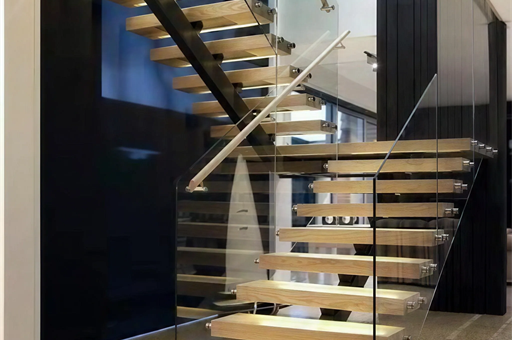
A straight glass flight set against a window wall is the purest and brightest version, with light pouring through every step. Glass treads on a slim steel spine keep the structure minimal while the steps appear to float in mid-air. Timber treads with a frameless glass balustrade soften the look and cut the cleaning, which is why it is one of the most popular pairings of all. A glass balustrade lit along its base shoe adds a quiet glow after dark, turning the stair into a feature at night. And in a tall, double-height void, a full glass flight with a matching balustrade becomes a light well that carries daylight down through the house.
Each of these still rests on the same engineered steel carrier, so the choice is about how far to push the transparency rather than whether the structure can cope. For ideas across every material, not only glass, see our floating staircase ideas guide.
Is a Floating Glass Staircase Right for You?
A floating glass staircase rewards the right setting and frustrates the wrong one. It does its finest work in a light-filled, open-plan space where transparency is the goal and where the stair is on show. In that context the glass earns its cost by opening the room and carrying light to places a solid stair would darken.
It is a less natural fit where heavy daily traffic, muddy boots, or a houseful of young children would mean constant cleaning, or where someone in the home feels uneasy walking on a transparent surface. That unease is real for some people, and it is worth testing before you commit. None of this rules glass out; it simply means the decision should match how the space is actually used. Where it fits, few staircases make a stronger impression.
A square-tube floating staircase with a frameless glass railing we built for a Virginia home — trial-assembled before crating.
Floating Glass Staircase FAQ
Are glass staircases safe to walk on?
Yes, when they use structural laminated glass and a textured top surface. The lamination holds the tread together even if a ply cracks, and the fritted or sandblasted zone gives grip underfoot. We engineer the glass for the load, exactly as we would steel, so a correctly built glass stair is as safe as any other.
Are glass stair treads slippery?
Bare glass would be, which is why glass treads never ship with a glossy top. The walking surface carries a fritted, sandblasted, or ceramic-dot finish that gives grip while keeping the open look. The texture sits where your foot lands, so the tread feels sure rather than slick.
How thick is the glass on a glass staircase?
It varies with the span and the load, so we set it on the working drawing. Treads use several bonded plies for strength and safety, and we size balustrade panels for the guard load they must resist. The exact build-up falls out of the engineering rather than a fixed number.
Do glass stairs show every fingerprint?
More than timber or stone, yes. Glass rewards a regular wipe with a streak-free cleaner, especially on a busy stair. It is light work, but more frequent than a solid material asks for, and worth factoring in before you choose a fully glass flight.
Can you mix glass with other materials?
Often, and to great effect. Timber treads with a frameless glass balustrade is one of the most popular combinations, blending warmth with transparency. Glass treads also pair with a slim steel carrier. We confirm any mix on the working drawing so each material is sized correctly.
Background: the floating staircase guide. Related: tread materials and the cost drivers. Browse the glass balustrade range and the full staircase range.
Double Building Materials draws, manufactures, trial-assembles, crates, and ships your staircase. Your own contractor or installer handles on-site installation and local code sign-off — we can help you find one where available. Glass and code points are general references; confirm the required glazing class with your current local edition.
Ask about a glass staircase on WhatsApp →