

Floating Staircase Tread Materials: Wood, Steel, Stone, Concrete and Glass Compared
Floating Staircase · Tread Materials
Floating Staircase Tread Materials: Wood, Steel, Stone, Concrete and Glass Compared
The common floating staircase tread materials are wood, steel, stone or marble, concrete, and structural glass. Wood is the warm, approachable default; steel is the slimmest; stone and concrete are the heaviest and most monolithic; glass is the most open. Each one changes the weight, the grip, the cost, and the structure beneath.
The tread is the part of a floating staircase you see and touch every day, so the material decides much of how the stair looks and feels. It also decides how much steel sits underneath, because a heavy tread asks more of the carrier. This guide compares the five common materials on appearance, weight, grip, thickness, and cost. It then covers the questions that cut across all of them, so you can choose with the structure and the budget in view.
Floating Staircase Tread Materials at a Glance
Each material brings a different balance of warmth, weight, grip, and price. The table sets them side by side; the sections below take each one in turn.
| Material | Character, weight and cost position |
|---|---|
| Wood | Warm and familiar, moderate weight, and the most approachable cost. The default for most homes. |
| Steel | The slimmest tread, industrial in feel, and able to carry its own load. Mid-range on cost. |
| Stone or marble | Heavy and luxurious, cool underfoot, and a premium cost on both material and structure. |
| Concrete | Monolithic and contemporary, the heaviest option, and demanding on the supporting structure. |
| Glass | The most transparent and open, with structural laminated plies, careful detailing, and a premium cost. |
Wood Treads
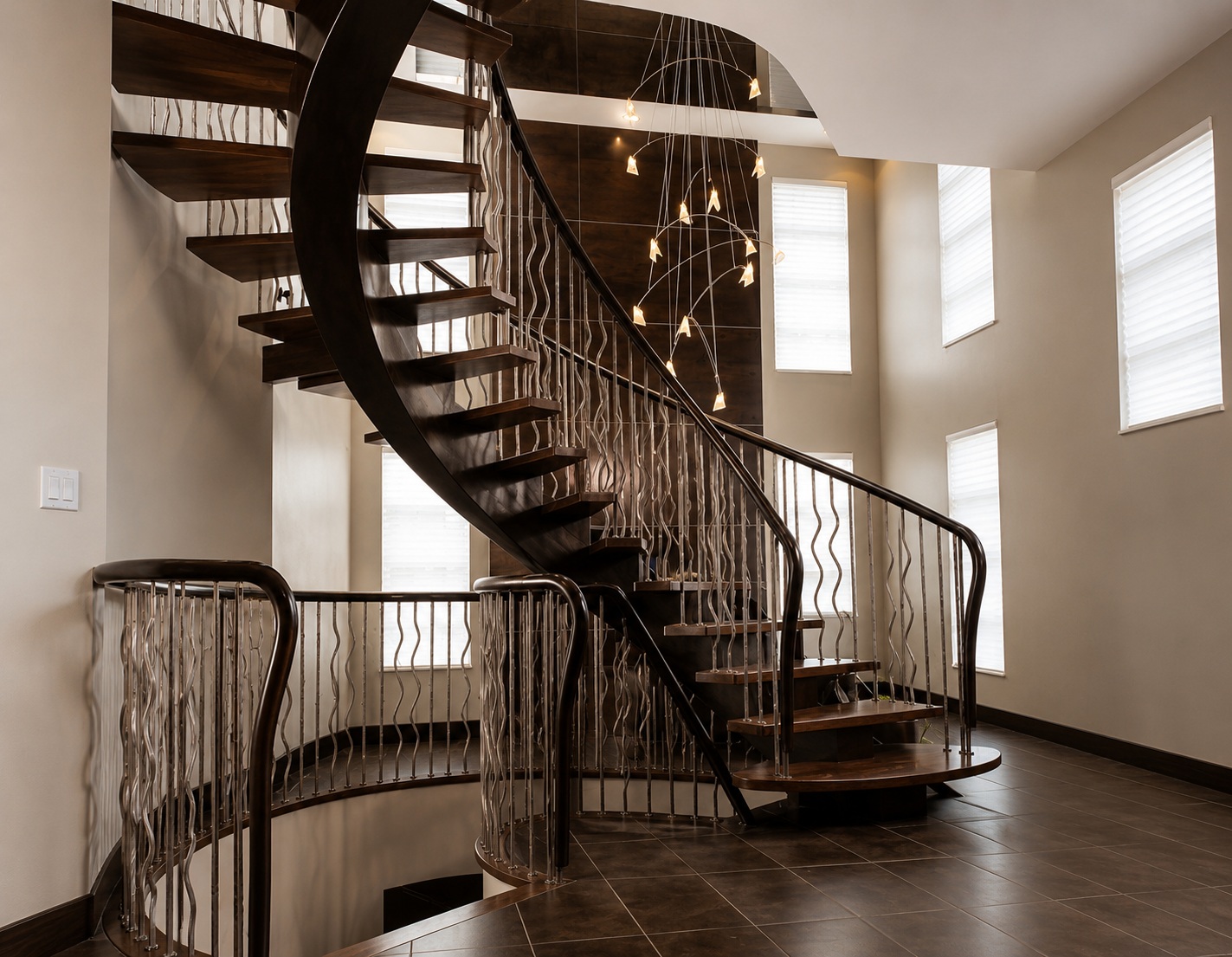
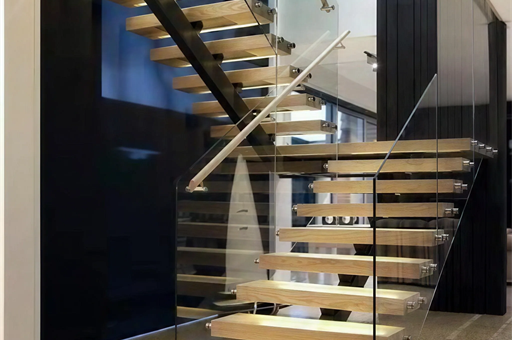
Wood is the material most people picture on a floating staircase, and for good reason. It is warm underfoot, it pairs with almost any interior, and it sits at the approachable end of the price range. Oak, walnut, ash, and maple are the usual species, each with its own colour and grain. Oak and ash sit high on the hardness scale, which helps a tread resist daily wear, while walnut trades a little hardness for a deeper, richer tone.
The real choice is between engineered and solid wood. Engineered treads layer a hardwood face over a stable core, so they move less with humidity and stay flat over time. Solid treads are a single thick section, prized for the look and the feel, but more sensitive to changes in the room. On a floating stair the treads are usually thick, often in the range of 50 to 80mm, so the steps read as substantial rather than thin. Either way, wood keeps the staircase feeling like part of a home rather than a showroom.
Steel Treads
Steel gives the slimmest tread of all. A folded steel plate can be remarkably thin and still carry a person, because the fold itself adds stiffness. That lets the whole staircase read as light and sharp, which suits a modern or industrial interior. Powder-coating finishes the steel in almost any colour, and a matte black is a perennial favourite on floating flights.
Steel has a second advantage that shows up in the structure. Because a steel tread can carry its own load, it sometimes lets us simplify the carrier beneath, which can offset part of its mid-range cost. The one point to plan for is grip, since bare metal can be slippery. We add a textured finish, a timber or rubber insert, or a non-slip nosing so the surface stays sure underfoot. Handled that way, steel is a clean, durable, and quietly engineered choice.
Stone and Marble Treads
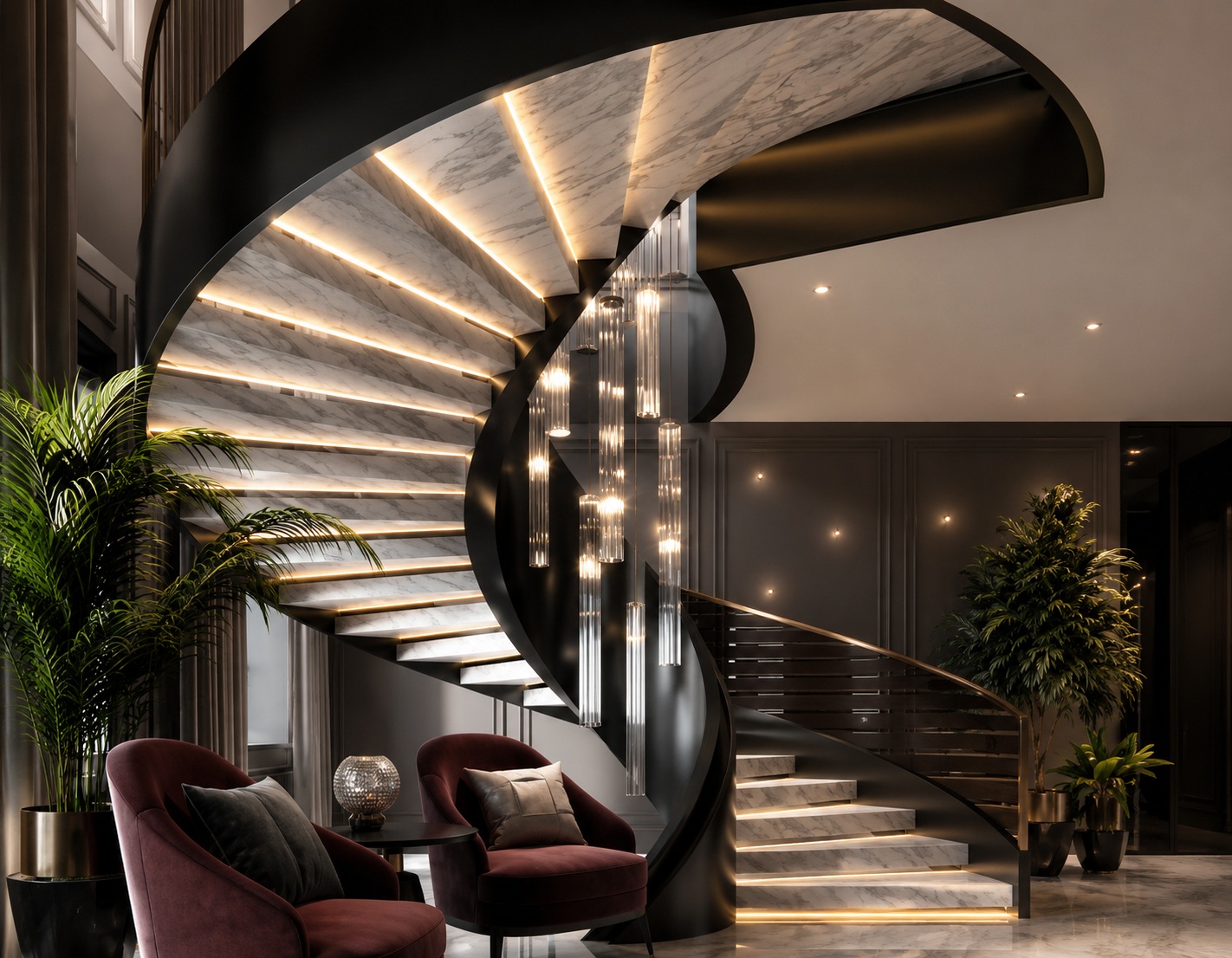
Stone and marble bring a sense of permanence that no other tread matches. A honed marble or granite tread reads as solid and luxurious, and it ages slowly. The trade-off is weight: stone is heavy, so the carrier and the anchors grow to match it, and that pushes both the structure and the cost toward the premium end.
Finish matters here more than with any other material. A polished stone surface looks spectacular but can be slippery, especially in socks, so many projects choose a honed or lightly textured finish for a stair. Stone treads are also usually thick, which suits the substantial look but adds to the load the structure carries. We size the steel for that weight from the first drawing, because a stone tread is unforgiving of an undersized carrier. Used well, stone turns a staircase into the centrepiece of a room.
Concrete Treads
Concrete gives the most monolithic, contemporary look of all the materials. A concrete tread can be cast smooth, polished, or left with a subtle texture, and it pairs naturally with a minimal interior. It is the heaviest option on the list, so it asks the most of the supporting structure, and it is usually the most involved to produce.
There are two common routes to a concrete floating stair, and they affect both the look and the build. One casts the concrete on site around a steel frame, which is structural work for your local contractor. The other uses precast or clad treads on a steel carrier we fabricate, which keeps the heavy, monolithic appearance while moving the heavy lifting into the workshop. We explain both routes in our dedicated floating concrete staircase guide.
Glass Treads
Glass is the most open tread you can choose, because it lets light pass straight through the staircase. A glass tread is never a single sheet; it is structural laminated glass, built from several plies bonded together, so the tread holds together even if one ply cracks. Low-iron glass removes the green tint of ordinary glass and keeps the treads clear.
The key detail is the walking surface. A glossy glass tread would be slippery, so the top face carries a fritted, sandblasted, or otherwise textured zone that gives grip while keeping the open look. Glass treads sit at the premium end on both material and engineering, and they reward careful detailing more than any other choice. If the transparent direction appeals to you, our floating glass staircase guide covers the treads and the matching balustrade together.
How Thick Should a Tread Be?
There is no single right thickness, because it depends on the material and the span. A folded steel plate can be the thinnest of all, while solid timber and stone treads are usually much deeper to look and feel substantial. A longer cantilever also needs more depth to stay stiff, so a tread that reaches further from its support generally grows thicker.
We set the exact thickness on the working drawing once the material and the span are fixed, balancing the appearance you want against the stiffness the structure needs. The aim is a tread that looks right and never feels springy, and the correct number falls out of the engineering rather than a catalogue. The structure behind that decision is covered in our guide to floating staircase structural design.
Grip, Slip and Safety
Grip is the one safety question every tread material has to answer, and the answer changes with the surface. Timber with a satin finish is naturally sure underfoot. Polished stone and bare steel can be slippery, so they take a textured finish, an insert, or a non-slip nosing. Glass relies on a fritted or sandblasted zone for the same job.
The open risers raise a related point, and most residential codes address it. The gap between treads should not let a 4-inch sphere pass through where it sits above a certain height, which keeps a small child safe. These are common US residential values, and your current local edition governs, so confirm them with your local team. The grip on the tread and the gap between treads are both detailing decisions, and both have well-established answers, which is why a floating staircase can be as safe as any other.
Matching the Tread to Your Interior
The most reliable way to choose a tread material is to start from the room rather than the catalogue. The staircase usually sits in the most visible part of a home, so the tread should belong to the style around it rather than fight it. When the material echoes the floor, the joinery, and the light in a space, the staircase reads as part of the architecture instead of an add-on.
A warm, traditional interior tends to suit timber, which carries colour and grain that soften a space. A sharp, modern or industrial room often calls for steel, with its thin profile and matte finish. A luxurious, formal setting is where stone and marble earn their weight, while a minimal, architectural interior pairs naturally with concrete. A light-filled, open-plan space is where glass treads do their most striking work, passing daylight through the whole flight. Once the room points you toward a material, the structure and the budget refine the final choice, and a quick conversation about all three saves a lot of second-guessing later.
A floating staircase with timber treads and a glass railing we built for a Virginia home — trial-assembled before crating.
Tread Materials FAQ
Which tread material should I choose?
There is no single answer, because it depends on the look you want and the budget you have. Wood is the warm, approachable default. Steel suits a slim, modern flight. Stone and concrete give a heavy, luxurious presence, and glass gives the most open look. The right material is the one that matches your interior and the structure you can support.
What is the most popular floating stair tread?
Timber, and usually oak, is the most common choice by a wide margin. It balances warmth, durability, and cost, and it matches the flooring in most homes. Steel and glass are the next most requested, chosen when the look leans modern or when an owner wants light to pass through the flight.
Do floating stair treads need maintenance?
It depends on the material. Timber benefits from an occasional re-oil or refinish, much like a wood floor. Steel, stone, concrete, and glass are largely wipe-clean, though polished stone prefers a pH-neutral cleaner to protect the surface. None of the materials are demanding, but timber is the one that rewards a little upkeep over the years.
Can floating treads be replaced later?
In most cases yes, because the treads fix to the carrier rather than cast into it. A timber or steel tread can usually be unbolted and swapped, which is one reason a clear drawing of the fixings is worth keeping. Cast-in-place concrete is the exception, since those treads are part of the structure itself.
Which tread material is the most economical?
Engineered wood is usually the most approachable, followed by steel in the mid-range. Solid hardwood, concrete, and then stone or structural glass sit toward the premium end, on both the material and the structure each one needs. Our cost guide sets out how material feeds into the overall price.
Are wood or glass treads safer?
Both are safe when detailed correctly. Wood with a satin finish has natural grip. Structural laminated glass holds together even if a ply cracks, and a fritted or sandblasted surface gives it grip. The safety comes from the detailing rather than the material itself, so neither is inherently riskier than the other.
Can you mix tread materials?
Yes, and many projects do. A common pairing puts timber treads on a steel carrier, which marries the warmth of wood with the slim strength of steel. We confirm any combination on the working drawing, so the weight and the fixings suit both materials at once.
Background: the floating staircase guide. Related: floating glass staircase, floating concrete staircase, and the cost drivers. Browse the staircase range.
Double Building Materials draws, manufactures, trial-assembles, crates, and ships your staircase. Your own contractor or installer handles on-site installation and local code sign-off — we can help you find one where available. Material and code points are general references; confirm your current local edition.
Talk treads through on WhatsApp →