




Walk-In Closet Shelving Ideas: Shelves, Drawers and Racks That Fit Your Wardrobe
Cabinet Guides · Custom Closets
The most useful walk-in closet shelving ideas follow two numbers: shelves 12 to 16 inches deep and stacks only a few items high. Put shelves between waist and shoulder height, drawers below them, and luggage on top. Add a shelf tower between hanging sections, a slide-out pant rack, shoe shelves near the floor and LED strips under the shelves.
This guide gathers the shelving ideas that hold up in daily use, from the depth of a single shelf to the way a whole wall divides into sections. The figures are common US starting points, and your own shelving is drawn to your room and to what you actually own.
Closet series The other guides in this series cover walk-in closet designs and layouts, walk-in closet dimensions, a walk-in closet with a vanity and what to measure for a custom closet.
Walk-In Closet Shelving Ideas Start With Depth and Height
Shelves look simple, yet small differences in depth and height determine whether a closet stays organized. This Old House recommends shelves 12 to 16 inches deep for folded clothes, which is approximately the depth of a folded sweater with a little air circulating around it.
Deeper shelves are rarely an improvement, because items pushed to the back disappear behind the front row and are eventually forgotten. A 24-inch-deep section, the depth that hanging requires, therefore works best with drawers or slide-out racks rather than fixed shelves, so everything comes forward toward you.
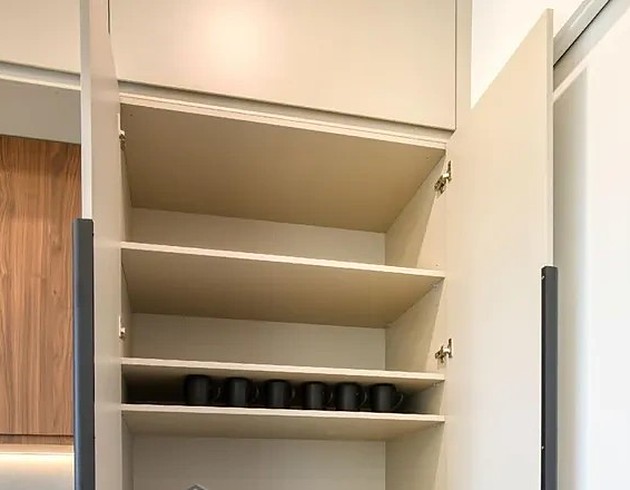
Height matters just as much. The most convenient shelves sit between waist and shoulder height, where you can see and reach every stack without bending or stretching. Reserve the very top and the very bottom for things you use occasionally: luggage, seasonal clothes and spare bedding.
Animated elevation: double hang, a shelf and drawer tower, and long hang appear in turn, with the common US rod heights.
Keep Folded Stacks Low and Shelves Close Together
Tall piles inevitably topple, so This Old House suggests stacks of two to four sweaters or three to five T-shirts, which means shelves spaced closely usually hold more than a few widely separated ones.
Closely spaced shelves also make each stack visible at a glance, so you stop buying duplicates of items hidden at the bottom of a pile. For bulky knits, slightly taller gaps work better; for T-shirts, polos and folded jeans, shorter gaps waste less space between the stack and the shelf above.
Eleven Walk-In Closet Shelving Ideas That Work Every Day
1. A shelf tower between two hanging sections
A central tower of shelves divides a long wall into two hanging sections and gives folded clothes their own column. It also stiffens the entire run, because the tower panels support the rods on either side.
2. Double hang beside long hang
Two rods at about 40 and 80 inches hold shirts and jackets twice over, while a single rod about 60 inches or higher takes dresses and coats. Two sections of double hang for each section of long hang is a sensible, practical starting ratio.
3. Drawers at hand height
Drawers belong between knee and waist height, where you can look straight into them. Below that, use them for items you open less often, and reserve the upper drawers for everyday underwear, socks and athletic clothes.
4. A jewelry drawer at the top of the stack
A shallow drawer divided into small compartments keeps rings, watches and earrings separate and visible. Place it at the top of a drawer stack or in the island, close to the mirror where you put things on.
5. A slide-out pant rack under medium hang
A slide-out pant rack holds trousers folded over separate bars, so each pair stays visible and organized. It fits neatly below a single rod at shoulder height, using space that would otherwise sit empty.
6. Shoe shelves near the floor or beside the door
Shoes are heavy and dusty, so the lowest shelves suit them particularly well. A dedicated tower beside the door works too, because you choose shoes last on the way out, and an LED strip under each shelf makes dark pairs easier to distinguish.
7. Open shelves with dividers for handbags
Handbags slump and tangle on wide, undivided shelves. Vertical dividers give each bag its own compartment, keep the shapes upright and let you see the whole collection without lifting one bag off another.
8. A top shelf for luggage and seasonal clothes
The space above the top rod suits suitcases, winter blankets and seasonal clothes that you exchange twice a year. In a taller room, a second row of shelves or a run of cabinets with doors keeps that upper storage dust-free.
9. Light under every shelf
LED strips under shelves and under the top of each section light the clothes from the front, exactly where a ceiling light cannot reach. We plan the strip positions and the cable routes in the drawings, and a licensed electrician makes the final connection.
10. Corner shelves that use the L
Where two walls meet, hanging rods leave an awkward, inaccessible corner. Shelves that turn the corner, or a short stack of open shelves at the junction, recover that space for folded clothes, hats or several pairs of shoes.
11. An island with drawers and a folding top
Where the room leaves a walkway on every side, an island adds a block of drawers and a generous surface for folding and packing. It also gives a natural place for the jewelry drawer and for accessories you reach for every morning.
Shelves That Do Not Sag: Span, Board and Support
A shelf sags under weight, and the sag grows quickly as the unsupported span gets longer. Books and folded denim are surprisingly heavy, so long shelves need either a stiffer board, a thicker shelf or a support in the middle.
Plywood is generally stiffer than particleboard of the same thickness, which makes it a sensible choice for long shelves and for panels that carry heavy hanging. Melamine-faced particleboard suits most other shelves, because its hard face is flat, consistent and easy to wipe clean.
Shorter spans are the most economical solution. Dividing a long wall into sections, as the shelf tower idea does, keeps every shelf short and stiff. Our cabinet and wardrobe materials guide compares the boards in more detail, and for US homes the composite boards in our closets meet the TSCA Title VI formaldehyde standard.
Fixed or Adjustable Walk-In Closet Shelving
Adjustable shelves suit a wardrobe that changes, such as a growing child's closet or a guest room. Fixed shelves suit a carefully counted wardrobe, and they add stiffness to the whole section, because a fixed shelf ties the panels on both sides together.
Many closets combine the two: fixed shelves at the top, the middle and the bottom of a tower, with the shelves between them left flexible. The drawings show which shelves are fixed and which can move, so the plan matches the way you dress.
Shelving for Children and Shared Closets
Children reach considerably lower, so This Old House suggests rods at about 36 to 40 inches in a child's closet. Shelves and drawers within easy reach encourage children to put their own clothes away, and higher shelves can hold the things they will grow into.
For accessible storage, the 2010 ADA Standards set a reach range of 15 to 48 inches above the floor. Even when the rules do not apply to a private home, that range is a useful guide for anyone who prefers not to stretch or kneel.
Shelving Ideas for Ties, Belts, Scarves and Hats
Accessories are small, numerous and easily lost, so they deserve dedicated, visible locations rather than a corner of a general shelf. Shallow drawers divided into compartments organize ties, belts and folded scarves far better than a deep drawer where everything piles together.
Hats and caps keep their shape on an upper shelf with generous vertical clearance, while sunglasses and watches belong beside the jewelry drawer. Positioning every accessory near the mirror, rather than scattered across the closet, shortens the morning routine considerably.
Open Shelving or Shelves Behind Doors
Open shelving keeps everything visible and accessible, which suits a walk-in closet with its own door and good lighting. Shelves behind hinged doors suit a closet that opens directly onto the bedroom, because the doors hide visual clutter and protect folded clothes from dust.
Many owners combine both approaches: open shelves and hanging for everyday clothes, and cabinets with doors above for seasonal items. The drawings show each door swing, so no door collides with a drawer, a rod or the walkway.
Six Walk-In Closet Shelving Mistakes to Avoid
- Shelves that are too deep, so items disappear behind the front row and are forgotten.
- Gaps that are too tall, so stacks grow until they topple and the space above is wasted.
- No light below the top shelf, so dark clothes and shoes are difficult to distinguish.
- Shoes positioned at eye level, where the most convenient shelves should hold folded clothes.
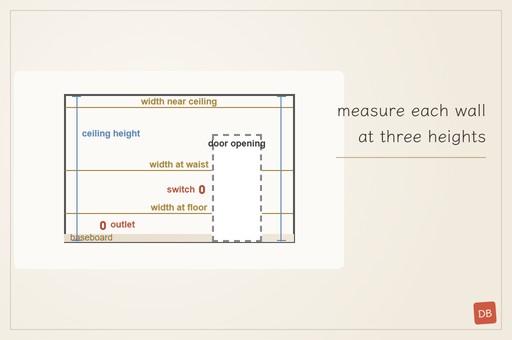
- Ignoring the door swing, the light switch and the outlets, which the drawings must show.
- Forgetting the baseboard and the ceiling height, so panels do not meet the wall or the ceiling cleanly.
Each of these mistakes is easy to prevent at the drawing stage and expensive to correct afterwards. That is the practical reason to plan the shelving with the rest of the closet, using accurate measurements of the room.
Plan the Shelving With the Whole Closet
Animated model: a three-section closet wall builds part by part, from the panels to the drawers, the pant rack and the lights.
Shelving works best when it is drawn with the rods, the drawers and the light, not added afterwards. Our walk-in closet designs guide covers the layouts, and our walk-in closet dimensions guide explains the widths each layout needs.
Drawing-First Coordination means each shelf is drawn to your room and your inventory before anything is cut. After production in our factory, Trial Assembly Before Packing lets us stand each section up and check it, and Export-Ready Crating protects the labelled panels on the way to you.
Want shelving drawn to your wardrobe?
Send the room size and a rough count of what you fold, hang and store. We reply with closet design drawings, then a factory quote.
Send Your Room Size →More Questions Owners Ask
How deep should walk-in closet shelves be?
Usually 12 to 16 inches for folded clothes. Deeper shelves hide items at the back, so a 24-inch-deep section suits drawers or slide-out racks better.
What height suits closet shelves?
Shelves between waist and shoulder height are the most convenient. Keep the top and bottom shelves for luggage, seasonal clothes and things you use less often.
How far apart should shelves be in a walk-in closet?
Close enough for low stacks: two to four sweaters or three to five T-shirts high. More shelves, closely spaced, usually hold more than a few tall gaps.
Can you add lighting to closet shelves?
Yes. We build LED strip lighting under shelves and sections and plan the cable routes in the drawings; a licensed electrician makes the final connection.
Do you build walk-in closet shelving for US homes?
Yes, as part of a complete closet drawn to your room; see our walk-in closet systems and reach-in closet systems.
Related: Walk-in closet designs · Walk-in closet dimensions · Custom closets · Walk-in closet systems · Melamine cabinets and wardrobes · Custom closet design guide
Sources: This Old House, closet organization (2024); Family Handyman, standard closet sizes (2025); 2010 ADA Standards, section 308; USDA Forest Products Laboratory, Wood Handbook (FPL-GTR-282).
Double Building Materials draws, builds, trial-assembles, crates and ships custom closets from our factory in Guangdong, China. Our crews and partner installers can install in the USA, Australia and Canada, quoted separately, or your own installer can fit the closet from our drawings.