

Interior Stair Railing Ideas: 9 Modern Styles for Indoor Stairs
Railing Design Guides · Interior Stairs
The most convincing interior stair railing ideas pair one clear material with the structure of the stair. Frameless glass delivers openness, and horizontal stainless cable draws light modern lines. Solid rod or slim pickets create a crisp graphic rhythm, forged iron suits classic homes, and a warm wood handrail softens the touch. Every idea still has to meet local guard and handrail requirements.
An interior railing is the one piece of the stair you touch daily, and it often frames the view from the entrance, the living room or the landing above. Choosing it well means balancing appearance, light, safety and maintenance. This guide walks through nine interior stair railing ideas with animated models, explains which stair types suit each one, and shows how the same ideas look on real projects we have drawn and manufactured. For outdoor and deck styles as well, see our broader guide to railing ideas.
How to Choose an Interior Railing
Start with the architecture of the stair rather than the catalog, because the structure decides which railing will look natural. A floating stair with open risers invites a transparent railing, because a heavy balustrade would hide the very structure you paid to show. A curved stair in a formal entrance often looks more resolved with forged iron or continuous metal pickets, which follow the curve naturally. A straight stair against a wall may only need a well-detailed handrail on one side and a guard on the open side.
Next, consider daylight and sightlines, because glass and cable keep natural light moving through a stairwell, which helps in narrow townhouses and in homes where the stair sits beside the main living space. Pickets and rods cast shadow patterns that add texture, and closer infill gives a little privacy where a stair overlooks a bedroom corridor.
Finally, consider everyday maintenance and home routines. Glass needs regular cleaning, especially near the handrail. Horizontal infill can look climbable to young children, so some families prefer vertical pickets or glass. Wood handrails feel warm in winter, while stainless steel stays cool and durable in busy homes.
Glass Ideas: Open, Bright and Quiet
Glass stays a top choice for contemporary interiors because it protects the open side without blocking the view. The two animated models below show point fixings and a concealed floor channel, and our guide to glass railing mounting systems compares every configuration in more depth.
Point-fixed standoff glass
Frameless glass in a floor channel
Animated models: each railing builds part by part, then turns so you can see the profile. Illustrations, not drawn to scale.
1. Glass between slim stainless posts
Clear panels held between polished posts, with a round handrail on top, keep a stairwell bright and read as quietly modern. See our glass stair railing range.
2. Point-fixed standoff glass
Each panel is bolted to the stringer face on stainless standoffs, so the glass seems to float beside the stair. Explore our standoff glass railing options.
3. Frameless glass for lofts and landings
Panels sit in a continuous floor channel, so only glass shows above the floor, and a separate handrail or cap adds grip where needed. See our frameless channel railing.
Indoor glass railings use safety glass, typically tempered or laminated, and our article on tempered glass railing thickness and safety explains the difference. If you love the cleanest possible look, read our frameless glass railing guide before you decide, because a frameless system still needs a graspable handrail somewhere on the stair.
Metal Ideas: Cable, Rod, Pickets and Iron
Metal infill offers more visual texture than glass and usually requires less frequent cleaning. Each option creates a distinctive pattern, from the fine horizontal lines of cable to the vertical rhythm of pickets and the sculptural presence of forged iron.
Horizontal stainless cable
Forged iron pickets
Animated models: stainless cable and forged iron, each assembled part by part. Illustrations, not drawn to scale.
4. Horizontal stainless cable
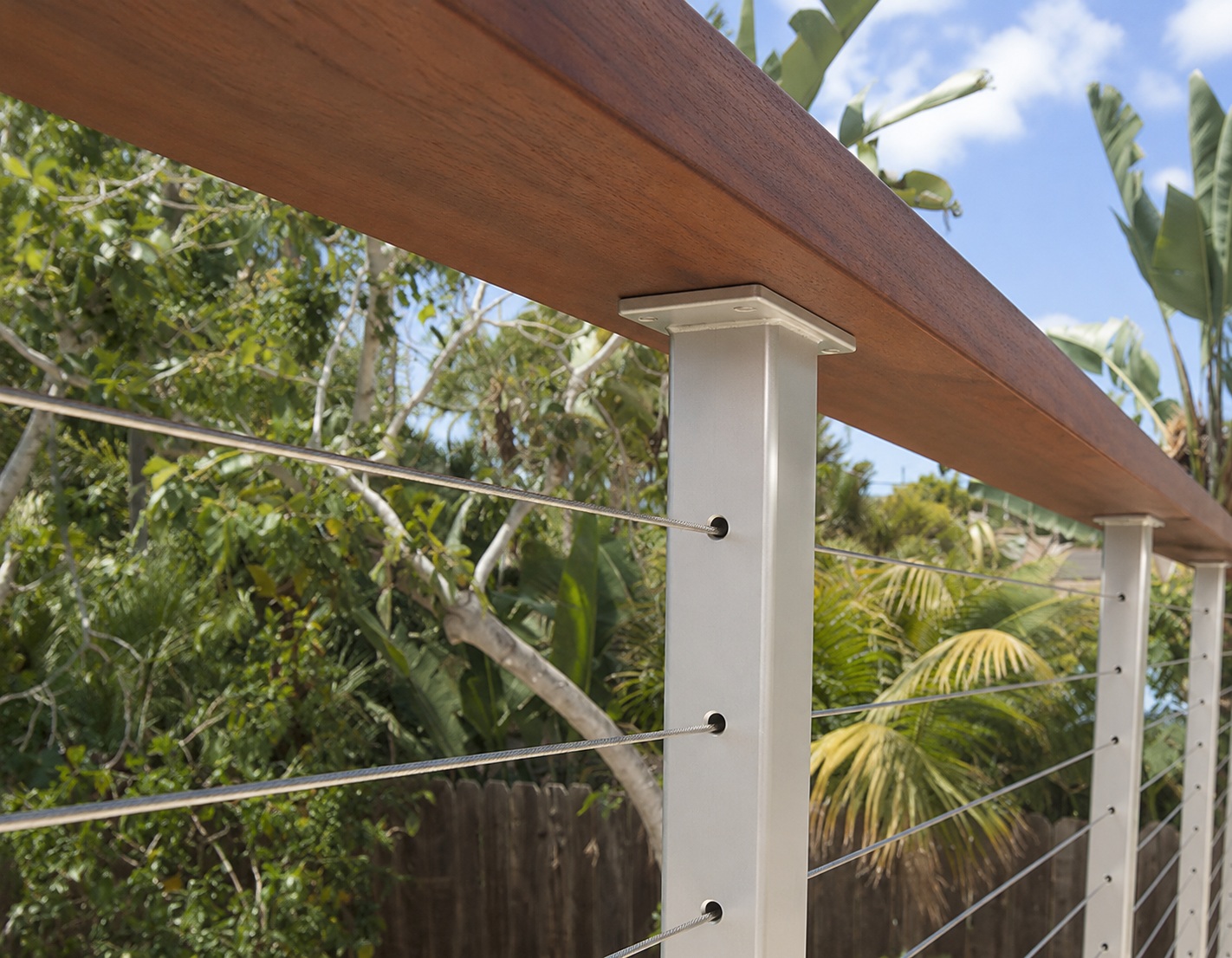
Fine cables between black or stainless posts draw light horizontal lines across the stair. Read our interior cable railing guide.
5. Solid stainless rod
Rods read heavier than cable and stay rigid without tension hardware, with brushed, mirror or black finishes. Browse our stainless rod railing.
6. Slim black metal pickets
Vertical pickets in a dark powder coat give a crisp graphic rhythm against pale walls. Explore our aluminum railing family.
7. Forged iron for classic homes
Forged pickets, collars and scrolls suit traditional and curved stairs, and our guide to wrought iron stair railing covers styles and care.
Cable and rod suit modern interiors with steel or wood treads, and both look more refined when the posts and handrail share one consistent finish. Pickets work across architectural styles, from minimal black to traditional white. Forged iron is the traditional companion for curved and formal stairs, where collars, twists and scrolls can echo other ironwork in the house.
Wood and Lighting Ideas
8. A warm wood handrail on metal or glass
A wood handrail softens a modern railing and makes the stair feel welcoming to the touch. Oak works well with glass or stainless posts, and the wood can match the treads for a coordinated look. Our red oak and glass staircase in Hawaii shows the combination on a U-shaped stair, and our guide to stainless steel railing with glass and wood covers the detailing.
9. Lighting that guides the way
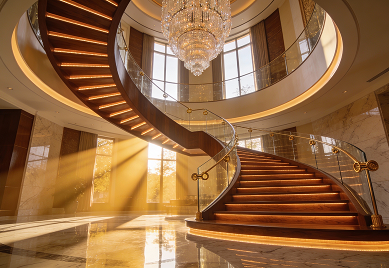
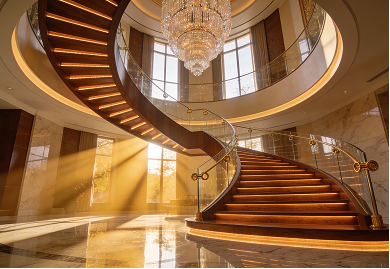
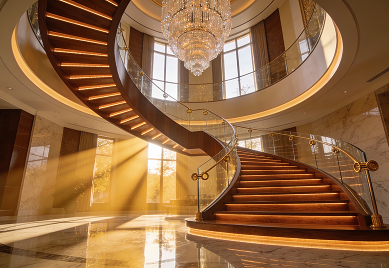
Integrated lighting transforms a railing into an evening feature. Step lights recessed along the stair, or light concealed near the handrail, guide the feet without glare. Our curved staircase with step lighting in Crawfordville, Florida is a good example. We plan the fixings and cable routes in the drawings, while a licensed electrician makes the final electrical connections on site.
Match the Railing to the Stair Type
The same railing can look elegant on one stair and awkward on another. Use this table as a starting point, then review the overall design with our staircase design ideas guide.
| Stair type | Railings that suit it | What to watch |
|---|---|---|
| Straight stair | Glass, cable, rod, pickets or iron | Long runs reveal any misalignment, so precise drawings and a trial assembly pay off. |
| L-shaped and U-shaped stairs | Glass or pickets with level landing sections | Handrail transitions at each landing need careful detailing. |
| Curved stair | Forged iron or metal pickets that follow the curve | Each part is shaped to the radius, so measurements must be exact. |
| Spiral stair | Pickets or rods that follow the helix | The outer handrail carries most of the grip, so its profile matters. |
| Floating stair | Frameless or standoff glass, or cable | Open risers have their own 4-inch limit, and the wall side may need a handrail. |
Floating stairs deserve a special mention, because the railing decides how weightless the stair appears. Our guide to the floating glass staircase explains how glass treads and glass railings work together.
Finishes and Colors for Indoor Railings
Finish selections define the character of the stair as much as the infill. Stainless steel comes brushed for a soft satin look, mirror polished for a jewelry-like shine, or black for contrast. Powder-coated metal offers black, white or bronze tones that can match window frames, door hardware or kitchen fittings.
Clear glass gives the most open look of all. Wood handrails and treads can follow the floor, so the stair feels like part of the architecture rather than an added object. A practical guideline is to limit the palette to two or three materials, with one dominant finish carried through posts, brackets and handrail ends.
Safety Rules Every Idea Must Respect
Each interior stair railing idea in this guide operates within the same residential regulations. Under the 2024 IRC, a flight with four or more risers needs a handrail on at least one side, and the handrail sits 34 to 38 inches above the nosing line. An open side more than 30 inches above the floor below also needs a guard. Our detailed guide to stair railing height explains each number with animated diagrams.
Openings matter as much as height, so a 4-inch sphere must not pass through a guard, with 4⅜ inches allowed on the open side of a stair and 6 inches at the triangle under the bottom rail. Glass closes the opening completely, while cable, rods and pickets meet the rule through spacing and tension. Your local building authority confirms the final design, because local adoption and amendments govern each project.
What Drives the Budget
Each railing we make is drawn and priced for its own stair, so there is no standard price list. Several variables influence the budget most: the infill material, the glass type and thickness, the number of curves and landings, the finish, and how many special fittings the transitions require.
- Glass systems vary with panel size, glass type and the mounting method.
- Cable and rod systems depend on post spacing, the number of runs and the finish.
- Curved work takes more fabrication time, because each part follows the radius.
- Mixed materials, such as wood handrails on stainless posts, add coordination and finishing steps.
For a deeper explanation of the drivers, see our articles on glass railing cost and cable railing cost.
Interior Stair Railing Ideas From Our Projects
Ideas become easier to evaluate when you see them on completed stairs, and these projects show several of the styles above in real homes.
- Square-tube stair with standoff glass railing in Atlanta: point-fixed glass beside a crisp steel stair.
- Modern staircases with glass railing in two Virginia homes: clear glass that keeps two entrances open and bright.
- Marble stone staircase with glass railing in Texas: glass that lets the stone treads take the spotlight.
- White-oak floating staircase with glass in Florida: transparent railing on a floating stair.
- Red oak U-shaped staircase with glass in Hawaii: warm timber combined with glass panels.
- Curved staircase with step lighting in Crawfordville: lighting that turns the stair into a night-time feature.
On each project we drew the railing with the stair, built both on a trial assembly in our 4,500 m² factory, and crated the parts for export. The approach, Drawing-First Coordination, Trial Assembly Before Packing and Export-Ready Crating, is how a custom railing arrives ready to fit the stair it was made for.
Our video: a glass railing stair installation review, showing open-riser fit-up and site coordination.
Interior Stair Railing FAQ
What are some creative ideas for stair railings?
Popular creative directions include point-fixed glass that seems to float, horizontal stainless cable, slim black pickets, forged iron with scrolls, a warm wood handrail on metal posts, and lighting recessed along the stair. The right fit depends on the stair type, the light and how the stair is used day to day.
Do you need a handrail for interior stairs?
Yes, in most residential situations. Under the 2024 IRC, each flight with four or more risers needs a handrail on at least one side, and an open side more than 30 inches above the floor below also needs a guard. Check the edition your local building department enforces.
Is a glass railing safe for indoor stairs?
A glass railing made with safety glass, such as tempered or laminated glass, and designed to the local guard rules is a common, durable choice for interior stairs. It still needs a graspable handrail, either on the glass, on posts or on the wall.
Can I mix wood and metal on a stair railing?
Yes, and a wood handrail on stainless or black metal posts is a widely used combination, because it pairs a warm touch with a slim, durable structure. Keep the palette to two or three materials so the design stays calm.
How do I choose between glass and cable for an indoor stair?
Choose glass when you want an uninterrupted view and the cleanest look, and cable when you prefer fine lines, less cleaning and a lighter structure. Families with small children sometimes prefer glass or vertical pickets to horizontal infill.
Keep exploring railing design. Start with our master guide to railing design ideas for 2026, check the rules in stair railing height, and compare infill in interior cable railing. When you are ready to draw your own stair, browse our custom balustrade and railing systems or the full glass railing range.
Double Building Materials draws, manufactures, trial-assembles, crates and ships your interior railing as one coordinated system. We can also install it for you: our own crews and partner installers cover the USA, Australia and Canada nationwide, quoted separately. Your own contractor can also fit it from our drawings, with final code sign-off by your local building authority. Code values above refer to the 2024 International Residential Code; your local adopted edition governs the project, so please confirm the current version with your local team. With 25+ years and 800+ projects shipped to 60+ countries from our 4,500 m² factory in Guangdong, China, we draw and trial-assemble every railing before it ships.
Talk to us on WhatsApp →