

Railing Design Ideas for 2026: Materials, Styles & Where to Use Them-Railing Guides
Railing Design · The Complete Ideas Guide
Railing Design Ideas for 2026: Materials, Styles & Where to Use Them
Good railing design ideas balance three things: safety, the view you want to keep, and the style of the home. The choice comes down to the material — glass, cable, stainless steel, aluminum, or wrought iron — and where the railing goes, whether a stair, a balcony, a deck, or a pool. Each pairing changes the whole look.
A railing is safety you have to look at every day, so its design matters as much as its strength. This complete guide gathers railing design ideas the way an owner chooses them: first the material, then the location, then the finish. Every material and scene below links to a focused guide and to the real systems we make, so you can move from inspiration to a buildable plan.
How to Choose a Railing Design
Useful railing design ideas start from three questions, not from a photo. First, what does the railing have to protect, and how high must it be to do that safely? Second, how much of the view beyond it do you want to keep? And third, what style does the home already speak in? Your answers point straight at a material before you compare a single picture.
The view question is the one that surprises owners most. A solid balustrade gives privacy but blocks the outlook, while glass or thin cable almost disappears and lets the scene through. A stair in a bright hallway often wants that openness, and a deck with a sea or garden view almost always does. Where privacy matters more, a patterned metal or a frosted glass panel keeps the screen without feeling heavy.
Location then sets the durability. An indoor stair railing can be almost anything, but a coastal balcony or a poolside fence needs a material that shrugs off salt, damp, and sun for years. The sections below run through each material in turn, then through each part of the home, so you can match the look you like to the place it has to live.
Two practical lenses finish the shortlist: budget and maintenance. Glass and stainless sit at the considered end and ask for little upkeep, while aluminum keeps both cost and care low, since a wash is usually enough. Cable is economical in materials but rewards precise tensioning, and ornamental wrought iron is the most labour-intensive to forge. None of this decides the design on its own. It simply keeps the choice realistic alongside the look you are drawn to.
Railing Materials at a Glance
Most railing design ideas grow out of one of five materials. Each has a look, a level of openness, and a natural home, so the quickest start is to see them side by side. The table below sketches the character of each, and the sections that follow take every one of them further.
| Material | Character and where it suits |
|---|---|
| Glass | The clearest, most open guard. Keeps a view and lets in light, for a modern stair, balcony, or deck. |
| Cable | Thin horizontal lines that nearly vanish. An airy, relaxed look for a deck or a contemporary interior. |
| Stainless steel | Crisp, durable, and low-maintenance. Suits modern homes and coastal sites in marine-grade 316. |
| Aluminum | Light, rust-free, and powder-coated in any colour. A practical, low-care choice for decks and porches. |
| Wrought iron | Forged, ornamental, and full of character. The classic for a period home or a statement stair. |
None of these is better than the rest; each answers a different home. To weigh them directly, read our railing materials compared guide. You can also browse the full range we make on the railing and balustrade hub, then read on for the ideas behind each material.
Glass Railing Ideas
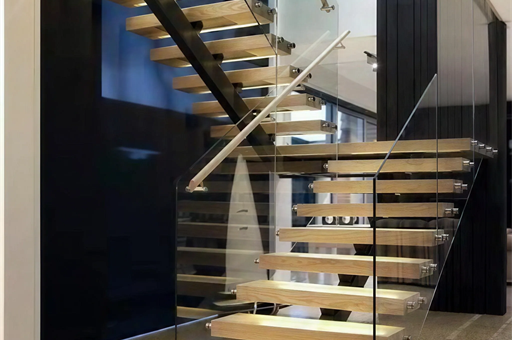
Glass is the railing for keeping a view. A clear panel guards the edge while letting light and sightlines pass straight through, which is why frameless glass is the signature look of modern stairs, balconies, and decks. Frosted or tinted glass softens that for privacy or sun control, without giving up the clean, uninterrupted line.
The design choice within glass is mostly the fixing, since how the panel is held changes the whole look. A frameless standoff or spigot system shows almost no metal, while a slim top-and-bottom channel reads a touch more structured. Start with our glass railing guide, then go deeper on the frameless glass railing look, the spigot vs channel mounting systems, and the glass railing cost drivers. Comparing it with cable? See glass railing vs cable railing.
Browse our glass balustrade range by fixing. Standoff models include a staircase standoff, a commercial lobby standoff, a floor-mount standoff, and a wall-mount standoff.
Spigot models include a balcony spigot, a deck spigot, a pool-fence spigot, and square and round spigots. Post-and-glass models include a commercial balustrade, a balcony balustrade, a stair balustrade, and square and round post options.
For a slim framed look, the U-channel range covers a balcony channel, a pool channel fence, and side-mount and top-mount versions.
Cable Railing Ideas
Cable railing trades panels for thin horizontal lines that the eye reads straight past. From a few steps back the cables almost vanish, so a deck feels wider and a view stays open. It is the relaxed, contemporary cousin of glass, and it has become one of the most popular deck and stair railing ideas for exactly that reason.
The design choices are the post material, the frame colour, and whether the run is indoors or out. A matte black frame with bright stainless cable is the modern default; warm timber posts with cable infill feel softer. Read the cable railing guide to start, then see interior cable railing ideas, cable railing for stairs, and the all-important cable spacing and tension rules.
Browse the cable railing range. It includes a porch cable railing, an outdoor cable railing, an interior cable railing, a cable stair railing, a black cable railing, and a deck cable railing.
Stainless Steel Railing Ideas
Stainless steel is the quiet workhorse of modern railing design. It is crisp, strong, and almost maintenance-free, and it carries glass, cable, or its own rods with equal ease. In marine-grade 316, it stands up to salt and damp, which makes it the dependable choice for a coastal balcony or a poolside run where lesser metals struggle.
The design ideas here are about finish and infill. A brushed satin finish reads soft and contemporary, while a black coating turns it sharp and graphic. Read the stainless steel railing design guide, settle the grade question in 304 vs 316 stainless steel. Weigh the budget in stainless steel railing cost, and keep it bright with how to clean stainless steel railings.
Browse the stainless steel railing range. The rod systems include a black rod railing, a deck rod railing, an outdoor rod railing, a stair rod railing, and a horizontal rod railing.
Aluminum Railing Ideas
Aluminum is the practical, low-care choice that still looks considered. It never rusts, it is light to handle, and it takes a powder coat in any colour. It holds a clean line on a deck or a porch for years with little more than a wash. Cast aluminum adds ornament for a more traditional look, while extruded profiles keep things sharp and modern.
The design ideas centre on the infill and the colour. The same posts can carry glass for a view, cable for an airy feel, or pickets for a classic guard. Read the cast aluminum railing guide and the cast aluminum deck railing guide for the looks and the care.
Browse the aluminum railing range. The post-and-glass systems include an aluminum glass deck railing, a black aluminum glass railing, and side-mount and top-mount options.
The deck-railing line covers a glass-infill deck railing, a cable-infill deck railing, a picket deck railing, and bronze, white, and black finishes.
Wrought Iron Railing Ideas
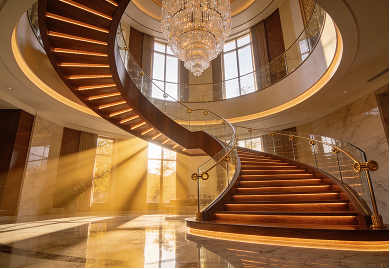
Wrought iron is the material with the most character. Forged scrollwork, twisted balusters, and ornamental panels give a railing a hand-made richness that no extruded profile can match. It suits a period home, a grand curved stair, or any project that wants the railing to be a feature rather than a quiet guard, indoors or out.
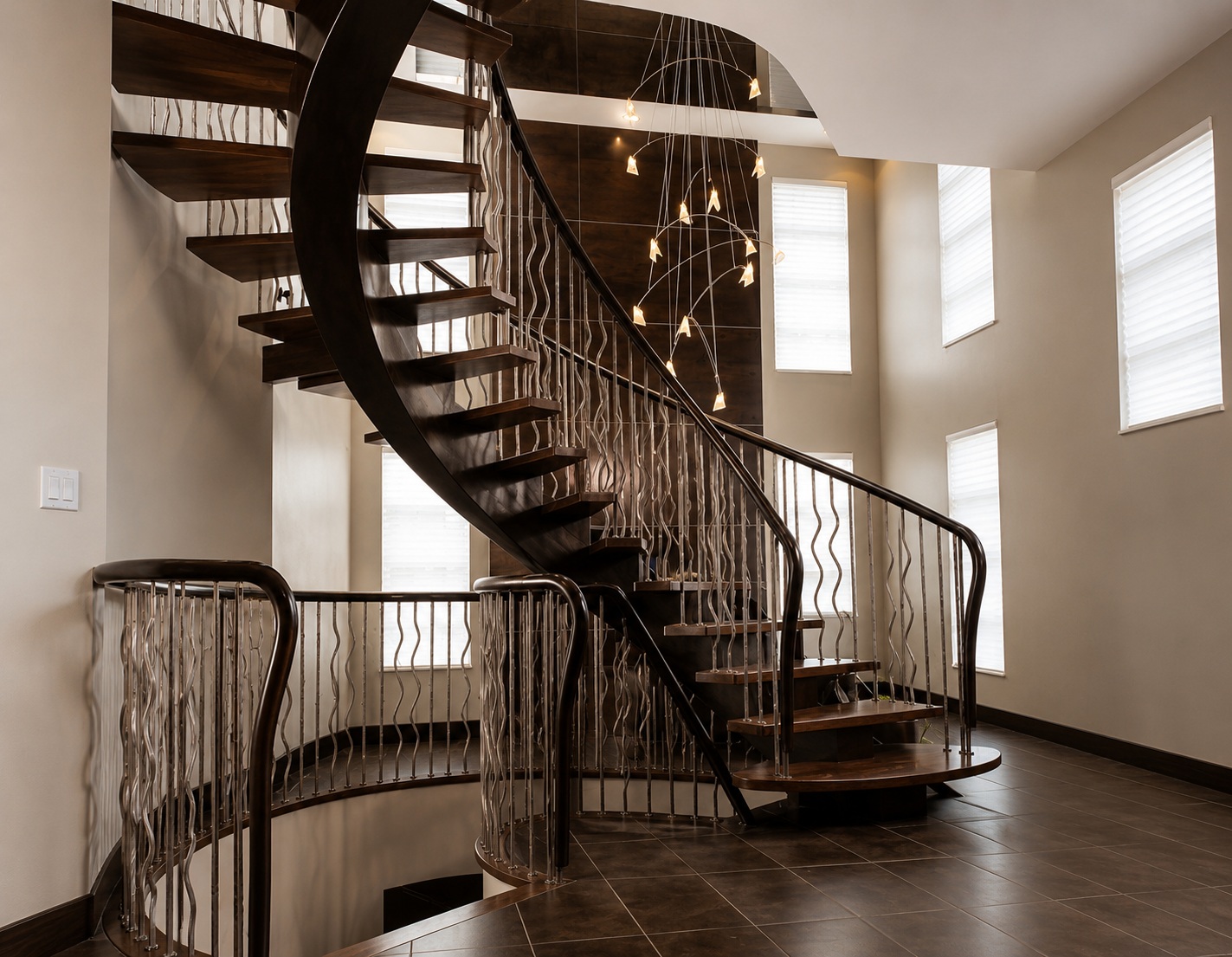
The design ideas range from intricate traditional patterns to clean modern bars in the same forged metal. A satin black finish is the classic, though bronze and hand-rubbed tones add depth. Read the wrought iron railing ideas guide, see it on a flight in wrought iron stair railing, and weather it well with exterior wrought iron railing.
Browse the wrought iron railing range, including a deck railing, a balcony railing, a porch railing, an interior railing, an outdoor railing, and a stair railing.
Railing Ideas by Location
The same material behaves differently depending on where it goes, so it helps to think by location as well as by metal. A stair railing has to flow with the flight and meet handrail rules. A balcony railing frames a view and faces the weather, and a deck or pool fence has to survive constant sun and damp. The right idea is the one that fits the place.
For the outdoor living spaces, our scene guides go deep. Start with balcony railing ideas, compare options in balcony railing materials and types, and see the favourite open look in glass balcony railing and glass deck and balcony railing ideas.
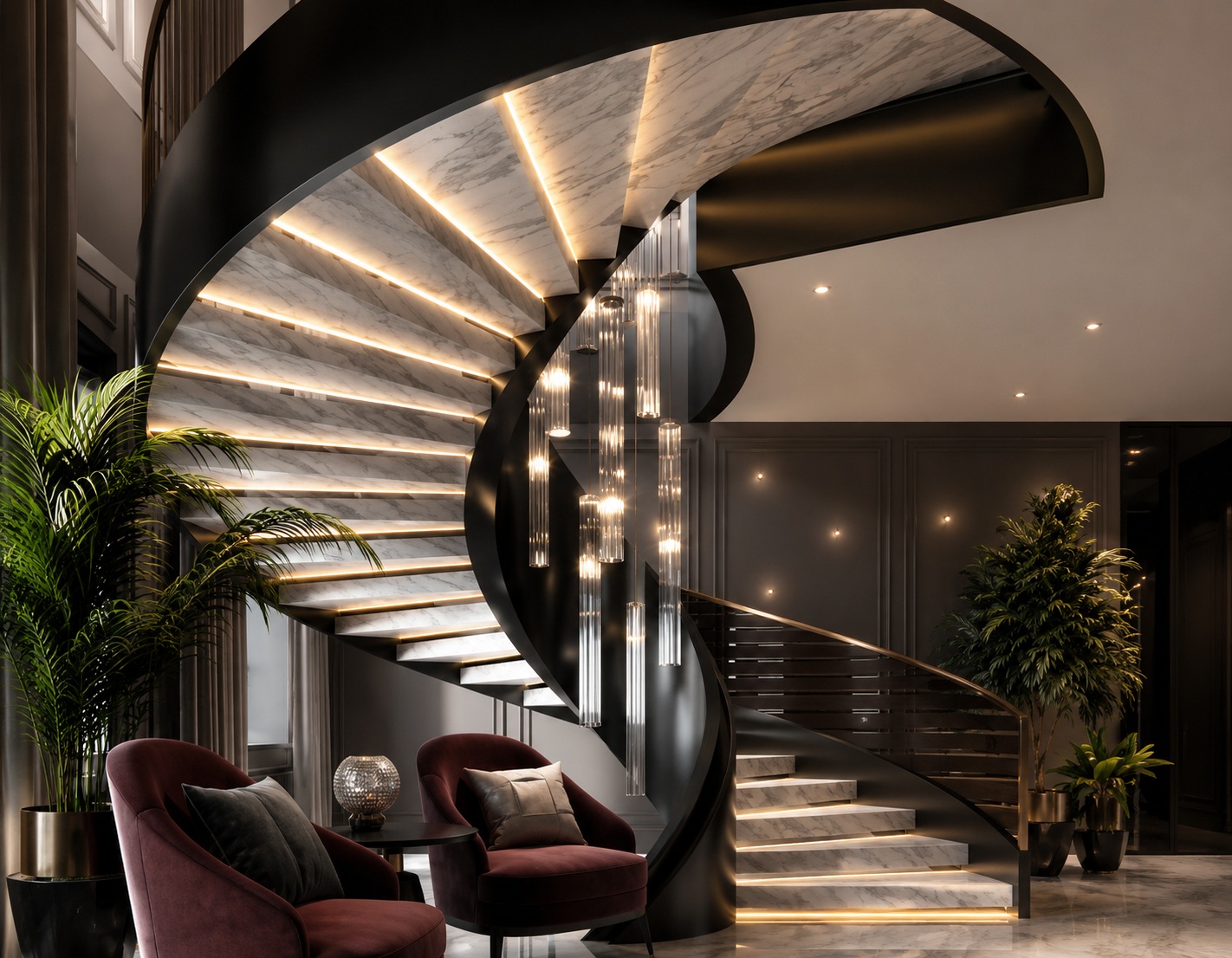
A railing should also match the staircase it follows, which is where the staircase and railing lines meet. For the stair-specific looks, our staircase guides cover them in full — design directions live in our staircase design ideas guide. Whatever the spot, you can match a system from the railing and balustrade hub.
Lighting and Finishing Touches
Lighting turns a railing into a feature after dark, and it is moving away from clunky post-cap lamps toward something quieter. The trend in 2026 is a subtle LED strip recessed into the underside of the top rail or set into the posts, casting a soft downward glow. It lights the walking surface without glare and gives a deck or a stair a calm, high-end feel.
Because the wiring has to be planned into the rail, lighting is a design decision rather than a late add-on. We mark the channel and the driver position on the drawing before fabrication, so the route is coordinated rather than chased in afterwards. Small finishing choices then complete the look: a handrail profile that feels right in the hand, a powder-coat colour that ties into the home, and end details that read as deliberate.
Comparing railing materials for real projects, from our factory — tap to play.
2026 Railing Design Trends
Railing design in 2026 keeps moving toward the open and the minimal. Horizontal lines are replacing vertical balusters, with cable and slim rod systems drawing the eye outward and making a space feel wider. Frameless glass holds its place for the same reason, while frosted and tinted panels answer the owners who want privacy or sun control without losing the clean look.
A few more directions stand out this year. Mixed materials lead, pairing warm timber handrails with metal or glass infill rather than sticking to one material. Colours are drawn from nature, with matte black joined by forest greens, warm greys, and earthy tones. Recessed LED lighting and a restrained, sculptural profile round out the look. The thread through all of it is a railing that supports the architecture quietly rather than competing with it.
The reassuring part is that these directions sit on materials that last. A well-made glass, cable, or stainless railing will read as current long after a trend colour fades, because the quality of the system, not the fashion, carries it.
Railing Height and Safety Basics
A railing is a safety barrier first, so a few rules shape every design. Guard height, the gap a small child could pass, and handrail height all sit within common references such as the IRC and IBC in the United States, with similar standards elsewhere. Cable railings have their own spacing and tension rules to stop the lines bowing. These figures keep a beautiful railing a safe one.
The numbers shift a little by location and by whether the project is a home or a commercial building. We design to common references and note them on the drawing, but your local adopted code edition is what actually governs, so confirm the current version with your local team before you build. The guides below set out the owner-relevant essentials.
Read balcony railing height and cable railing spacing for the home essentials. For a project build, see ADA railing requirements, the commercial railing code, the commercial handrail guide, and commercial stair and stairwell railing.
Choosing and Specifying Your Railing
Turning a railing idea into the right order takes a little preparation. The clearer you are about the location, the heights, the infill you like, and the finish colour, the closer the first drawing will land. A reference photo of a look you admire is worth a paragraph of description, and it saves rounds of back and forth later.
A custom railing fits your exact run, your posts, and your stair far better than a fixed kit, which matters most where the railing is on show. To plan one well, lean on our buyer guides and our design ideas, then bring the brief to a maker who drafts before they build.
Explore more looks in our railing design ideas and custom railing design guides. Get the whole-home view in our house railing guide, and vet a supplier with how to choose a railing manufacturer.
Designing a Made-to-Order Railing
A railing idea only becomes real once someone drafts it to your run and builds it to fit. At Double Building Materials, that is what we do. We are a Guangdong factory with 25+ years behind us and more than 800 projects shipped to over 60 countries. Every railing starts as a shop drawing rather than a kit off a shelf.
The sequence is the same whatever the material. We take your measurements, your chosen system, and your finish, then turn them into a working drawing you approve before any metal is cut. We fabricate the posts, the panels, and the handrail, then trial-assemble the run on our factory floor to confirm the fit. We crate it for export in the order your installer needs. Your own contractor fits it on site from our drawings, and we can help you find one where local installation is available. We do not install on site or sign off local code; that stays with your local team.
That drawing-first method is why a glass, cable, or iron railing travels safely from a screen to your home. Browse the full range on our railing and balustrade hub, or send us your run and the look you want and we will draw it.
Railing Design Ideas FAQ
How do I choose the right railing material?
Start with safety, the view you want to keep, and the location. Glass and cable keep an outlook open, stainless and aluminum shrug off weather, and wrought iron brings ornament. A coastal or poolside spot points to marine-grade stainless or aluminum, while an indoor stair can take almost anything. Match the look you like to the place it has to live.
What is the most popular railing design in 2026?
Open, horizontal, and minimal designs lead. Frameless glass and thin horizontal cable are the two favourites, because both guard the edge while keeping the view and the light. Mixed materials, such as a warm timber handrail over a metal or glass infill, and recessed LED lighting are the other strong directions this year.
Which railing keeps a view most clearly?
Frameless glass keeps a view most completely, since a clear panel guards the edge with almost nothing to look through. Horizontal cable comes a close second and feels even more open from a distance, though the thin lines are just visible up close. Both suit a balcony or deck where the outlook is the whole point.
What railing suits a coastal or poolside home?
Marine-grade 316 stainless steel and powder-coated aluminum handle salt, damp, and sun far better than ordinary metals, so they are the usual choice near the sea or a pool. Glass also performs well outdoors with stainless fittings. The grade and the fittings matter as much as the look, which is why the material guides above are worth a read.
Can you make a railing to match my home and stairs?
Yes. Every railing we make is drawn to your run, your posts, and your chosen look rather than picked from stock, so it matches the staircase and the interior it sits in. Send us your measurements, the location, and a reference of the style you like, and we turn it into a working drawing for your approval before fabrication.
Explore every material in depth: glass, cable, stainless steel, aluminum, and wrought iron railings. Or browse the full railing and balustrade range.
Double Building Materials draws, manufactures, trial-assembles, crates, and ships your custom railing. Your own contractor or installer handles on-site installation and local code sign-off — we can help you find one where available. Design directions above are common industry references; the materials and dimensions of your railing are set on your approved drawing.
Talk to us on WhatsApp →